Cannabis Packaging Michigan: CRA Compliance Guide
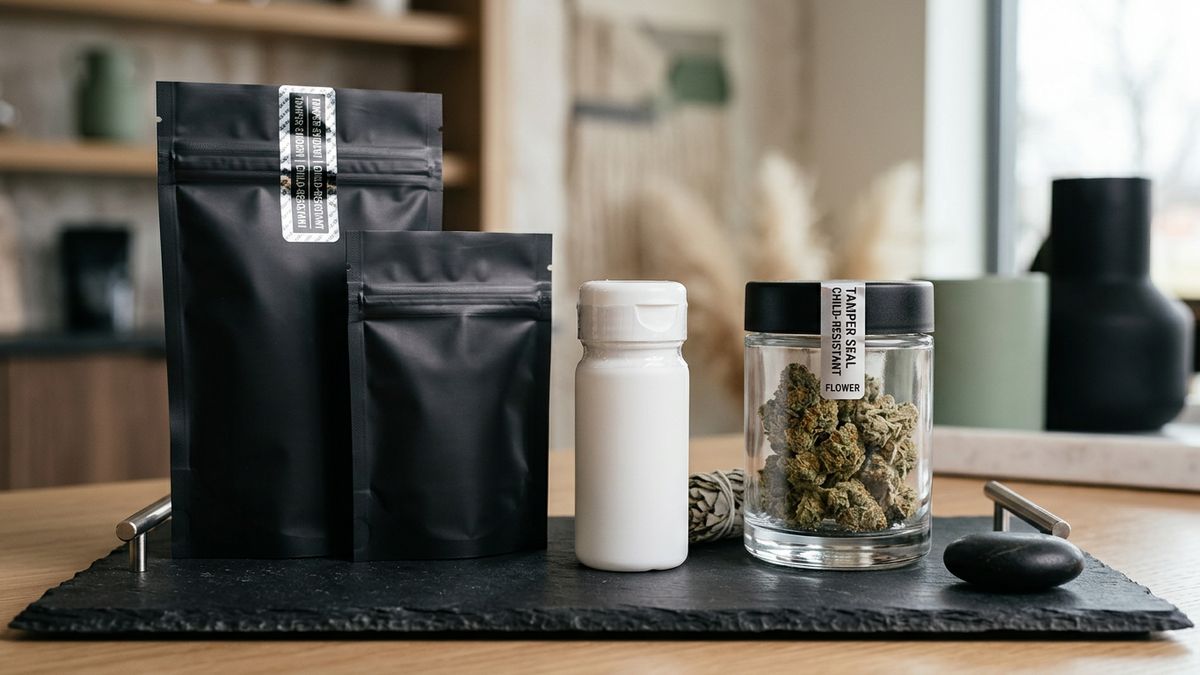
Cannabis packaging in Michigan is regulated by the Cannabis Regulatory Agency (CRA) under the Administrative Rules for cannabis establishments (R 420.1 through R 420.405). Every licensed product sold in the state must be child-resistant per 16 CFR 1700.20, tamper-evident, and properly labeled with THC and CBD potency in milligrams. Edibles must use only FDA-approved inactive ingredients and be in opaque packaging that doesn't appeal to children. Michigan's $3 billion cannabis market means the CRA enforces these rules aggressively.
I've spent about 20 years working in marketing and media connected to the cannabis industry. I created Growing Exposed on YouTube — we've built an audience of over 130,000 subscribers and 12.5 million views. I've also written for High Times and Stoner Magazine, and I own LG Digital Inc. I've watched Michigan go from a fragmented medical market to one of the largest adult-use markets in the country, and I've seen enough brands get flagged by CRA inspectors to give you a straight answer on what Michigan actually requires.
Here's everything you need to know about cannabis packaging in Michigan for 2026: the specific CRA requirements, how Michigan compares to other states, what catches out-of-state brands off guard, and how to source compliant packaging without overpaying.
Who Regulates Cannabis Packaging in Michigan?
The Cannabis Regulatory Agency (CRA) is the state agency that regulates all commercial cannabis activity in Michigan. It was originally established as the Marijuana Regulatory Agency (MRA) in 2019 under the Michigan Regulation and Taxation of Marihuana Act. The agency was renamed to the Cannabis Regulatory Agency in 2022 when its jurisdiction was expanded to cover both medical and adult-use cannabis under a unified regulatory framework.
Michigan legalized medical cannabis in 2008 through the Michigan Medical Marihuana Act. Adult-use cannabis was approved by voters in November 2018 through Proposal 1, with the first licensed retail sales beginning on December 1, 2019. Since then, Michigan has grown into one of the largest legal cannabis markets in the United States, with total sales exceeding $3 billion in 2024.
The CRA operates under the Administrative Rules (R 420.1 through R 420.405), which lay out the specific packaging, labeling, and testing requirements for all cannabis products sold in Michigan. The agency conducts routine inspections of licensed facilities and responds to consumer complaints with packaging compliance reviews. If your packaging doesn't meet the rules, the CRA can pull your product from dispensary shelves and fine your license.
What Are Michigan's Child-Resistant Packaging Requirements?
Michigan requires all cannabis products to be packaged in child-resistant containers that meet the CPSC's 16 CFR 1700.20 testing protocol. The CRA specifically references the federal standard, which means you need documentation from your packaging supplier that their products have been tested and certified. A supplier saying "it's child-resistant" without a lab test certificate isn't enough — the CRA can ask for proof during inspections.
Tamper-evident packaging is also required alongside the CR certification. The CRA defines tamper-evident as packaging with a barrier or feature that reveals whether the package has been opened before the consumer receives it. Acceptable tamper-evident methods include shrink bands, induction seals, breakaway caps, and tear-away strips. If you want to understand how tamper-evident packaging works in detail, check out our tamper-evident and food-grade cannabis packaging guide.
For multi-use cannabis products, the CR function must persist through repeated opening and closing. Michigan's rule mirrors the federal standard under the Poison Prevention Packaging Act: the package must be special packaging that maintains its child-resistant properties through normal use. If your CR zipper gives out after five openings, you're out of compliance. Our child-resistant mylar bags use CR zippers tested to maintain seal integrity through extended use.
CR Testing Protocol: What 16 CFR 1700.20 Actually Requires
The CPSC testing protocol under 16 CFR 1700.20 requires 200 children aged 42 to 51 months to attempt to open the package within 5 minutes. At least 85% must fail to open it after a demonstration of the opening mechanism. A separate panel of 100 adults aged 50 to 70 must be able to open and close the package, with 90% succeeding. This is the same standard used in every legal state, and Michigan references it directly in the CRA Administrative Rules.
Michigan also recognizes the ASTM D3475 classification standard for child-resistant packaging, which is the companion classification to 16 CFR 1700.20. Together, these two standards define what makes cannabis packaging legally child-resistant in Michigan. For a deeper dive into how CR certification works and how to spot suppliers who fake it, read our child-resistant mylar bags certification guide.
Labeling and Potency Requirements in Michigan
Michigan cannabis labels must include a specific set of required elements. The CRA checks these during product approval and during routine dispensary inspections. Getting any of these wrong means a failed compliance check, and the CRA has rejected products for missing or incorrect label elements.
Here's what must be on every cannabis product label in Michigan:
- THC and CBD potency: Listed in milligrams, both per serving and per package. This is a hard requirement.
- Universal warning symbol: Michigan's state cannabis warning symbol must be printed on the package — not applied as a removable sticker.
- Serving size: For edibles, each package must state the number of servings and milligrams of THC per serving.
- FDA-approved inactive ingredients: All inactive ingredients in edibles must be FDA-approved for food use. This is a Michigan-specific requirement.
- Warning statement: Keep this product away from children, plus other required health warnings.
- Licensee information: The name and license number of the producer or processor.
- Production date and lot number: For product traceability through the state's tracking system.
The FDA-approved inactive ingredient requirement is where Michigan stands out from other states. If you're making edibles with flavorings, colorings, or preservatives, every one of those inactive ingredients needs to be on the FDA's approved list. The CRA reviews ingredient lists during product approval and has rejected edibles that use non-approved additives. For help navigating label requirements across multiple states, see our custom cannabis labels and compliance stickers guide.
Michigan vs. Other States: How Do the Rules Compare?
Michigan's packaging requirements share a common foundation with other legal states — every state requires child-resistant packaging under 16 CFR 1700.20 — but the specifics differ. If you're a multi-state operator, you can't assume that packaging compliant in Michigan will pass in California or New York. Here's how they compare:
| Requirement | Michigan (CRA) | California (DCC) | New York (OCM) |
|---|---|---|---|
| Child-resistant | 16 CFR 1700.20 | 16 CFR 1700.20 | 16 CFR 1700.20 |
| Tamper-evident | Required | Required | Required |
| Opaque (edibles) | Required | Required | Required |
| Light-resistant (all) | Recommended, not required | Not required (edibles only: opaque) | Required for all products |
| QR code | Not required | Not required (UID tags) | Required |
| Universal symbol | MI warning symbol | CA Universal Symbol | NY universal symbol |
| FDA-approved ingredients | Required (edibles) | Required (edibles) | Required (edibles) |
| Anti-imitation rule | Prohibited | Prohibited | Prohibited (strongest in US) |
The key difference for Michigan: the FDA-approved inactive ingredient requirement. While California and New York also require food-grade ingredients, Michigan's CRA specifically calls out the FDA-approved list as a pass/fail criterion during product approval. If you're used to California's rules and you move into Michigan, don't assume your ingredient list will pass — the CRA reviews it differently.
For a full breakdown of how all states compare, read our cannabis packaging requirements by state guide.
What's Prohibited in Michigan Cannabis Packaging?
Michigan prohibits several things in cannabis packaging that brands from other states sometimes miss. The CRA is strict about these, and I've seen brands get pulled from shelves for crossing these lines:
- No child-appealing designs: Packaging cannot feature cartoons, characters, toys, or imagery that would attract minors. This includes mascots, animated characters, and anything that resembles children's snack packaging.
- No food or candy imitation: Edibles cannot be packaged to resemble existing food brands or candy products. If your edible looks like a popular candy bar from the outside, the CRA will flag it.
- No health claims: Packaging cannot make medical or therapeutic benefit claims. "Cures anxiety" or "treats insomnia" on your label will get your product pulled.
- No non-FDA-approved ingredients: Inactive ingredients in edibles must be FDA-approved for food use. No exceptions.
- No alcohol or tobacco branding crossover: Cannabis packaging cannot imitate or reference alcohol or tobacco products.
I've seen Michigan brands get creative with packaging design and then get pulled from dispensary shelves because the design crossed into child-appealing territory. The CRA doesn't mess around with this. Keep your design professional and adult-oriented.
How to Source Compliant Cannabis Packaging for Michigan
Sourcing compliant packaging for Michigan comes down to three things: CR certification, proper labeling, and the right materials. Here's what I recommend based on about 20 years in this industry.
Choose the right material for your product. Custom mylar bags are the workhorse of cannabis packaging — opaque, resealable, and available with CR zippers. They work for flower, edibles, and concentrates. For pre-rolls, pre-roll tubes with CR push-and-turn or pop-top mechanisms meet the 16 CFR 1700.20 standard. For concentrates, concentrate jars with CR lids provide both compliance and terpene preservation.
Verify CR certification on every SKU. Don't accept a generic compliance claim from your supplier. Ask for the actual lab test certificate for the specific bag, tube, or jar you're ordering. The certificate should show the test date, the testing lab, and the specific product tested. If the certificate is more than 2 years old or doesn't match the current SKU, ask for re-testing. Our CR certification guide walks through exactly how to verify this.
Design labels for Michigan specifically. Your labels need the Michigan universal warning symbol (not California's or New York's), THC and CBD in milligrams per serving and per package, FDA-approved ingredient disclosure, and all required warning statements. If you're selling in multiple states, use modular labels that let you swap the state-specific elements without reprinting the entire package.
Buy factory-direct to cut costs. Factory-direct suppliers like CropPak offer 30 to 50% lower pricing than broker resellers for equivalent compliant products. At 10,000+ units, CR mylar bags run $0.12 to $0.38 per unit, CR pre-roll tubes $0.08 to $0.25, and custom labels with the Michigan warning symbol $0.05 to $0.08 per label. For more on how minimum order quantities work and how to get the best pricing, read our cannabis packaging MOQ guide.
Common Michigan Packaging Compliance Mistakes
I've seen the same mistakes repeat across Michigan brands. Here are the ones that get products pulled most often:
Using a CR exit bag instead of CR product packaging. Some brands think a CR exit bag at the dispensary counter covers the requirement. It doesn't. The CRA requires the individual product package to be child-resistant, not just the bag the dispensary hands the customer. If your supplier tells you a CR exit bag covers it, they don't understand Michigan's rules.
Non-FDA-approved inactive ingredients in edibles. This is Michigan's most unique requirement and the one that catches out-of-state brands most often. If your edibles use flavorings, colorings, or preservatives that aren't on the FDA's approved food additive list, the CRA will reject them during product approval.
Potency listed in grams instead of milligrams. The CRA requires THC and CBD potency in milligrams, not grams or percentages. A label that says "20% THC" instead of "200 mg THC per package" will fail inspection. Both per-serving and per-package amounts must be stated.
Universal symbol applied as a sticker. The Michigan warning symbol must be printed on the package, not applied as a removable sticker. If the sticker can be peeled off, it doesn't meet the requirement. Print it directly on the packaging or use a permanent adhesive label that can't be removed without visible damage.
Child-appealing design elements. Even subtle design choices — bright colors, cartoon-like illustrations, or packaging that resembles a children's snack brand — can trigger a CRA compliance review. Keep your design clean, professional, and adult-oriented.
Michigan Cannabis Packaging Costs at Wholesale Volumes
Here's what you should actually be paying for Michigan-compliant cannabis packaging at wholesale volumes:
- CR mylar bags (10,000+ units): $0.12 to $0.38 per unit depending on size and customization
- CR pre-roll tubes with tamper-evident caps: $0.08 to $0.25 per unit
- Custom labels with MI warning symbol: $0.05 to $0.08 per label
- Tamper-evident shrink bands: $0.01 to $0.03 per unit
- Complete compliant package (bag + label + tamper-evident): $0.18 to $0.49 per unit from a factory-direct supplier
Factory-direct suppliers like CropPak offer 30 to 50% lower pricing than broker resellers for equivalent compliant products. The difference comes from cutting out the middleman markup, not from cutting corners on compliance. For a full breakdown of how to source packaging without overpaying, read our cannabis packaging 101 guide.
Frequently asked questions
What are the cannabis packaging requirements in Michigan?
Does Michigan require opaque packaging for all cannabis products?
What is the Cannabis Regulatory Agency in Michigan?
What potency information must be on Michigan cannabis packaging?
Does Michigan require a universal symbol on cannabis packaging?