Cannabis Packaging Requirements by State (2026)
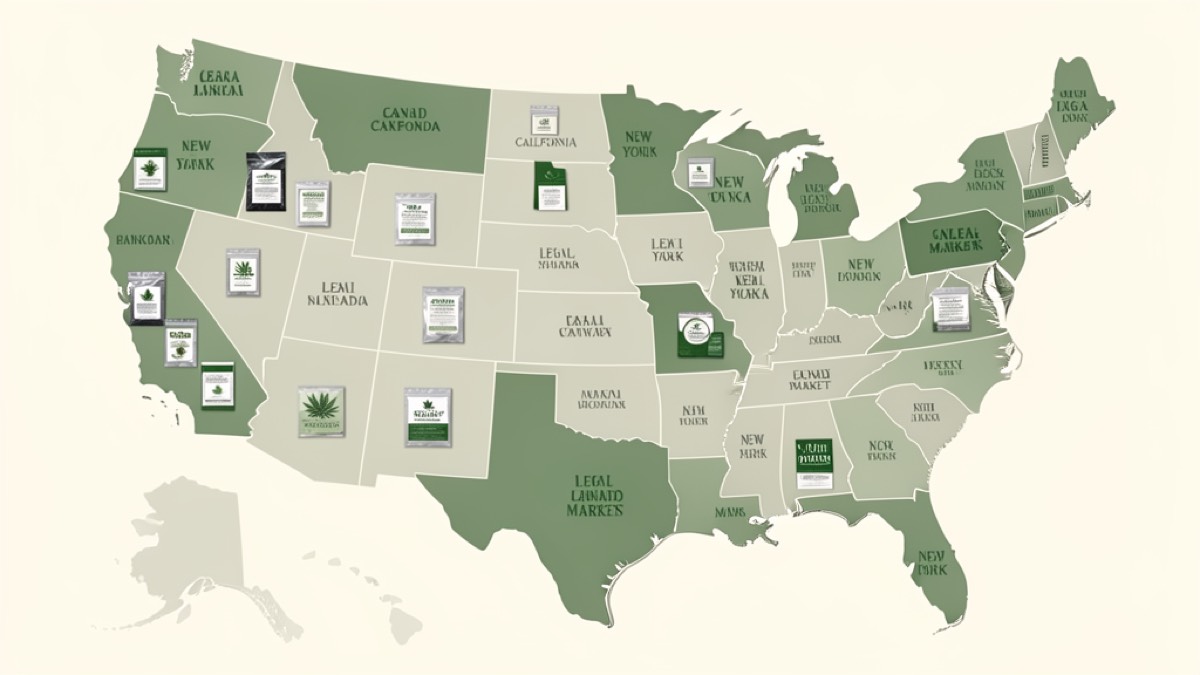
Cannabis packaging requirements are set at the state level, not the federal level. Since cannabis remains a Schedule I substance under federal law, the FDA and CPSC don't regulate cannabis packaging directly. Each legal state writes its own rules, and they don't agree on everything. That means a package that's compliant in Oregon might not be compliant in New York.
For licensed producers shipping to multiple states, this is a real problem. I've talked to brand owners who had to repackage entire product lines because they assumed the rules were the same everywhere. They aren't. Here's where things stand in 2026 and what you need to plan for.
Federal vs. State Regulation: Who Actually Sets the Rules?
Cannabis is a Schedule I substance under the Controlled Substances Act. That means federal agencies don't regulate cannabis packaging the way they regulate pharmaceutical packaging. The CPSC's 16 CFR 1700.20 child-resistant standard exists and every state references it, but the CPSC doesn't enforce it on cannabis products specifically. States do.
The result is a patchwork. Every legal state requires child-resistant packaging, but the details around labeling, tracking, sustainability, and even font sizes for potency information vary. If you're a multi-state operator, you need to design packaging that can be adapted per market, or maintain separate SKUs per state.
General Cannabis Packaging Requirements Across Legal States
While specifics vary, most legal states share these baseline requirements:
- Child-resistant: Packaging must meet 16 CFR 1700.20 standards. In most states, this applies to all consumer-facing cannabis products. See our child-resistant cannabis packaging category for compliant options.
- Tamper-evident: Packaging must show visible signs if it's been opened before sale. Tear strips, breakable seals, and shrink bands all qualify.
- Opaque: Many states require that the product isn't visible from outside the packaging. This is especially common for edibles, which could be mistaken for regular food.
- Resealable: For multi-use products like flower, the packaging must be re-closable and maintain its child-resistant properties after opening.
- Labeling: Universal symbols, potency information, batch numbers, and producer license numbers are required in most states. The format varies.
These are the common denominators. The differences are where brands get into trouble.
State-Specific Requirements: What's Different in 2026
California
California's Department of Cannabis Control (DCC) has some of the strictest packaging rules in the country. Key requirements:
- The California Universal Symbol must appear on all cannabis packaging. It's a triangle with the letters "CA" and a marijuana leaf. The DCC specifies exact dimensions.
- All packaging must be child-resistant and tamper-evident.
- Edibles packaging must be opaque.
- UID (Unique Identifier) tags are required for track-and-trace through the state's METRC system.
- Potency information must be printed on the primary panel in a specific font size relative to package size.
- Claims about health benefits are prohibited on packaging.
Colorado
Colorado was first to legalize recreational cannabis and has refined its packaging rules repeatedly. Current requirements include:
- The Colorado Universal Symbol (a diamond with "THC" inside) must appear on all packaging.
- The symbol must be printed in a contrasting color and meet minimum size requirements.
- Potency information (THC percentage or milligrams) must be displayed on the packaging in a font size that's readable without magnification.
- Edibles must be packaged in child-resistant, resealable packaging.
- Servings per package are limited, and the number of servings must be clearly labeled.
New York
New York's Office of Cannabis Management (OCM) has built packaging requirements that go beyond what most states require:
- QR codes on all packaging that link to the product's certificate of analysis (COA).
- Sustainability metrics are being phased in. OCM has signaled requirements for recyclable or compostable packaging materials, though the implementation timeline has shifted.
- Child-resistant packaging meeting 16 CFR 1700.20 is required.
- Marketing and advertising restrictions are tighter than most states. Packaging can't appeal to children, which means no cartoons, no bright colors that mimic candy packaging, and no fruit-like imagery.
- Universal symbol requirements are specific to New York and differ from California's.
New York has also been aggressive about recalls for packaging violations. Brands shipping into NY need to verify QR code functionality and sustainability compliance before product hits shelves.
Michigan
Michigan's Marijuana Regulatory Agency (MRA) runs its compliance through METRC (Marijuana Enforcement Tracking Reporting Compliance), and packaging rules are tied to that system:
- All products require METRC tracking tags affixed to packaging.
- Child-resistant packaging is required for all consumer products.
- Packaging must include the producer's license number and a harvest or batch number that matches METRC data.
- Michigan allows exit bags at point of sale for products that aren't individually CR-packaged, but the exit bag itself must be CR-certified. See our dispensary exit bags for compliant options.
- THC potency must be labeled, and the state has specific warning label requirements.
What's Changing in 2026
Several trends are reshaping cannabis packaging compliance heading into 2026:
- Sustainability mandates: New York and California are pushing toward recyclable or compostable packaging. Other states are watching. If you're designing packaging now, plan for sustainability requirements to expand.
- Tracking integration: More states are requiring QR codes or scannable tracking on packaging, not just METRC tags. This is moving from a California-specific requirement to a broader standard.
- Standardized universal symbols: States are converging on universal symbol requirements, though each state has its own symbol. Multi-state brands need modular label designs that can swap symbols per market.
- Stricter enforcement: States that were lenient in early years are now auditing packaging compliance. New York, Michigan, and Massachusetts have all issued recalls for packaging violations in the past 18 months.
Common Packaging Compliance Mistakes That Trigger Recalls
After watching brands navigate compliance for decades, the same mistakes come up repeatedly. Here are the ones that get brands recalled or fined:
- Assuming CR certification transfers across product lines: A CR certification for one bag size doesn't cover a different size with the same zipper. Each package model needs its own test certificate.
- Ignoring state-specific warning label requirements: California, Colorado, New York, and Michigan all have different warning label text. Using one state's warning in another state can trigger a recall.
- Forgetting about the secondary packaging: If your primary package isn't CR, the exit bag or secondary container has to be. Brands often forget that the dispensary's exit bag is the regulated package, not the flower bag inside.
- Not updating packaging after rule changes: State packaging rules update frequently. A package that was compliant in 2024 may not be compliant in 2026. New York's sustainability requirements are a current example of rules that caught brands off-guard.
- Using supplier-provided compliance language without verifying: Some suppliers provide generic warning labels that don't match specific state requirements. Always verify label text against the actual state regulation, not what your supplier says is "standard."
How to Build Compliant Packaging Without Going Crazy
The practical approach for multi-state operators is to design a base package that meets the strictest common requirements, then adapt labeling per state. That means:
- Start with 16 CFR 1700.20 certified child-resistant packaging. Every state requires this.
- Design for opacity. If your packaging is opaque, you're compliant in every state's opacity rules.
- Build modular label panels so you can swap universal symbols and state-specific warnings without redesigning the whole package.
- Plan for QR code integration now, even if your current states don't require it. Adding it later means reprinting everything.
- Use a packaging supplier that understands multi-state compliance. Ask them which states they've shipped into and whether they track rule changes.
We maintain a compliance resource center with up-to-date information on state requirements. A full state-by-state guide is coming soon, covering all 24 legal medical and recreational states with specific packaging rules.
At CropPak, we ship compliant cannabis packaging to licensed producers across Canada and the US. Factory-direct pricing, same-day turnaround, and every package is custom-printed to your brand. If you need help navigating multi-state compliance, talk to us before you place your next order.
Frequently asked questions
Are cannabis packaging requirements the same in every state?
Does the federal government regulate cannabis packaging?
What states require QR codes on cannabis packaging?
What is the universal symbol requirement for cannabis packaging?
Can I use the same packaging in multiple states?