Cannabis Packaging Washington: WSLCB Compliance Guide
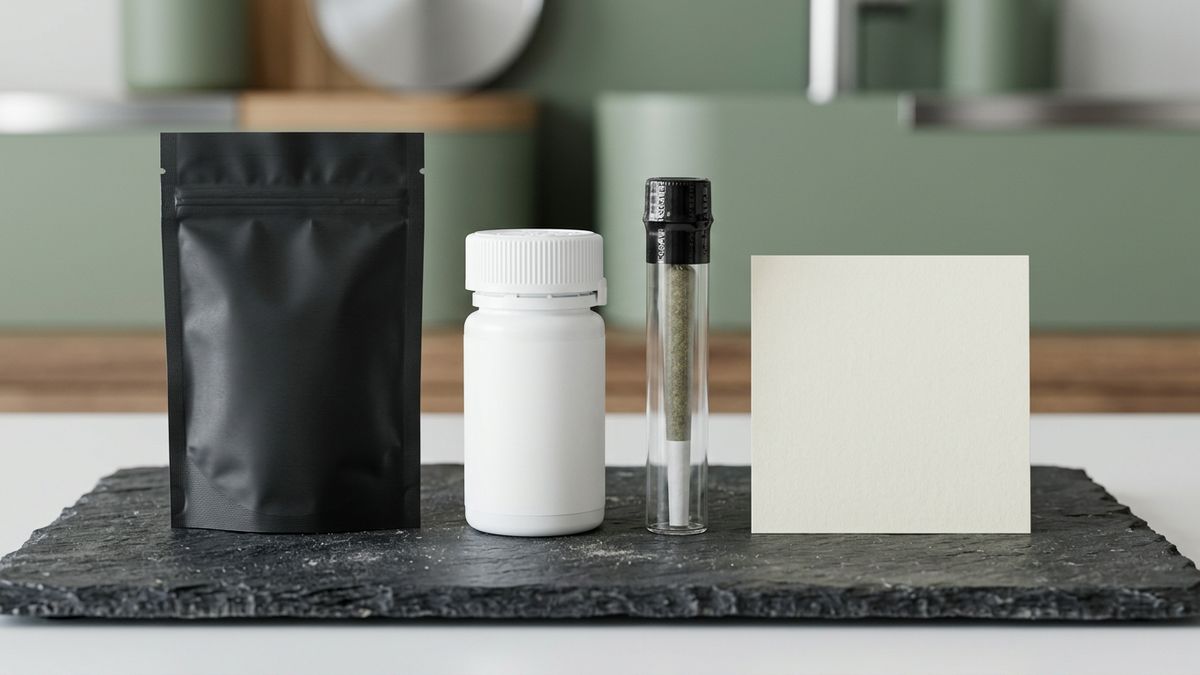
Cannabis packaging in Washington is regulated by the Washington State Liquor & Cannabis Board (WSLCB) under WAC 314-55-105 through 314-55-157. Every licensed cannabis product sold in the state must be child-resistant per 16 CFR 1700.20, opaque for all product types, and tamper-evident at retail exit. Labels must display potency in milligrams, required government warnings, and licensee information. Washington was the first state to legalize adult-use cannabis when voters passed Initiative 502 in November 2012, and its packaging rules have been evolving for over a decade.
I've spent about 20 years working in marketing and media connected to the cannabis industry. I created Growing Exposed on YouTube — we've built an audience of over 130,000 subscribers and 12.5 million views. I've also written for High Times and Stoner Magazine, and I own LG Digital Inc. I was working in the industry when Washington voters passed Initiative 502 in 2012 and watched the first licensed retail stores open on July 8, 2014. Washington was the first legal adult-use market in the country, and the WSLCB has had more than a decade to refine its packaging rules.
Here's everything you need to know about cannabis packaging in Washington for 2026: the specific WSLCB requirements, how Washington compares to Oregon, California, Colorado, and New York, what catches out-of-state brands off guard, and how to source compliant packaging without paying broker markup.
Who Regulates Cannabis Packaging in Washington?
The Washington State Liquor & Cannabis Board (WSLCB) regulates all cannabis packaging and labeling in Washington. The agency was created in 1933 to manage alcohol prohibition repeal, and in 2012 it was given jurisdiction over cannabis when voters approved Initiative 502. The WSLCB oversees licensing, enforcement, track-and-trace through the Leaf Data System, and all packaging and labeling rules under WAC 314-55.
The specific packaging and labeling requirements live in WAC 314-55-105 and WAC 314-55-155. WAC 314-55-105 covers what a container must do — child-resistant, opaque, tamper-evident — and WAC 314-55-155 covers what a label must say: potency, warnings, licensee info, lot numbers. If you're a licensed producer, processor, or retailer in Washington, the WSLCB is the only agency you answer to for packaging compliance.
Washington legalized adult-use cannabis under Initiative 502 in November 2012 — the same election where Colorado passed Amendment 64. Licensed retail sales began July 8, 2014, making Washington the first state to open legal adult-use dispensaries. The WSLCB had issued over 1,400 active cannabis licenses as of 2025, according to the agency's public licensing database. That makes Washington one of the most mature legal markets in the country, and the packaging rules reflect that experience.
What Are Washington's Child-Resistant Packaging Requirements?
Every cannabis product sold in Washington must be packaged in a child-resistant (CR) container that meets 16 CFR 1700.20 and the ASTM D3475 standard for CR packaging. That's the federal protocol, originally written for pharmaceuticals under the Poison Prevention Packaging Act of 1970. The CPSC defines the testing protocol: 200 children aged 42 to 51 months must attempt to open the package within 5 minutes, and at least 85% must fail. A separate panel of 100 adults must successfully open and close the package, with 90% succeeding.
For Washington, CR requirements apply to flower, edibles, concentrates, tinctures, topicals, and any product containing THC. There are no exemptions. If you sell a cannabis product in Washington, it needs to be in a CR container before it reaches the dispensary shelf.
The CR requirement is for the product packaging itself — not just the exit bag. I've seen brands try to use a standard mylar bag and rely on the dispensary's exit bag to satisfy the CR rule. That doesn't work in Washington. The product container must be CR-certified. The exit bag is an additional layer required at point of sale, which I'll cover below.
What Counts as Child-Resistant in Washington?
The WSLCB accepts any packaging that has passed 16 CFR 1700.20 testing. Common CR formats for Washington cannabis products include:
- CR zipper mylar bags: Mylar bags with a certified CR zipper closure. The most common format for flower and edibles. See our child-resistant mylar bags for certified options.
- Pop-top bottles: Push-down-and-squeeze caps that are certified CR. Used for flower and pre-rolls.
- CR pre-roll tubes: Plastic or glass tubes with CR push-down caps for individual pre-rolls. See our pre-roll tubes for details.
- CR concentrate jars: Glass or plastic jars with CR push-down-and-turn lids for concentrates and waxes.
Ask your packaging supplier for the actual CR test report for the specific SKU you're buying. A supplier that says "our bags are CR" without producing the test documentation isn't giving you what the WSLCB expects. We cover this in detail in our guide on child-resistant packaging requirements for cannabis brands.
Does Washington Require Opaque Packaging for All Cannabis Products?
Yes. Washington requires opaque packaging for all cannabis products, not just edibles. WAC 314-55-105 specifies that packaging must be opaque — meaning you can't see the product through the container. This applies to flower, edibles, concentrates, tinctures, topicals, and any other THC-containing product.
This is stricter than California, which only requires opacity for edibles. It matches Oregon, which also requires opacity across all product types. If you're a multi-state operator designing packaging that works in both Washington and Oregon, opaque is your baseline. For a deeper comparison, see our Oregon OLCC & OHA compliance guide.
Opaque doesn't mean you have to use black or dark bags. It means the material must block visibility of the contents. A matte black or solid-colored mylar bag works. A clear window bag does not. If your packaging has a window, it needs to be small enough that the product isn't visible — or you need an interior liner that blocks the view.
Washington Labeling Requirements: What Must Be on the Label?
Washington's labeling requirements are detailed under WAC 314-55-155 through 314-55-157. Every cannabis product label must include:
- Potency: THC and CBD content in milligrams. For flower, this is expressed as a percentage and total milligrams. For edibles and concentrates, it's milligrams per serving and total milligrams per package.
- Servings: The number of servings in the package for multi-serving products.
- Warnings: The WSLCB-required warning statement: "This product has intoxicating effects and may be habit forming. Cannabis can impair concentration, coordination, and judgment."
- Licensee information: The name and license number of the producer or processor.
- Lot or batch number: For track-and-trace through the Leaf Data System.
- Harvest date: For flower products, the harvest date.
- Ingredients: Full ingredient list for edibles and processed products.
- Allergens: Any major food allergens present in the product.
Washington does not require a state-specific universal THC symbol on packaging — that's a key difference from California, Colorado, and New York, each of which mandates its own symbol. Washington relies on the warning text and opaque packaging instead. For more on label requirements across markets, see our cannabis labeling requirements guide.
No Child-Appealing Graphics
Washington prohibits packaging that appeals to children. WAC 314-55-105 explicitly bans cartoons, toys, depictions of minors, and any imagery that could reasonably be expected to attract children. This is consistent with every other legal state, but Washington's enforcement has been particularly active. The WSLCB has issued violations for packaging that featured cartoon-style fruit characters, candy-like color schemes, and product names that mimicked mainstream snack brands.
If your packaging wouldn't look out of place on a convenience store candy rack, you're probably violating Washington's rules. Keep it clean, adult, and product-focused.
How Does Washington Compare to Other States?
Washington's packaging rules are among the most established in the country — it was the first legal adult-use market, so the WSLCB has had over a decade to refine its requirements. Here's how Washington compares to Oregon, California, Colorado, and New York:
| Requirement | Washington | Oregon | California | Colorado | New York |
|---|---|---|---|---|---|
| Child-resistant (16 CFR 1700.20) | All products | All products | All products | All products | All products |
| Opaque packaging | All products | All products | Edibles only | All products | All products |
| State universal symbol | No | Yes — OR | Yes — CA | Yes — CO | Yes — NY |
| Tamper-evident | At retail exit | Product level | Product level | Product level | Product level |
| Track-and-trace | Leaf Data System | CTS | METRC | METRC | NY Seed to Sale |
| QR code on label | Not required | Not required | UID tag required | Not required | Required — COA link |
| Sustainability mandate | Yes — reusable exit bags | No | Yes — CalRecycle | No | Yes — OCM rules |
One thing that stands out: Washington is the only major legal state that doesn't require a universal THC symbol on packaging. It relies on the warning text and opaque packaging instead. If you're designing multi-state packaging, you'll need state-specific labels for CA, CO, NY, and OR — but Washington just needs the warning text, potency, and the other label elements above.
For a full state-by-state breakdown, see our cannabis packaging requirements by state guide.
Washington's Sustainability Mandates: What's Changing in 2026?
Washington has been ahead of the curve on sustainability. In 2019, the legislature passed HB 1074, which banned single-use plastic bags across all retail — including cannabis dispensaries. That law took effect in 2021 and requires retailers to provide reusable bags or charge a pass-through fee for paper bags. For cannabis, this meant the end of single-use plastic exit bags.
The WSLCB requires that dispensary exit bags be reusable and child-resistant. A dispensary can provide a CR exit bag at the point of sale, and many charge a small fee — typically $0.05 to $0.25 — for it. The exit bag must be opaque and child-resistant per 16 CFR 1700.20. See our dispensary exit bags for compliant options.
Beyond exit bags, Washington's Department of Ecology has been pushing the cannabis industry toward recyclable and compostable packaging materials. While there's no statewide compostable mandate specifically for cannabis packaging yet, the trend is clear. Several Washington-based producers have voluntarily moved to kraft paper and recyclable glass formats. The WSLCB has signaled that sustainability requirements will tighten over the next few years, and brands that design for recyclability now will be ahead of the curve.
For context, California requires cannabis packaging to be recyclable or compostable under CalRecycle rules, and New York has its own sustainability requirements under the OCM's packaging regulations. Washington is tracking toward similar requirements. If you're designing packaging that works across WA, CA, and NY, plan for recyclable materials from the start. We cover sustainability requirements in our child-resistant cannabis packaging category.
How Much Does Washington-Compliant Cannabis Packaging Cost?
At factory-direct volumes (10,000+ units), Washington-compliant packaging runs:
- CR opaque mylar bags: $0.12 to $0.38 per unit depending on size (1g through 28g) and customization level. See our custom mylar bags for sizing and pricing.
- CR pre-roll tubes: $0.08 to $0.25 per unit. Certified CR push-down caps, branded with shrink sleeve.
- CR concentrate jars: $0.15 to $0.45 per unit for glass jars with CR lids.
- Dispensary exit bags: $0.20 to $0.60 per unit for reusable, CR-certified exit bags.
- Custom labels: $0.02 to $0.08 per label depending on material, size, and quantity. See our custom cannabis labels for options.
These are factory-direct prices. If you're buying through a broker or middleman, expect to pay 40 to 100% more. The difference between factory-direct and broker pricing on a 10,000-unit order of CR mylar bags can be $2,000 to $4,000 — money that goes straight to a middleman who adds no value to your supply chain.
Common Washington Compliance Failures (and How to Avoid Them)
After about 20 years in this industry, I've seen the same compliance failures repeat themselves. Here are the ones that catch brands in Washington:
- Non-CR product packaging: Assuming the exit bag covers the CR requirement. It doesn't. The product container must be CR-certified. The exit bag is an additional layer.
- Clear or translucent bags: Washington requires opaque packaging for all products. A clear window bag fails this requirement.
- Missing potency information: Labels must show THC and CBD in milligrams. A label that says "high THC" without the actual number is a violation.
- Child-appealing graphics: Cartoons, fruit characters, candy-like branding. The WSLCB issues violations for this regularly.
- No lot or batch number: Required for Leaf Data System track-and-trace. A missing lot number means the product can't be traced.
- Single-use plastic exit bags: Banned under HB 1074 since 2021. Dispensaries must use reusable, CR exit bags.
The simplest way to avoid these: work with a packaging supplier that understands Washington's specific requirements and can provide CR test documentation for every SKU. Ask for the test report before you place an order. If they can't produce it, find another supplier.
Ready to source Washington-compliant packaging? Submit a quote request and we'll price it all-in — packaging, printing, and shipping — usually same day. Or browse our full compliance resource hub for more details on state-specific requirements.
Frequently asked questions
What are the packaging requirements for cannabis in Washington State?
Does Washington require a universal THC symbol on cannabis packaging?
Does Washington require tamper-evident cannabis packaging?
What track-and-trace system does Washington use for cannabis?
Are dispensary exit bags required in Washington State?