Cannabis Packaging Oregon: OLCC & OHA Guide

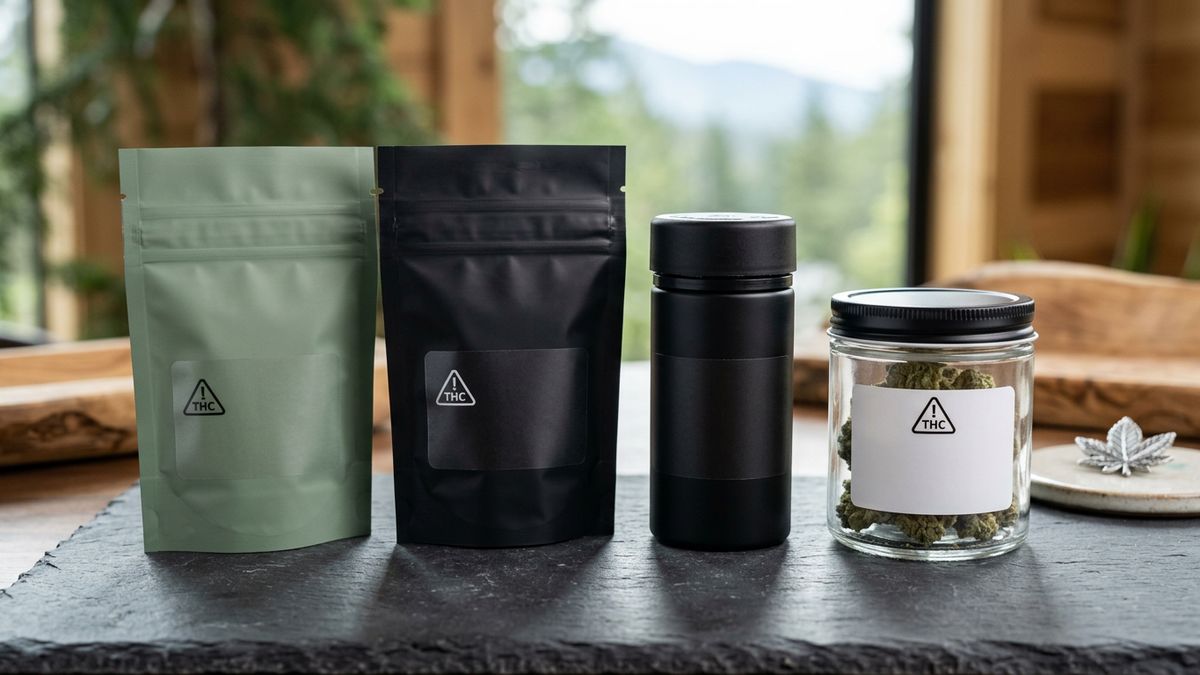
Cannabis packaging in Oregon is regulated by two state agencies: the Oregon Liquor & Cannabis Commission (OLCC) under OAR 845-025 and the Oregon Health Authority (OHA) under OAR 333-007-0300 through 333-007-0360. Every licensed product sold in the state must be child-resistant per 16 CFR 1700.20, opaque for all product types (not just edibles), tamper-evident, and resealable for multi-use products. Labels must carry the Oregon universal symbol, THC and CBD potency in milligrams, and the required government warning. Oregon was one of the first legal adult-use markets in the country, and its packaging rules are among the strictest.
I've spent about 20 years working in marketing and media connected to the cannabis industry. I created Growing Exposed on YouTube — we've built an audience of over 130,000 subscribers and 12.5 million views. I've also written for High Times and Stoner Magazine, and I own LG Digital Inc. I was around when Oregon voters passed Measure 91 in 2014 and watched licensed retail sales open in October 2015. I've seen enough brands get flagged by OLCC and OHA inspectors to give you a straight answer on what Oregon actually requires.
Here's everything you need to know about cannabis packaging in Oregon for 2026: the specific OLCC and OHA requirements, how Oregon compares to California, Colorado, and New York, what catches out-of-state brands off guard, and how to source compliant packaging without paying broker markup.
Who Regulates Cannabis Packaging in Oregon?
Two agencies split the job. The Oregon Liquor & Cannabis Commission (OLCC) regulates the commercial cannabis supply chain — licensing, track-and-trace through the Cannabis Tracking System (CTS), and retail rules under OAR 845-025. The OLCC was originally the Oregon Liquor Control Commission and was renamed to reflect its expanded cannabis jurisdiction. It oversees both medical and adult-use cannabis under a single regulatory framework.
The Oregon Health Authority (OHA) sets the packaging and labeling rules under OAR 333-007-0300 through 333-007-0360. That's the administrative rule range that governs what your container has to do (child-resistant, opaque, tamper-evident) and what your label has to say (potency, warnings, universal symbol). If you're a licensed producer, you're dealing with both agencies: the OLCC for your license and the CTS, and the OHA for your packaging and labeling approval.
Oregon legalized medical cannabis in 1998 under Measure 67 and adult-use cannabis in 2014 under Measure 91. Licensed adult-use sales began in October 2015, making Oregon one of the first four legal adult-use markets alongside Colorado, Washington, and Alaska. The state has issued over 2,000 active cannabis licenses and processes roughly $1 billion in annual legal cannabis sales. With that volume, OLCC compliance officers enforce packaging rules through routine dispensary inspections and the OHA reviews packaging and labeling during the product registration process.
What Are Oregon's Child-Resistant Packaging Requirements?
Oregon requires all cannabis products to be in child-resistant packaging that meets the CPSC standard 16 CFR 1700.20. The OHA also references ASTM D3475 as an acceptable classification standard for child-resistant testing. Your packaging supplier needs to provide certification documentation for both.
Here's what the 16 CFR 1700.20 testing protocol actually involves: 200 children aged 42 to 51 months attempt to open the package within 5 minutes. At least 85% must fail after a demonstration. A separate panel of 100 adults aged 50 to 70 must be able to open and close the package, with 90% succeeding. If your supplier can't produce test reports matching those parameters for the exact SKU you're buying, their "certified" claim doesn't hold up under an OHA review.
For multi-use products, the CR function has to persist through repeated opening and closing. OHA inspectors have tested packages after multiple open-close cycles, so your CR zipper or closure mechanism needs to hold up to real-world use. A zipper that stops functioning after a handful of opens fails compliance, even if it passed the initial 16 CFR 1700.20 test. You can browse our full selection of child-resistant cannabis packaging for CR-certified options that hold up.
Unlike some states, Oregon does not allow a dispensary exit bag to substitute for product-level CR packaging. The product container itself must be child-resistant before it reaches the dispensary. Exit bags are an additional layer, not a replacement. If your supplier tells you an exit bag covers the CR requirement, they don't understand Oregon's rules.
Does Oregon Require Opaque Packaging for All Cannabis Products?
Yes. Oregon requires opaque packaging for all cannabis products — flower, edibles, concentrates, topicals, and everything else. This is stricter than states like California, which only requires opacity for edibles. If light passes through your packaging and reveals the product inside, it fails OHA compliance inspection.
The opacity requirement does two things. First, it blocks UV and visible light from degrading cannabinoids and terpenes. UV exposure can reduce THC potency by up to 30% within six months in transparent packaging. Second, it keeps the product from being visible to children or non-consuming adults who might mistake it for a regular food product.
For your packaging, that means using opaque custom mylar bags with a full-coverage print or a solid-color exterior. PET/AL/LLDPE construction with an aluminum foil layer blocks all light by default — that's the barrier layer doing its job. Clear windows, semi-transparent materials, or thin light-colored plastic won't pass Oregon's opacity standard. If a supplier offers "tinted" bags as a lighter alternative, don't use them for Oregon. Opaque means zero light transmission.
What Is the Oregon Universal Symbol for Cannabis Packaging?
Oregon requires a universal symbol on all cannabis product packaging. The OHA adopted a standardized warning symbol that must appear on every licensed cannabis package sold in the state. It has to be printed directly on the packaging — not applied as a removable sticker. The symbol alerts consumers that the package contains cannabis and should be kept away from children.
The Oregon universal symbol is distinct from the symbols used by other states. California uses a triangle with a marijuana leaf and the letters "CA." Colorado uses a diamond with "THC." New York has its own OCM symbol. Each state designs its own, and Oregon's is the one that matters for OHA compliance. For multi-state operators, that means producing Oregon-specific label variants with the correct symbol for this market.
The practical approach for brands selling into multiple states is modular labeling: same base packaging, different compliance labels per state. You swap the universal symbol and state-specific warnings without reprinting your branded packaging. Our cannabis labeling requirements guide breaks down every required element state by state.
Oregon Labeling Requirements: What Must Be on the Label?
Oregon's labeling requirements go beyond the universal symbol. Every cannabis product label has to include specific information, and the OHA checks these during the product registration and inspection process. Here's what needs to be on your Oregon cannabis label:
- Oregon universal symbol: The state's standardized warning symbol, printed directly on the packaging.
- THC and CBD potency: Listed in milligrams. Both per-serving and per-package amounts for edibles.
- Serving size: For edibles and multi-serving products, the serving size and number of servings.
- Government warning statement: The standard cannabis warning text required by the OHA.
- Licensee information: The name and license number of the producer or processor.
- Batch or lot number: For track-and-trace through the CTS and for recall purposes.
- Net weight: In both metric and imperial units.
- Production or harvest date: When the product was manufactured or harvested.
- Child warning: "Keep out of reach of children" or equivalent.
Packaging cannot appeal to children. That means no cartoon characters, no designs that mimic candy or snack packaging, and no imagery that would be attractive to minors. The OHA reviews packaging during the product registration process and has rejected products it determined appeal to children. Edibles get extra scrutiny here because they look like food — the packaging has to clearly signal that this isn't a regular treat.
How Does Oregon Compare to Other States?
Oregon's packaging rules are strict, and the universal opacity requirement is what sets Oregon apart from most other legal states. Every state requires child-resistant packaging under 16 CFR 1700.20, but the details around opacity, universal symbols, track-and-trace, and labeling vary. Here's how Oregon stacks up against California, Colorado, and New York:
| Requirement | Oregon | California | Colorado | New York |
|---|---|---|---|---|
| Child-resistant (16 CFR 1700.20) | Yes | Yes | Yes | Yes |
| Tamper-evident | Yes | Yes | Yes | Yes |
| Opaque packaging | All products | Edibles only | All products | All products (light-resistant) |
| Universal symbol | OR universal symbol | Triangle + CA leaf | Diamond + THC | NY OCM symbol |
| Track-and-trace system | CTS (OLCC) | METRC (DCC) | METRC (MED) | NY seed-to-sale |
| QR code required | No | No (UID tags) | No | Yes |
| Resealable for multi-use | Yes | Yes | Yes | Yes |
Oregon's combination of universal opacity (not just edibles), the dual-agency OLCC + OHA structure, and the CTS track-and-trace requirement makes it one of the more demanding states for packaging compliance. For a deeper comparison, read our Colorado MED compliance guide, our California DCC compliance guide, and our cannabis packaging requirements by state guide.
How Much Does Oregon-Compliant Cannabis Packaging Cost?
Oregon's requirements — opaque, CR, tamper-evident, the universal symbol, and full labeling — add cost on top of base packaging. But the increments are small compared to the cost of non-compliance. Here's what you should expect at wholesale volumes:
- Opaque CR mylar bags: $0.12 to $0.38 per unit at 10,000+ units, depending on size and customization.
- CR pre-roll tubes with tamper-evident caps: $0.08 to $0.25 per unit.
- Custom labels with the OR universal symbol: $0.05 to $0.08 per label at 10,000+ units.
- Tamper-evident shrink bands: $0.01 to $0.03 per unit.
- Glass concentrate jars with CR lids: $0.20 to $0.50 per unit for terpene-rich products.
A complete Oregon-compliant package — opaque CR mylar bag, custom label with the universal symbol and potency in milligrams, and a tamper-evident shrink band — runs about $0.20 to $0.50 per unit at 10,000 volume from a factory-direct supplier. The same package through a broker reseller runs $0.35 to $0.70. That 30 to 50% broker markup is pure margin for the middleman, and it's the single biggest cost difference you'll see.
Factory-direct suppliers like CropPak handle all of this in a single production run. We manufacture opaque CR mylar bags, produce custom labels with the Oregon universal symbol and potency in milligrams, add tamper-evident shrink bands, and supply child-resistant mylar bags and pre-roll tubes — all tested and certified for Oregon compliance. Request a quote and we'll send you an all-in price with no middleman markup. Our compliance hub has the full regulatory landscape.
Common Oregon Compliance Failures (and How to Avoid Them)
Based on what I've seen brands get flagged for, here are the most common OLCC and OHA compliance failures:
- Transparent or semi-transparent packaging. Oregon requires opacity for all products. Brands used to California's edibles-only opacity rule ship clear bags into Oregon and fail inspection. Use opaque, full-coverage packaging for every product type.
- Universal symbol as a removable sticker. The Oregon universal symbol must be printed directly on the packaging, not applied as a sticker that can peel off. If your label uses a sticker for the symbol, switch to printing it directly on the label.
- Exit bag used as a CR substitute. The product container itself must be child-resistant. A dispensary exit bag doesn't replace product-level CR packaging. If your supplier says it does, they're wrong for Oregon.
- Potency not in milligrams. The OHA requires THC and CBD potency in milligrams. Brands that list potency in grams or percentages get flagged. Convert to milligrams per serving and per package.
- Non-resealable multi-use packaging. Multi-use products must be resealable. A one-time tear strip with no reseal function fails for multi-use products. Use a CR zipper that reseals after opening.
Every one of these failures is preventable. The pattern I see is brands trying to save $0.05 to $0.10 per unit by skipping opacity, using standard zippers, or cutting corners on labeling — then paying thousands in fines, recall costs, and reprinting when the OLCC or OHA catches it. Compliance costs less than non-compliance, every time.
For more on how Oregon fits into the national picture, read our Michigan CRA compliance guide and our New York OCM compliance guide. You can also check the Oregon state packaging page on our site for a product-focused overview.
Frequently asked questions
What are the packaging requirements for cannabis in Oregon?
Does Oregon require opaque packaging for all cannabis products?
Who regulates cannabis packaging in Oregon — the OLCC or the OHA?
Can I use a dispensary exit bag instead of child-resistant product packaging in Oregon?
How much does Oregon-compliant cannabis packaging cost wholesale?