Cannabis Packaging California: DCC Guide
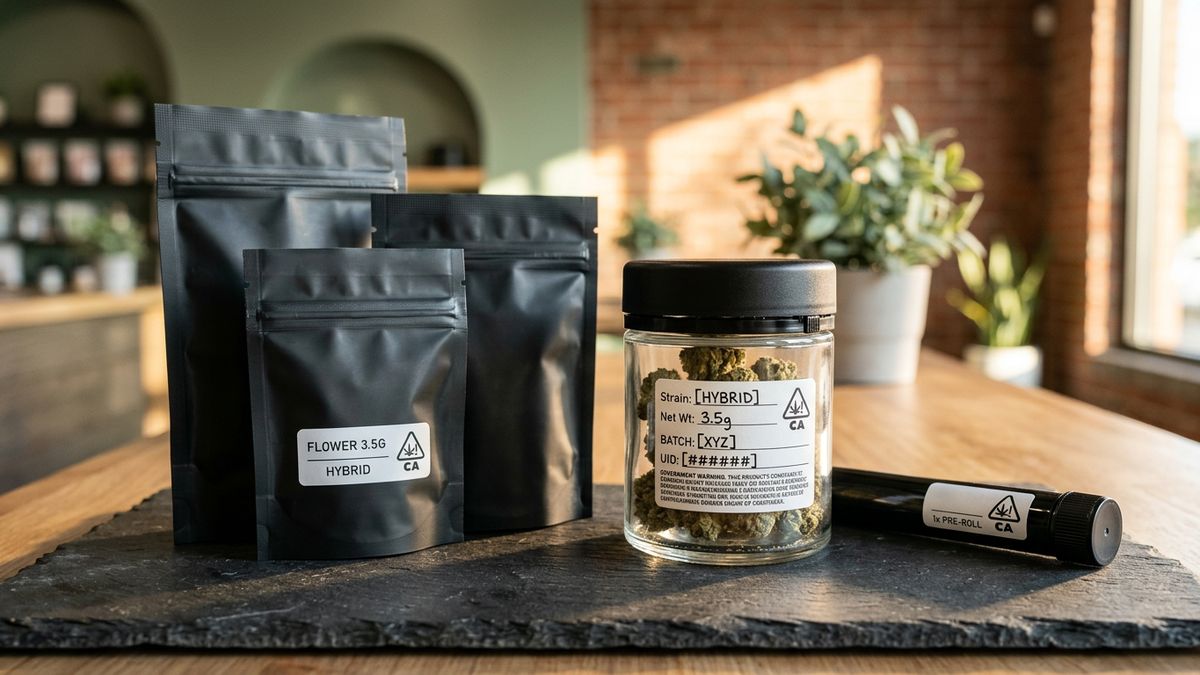
Cannabis packaging in California is regulated by the Department of Cannabis Control (DCC) under Title 4, Division 19 of the California Code of Regulations. Every licensed product sold in the state must be child-resistant per 16 CFR 1700.20, tamper-evident, and opaque for edibles. Labels must carry the CA Universal Symbol, UID batch tags, THC and CBD potency in milligrams, allergen disclaimers, and the government warning statement. Non-compliant packaging gets pulled from dispensary shelves, and DCC fines start at $5,000 per violation.
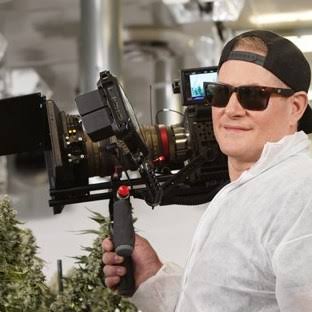
I've spent about 20 years working in marketing and media connected to the cannabis industry. I created Growing Exposed on YouTube — we've built an audience of over 130,000 subscribers and 12.5 million views. I've also written for High Times and Stoner Magazine, and I own LG Digital Inc. I've watched California's packaging rules evolve from the loose Prop 215 days to the full DCC framework we have now, and I've seen enough brands get burned by non-compliant packaging to give you a straight answer on what California actually requires.
Here's everything you need to know about cannabis packaging in California for 2026: the specific DCC requirements, what's changing, how to source compliant packaging without overpaying, and the mistakes that get brands fined.
Who Regulates Cannabis Packaging in California?
The Department of Cannabis Control (DCC) is the single state agency that regulates all commercial cannabis activity in California. It was created in July 2021 by consolidating three predecessor agencies — the Bureau of Cannabis Control (BCC), the California Department of Food and Agriculture (CDFA), and the California Department of Public Health (CDPH). Before that consolidation, cannabis packaging rules were split across multiple agencies with overlapping and sometimes contradictory requirements. The DCC fixed that.
Under the DCC's current regulations in the California Code of Regulations, Title 4, Division 19, all licensed cannabis products — medical and adult-use — must meet the same packaging requirements before they hit a dispensary shelf. There is no separate, relaxed track for medical sales. If you hold a DCC license and sell a product in California, the packaging rules apply to you.
California issued over 8,000 active cannabis licenses as of 2025, according to the DCC's own licensing database. With that volume, inspectors enforce packaging compliance aggressively. First violations trigger fines starting at $5,000 per incident. Repeat violations risk license suspension or revocation. The DCC reviews packaging both at initial product approval and during routine dispensary inspections — so your packaging needs to pass twice.
What Are the Child-Resistant Packaging Requirements in California?
Every cannabis product sold in California must be packaged in child-resistant (CR) packaging that meets the federal 16 CFR 1700.20 standard. That's the CPSC protocol that tests whether children under 5 can open a package within a specified time window — typically 5 minutes. The testing requires 200 children aged 42 to 51 months to attempt opening the package, with at least 85% failing. A separate panel of 100 adults aged 50 to 70 must be able to open and properly re-close the package, with 90% succeeding. If your packaging fails that test, it fails California.
The CR requirement applies at the point of sale and remains in effect for the life of the product. For multi-use products like flower in a resealable jar or bag, the packaging must maintain its child-resistant function after each opening. Single-use packaging, like a sealed pre-roll tube, must be CR at the time of sale. The packaging must also be tamper-evident — the consumer needs visible proof if the package has been opened or interfered with before purchase. That means induction seals, breakaway bands, or similar features that visibly indicate tampering.
The CPSC also recognizes the ASTM D3475 classification standard as a companion to 16 CFR 1700.20. California's DCC references 16 CFR 1700.20 specifically in its regulations, but packaging that meets both standards provides the strongest compliance position. For more detail on how CR testing works and how to verify your supplier's certification is real, see our child-resistant packaging requirements guide.
One common mistake: brands assume a dispensary's CR exit bag at the point of sale substitutes for product-level CR packaging. It doesn't. DCC regulations require the individual product package to meet 16 CFR 1700.20. The dispensary may use an additional CR exit bag, but it cannot replace the product packaging requirement. If you're sourcing exit bags for dispensary use, we carry CR dispensary exit bags — but your product packaging still needs its own CR certification.
Opacity and Resealability: What California Requires
California gets specific about opacity in a way most states don't. Edibles packaging must be opaque. You cannot see the product through the packaging. This rule exists because cannabis edibles look like regular food — gummies, chocolates, cookies — and transparent packaging makes them too tempting for kids. If your edible is visible through the package, it fails DCC inspection.
For non-edible products like flower and concentrates, California does not require full opacity. But many brands choose opaque packaging anyway, and for good reason: light degrades cannabinoids. UV exposure can reduce THC potency by up to 30% over six months in transparent packaging, according to a 2020 study published in the Frontiers in Pharmacology. Opaque mylar bags protect your product's potency and your brand's reputation.
Multi-use cannabis products must be resealable. If a consumer buys an eighth of flower, they'll open it, take some, and close it. The packaging needs to maintain its CR and tamper-evident properties across multiple uses. Mylar bags with CR ziplocks handle this well — CR mylar bags from CropPak come with resealable zippers tested to hold up through repeated opening cycles. For premium flower presentation, CR glass flower jars with UV-blocking coatings also meet the resealability requirement while protecting potency.
Labeling Requirements: The CA Universal Symbol and Everything Else
California cannabis labels are among the most detailed in the country. The DCC requires the following elements on every product package:
- CA Universal Symbol: The triangular THC symbol adopted by DCC must appear on the front of the package. It must be printed directly on the packaging — not applied as a removable sticker. The symbol must be at least 0.5 inches in diameter.
- UID batch tags: Each package must carry a unique identifier linking it to its batch, harvest date, and track-and-trace record in California's METRC system.
- Potency information: THC and CBD content in milligrams, both per serving and per package.
- Allergen disclaimers: If the product contains any of the eight major food allergens (milk, eggs, fish, shellfish, tree nuts, peanuts, wheat, soy), the label must declare it.
- Government warning statement: The standard DCC warning about cannabis use risks.
- Net weight: In both metric and imperial units.
- Manufacturing date and lot number: For traceability.
- Licensee information: Manufacturer name and contact information.
- Keep out of reach of children: Required warning statement on all products.
The CA Universal Symbol is non-negotiable, and it's the detail I've seen brands miss most often. A sticker can be removed. Printed ink cannot. DCC inspectors check for this specifically. If your supplier applies the symbol as a label rather than printing it on the package, you're not compliant. For a full breakdown of labeling rules across all legal states, see our cannabis labeling requirements guide — and for custom labels that pre-format all required fields, see our custom cannabis labels and compliance stickers.
California vs Other States: Labeling Requirements Compared
California's labeling requirements are among the most demanding in the country. Here's how they compare to other major markets:
| Requirement | California (DCC) | New York (OCM) | Colorado (MED) | Michigan (CRA) |
|---|---|---|---|---|
| Child-resistant (16 CFR 1700.20) | Yes | Yes | Yes | Yes |
| Tamper-evident | Yes | Yes | Yes | Yes |
| Opaque packaging (edibles) | Yes | Yes | Yes | No |
| Universal symbol required | Yes (CA THC triangle) | Yes (NY OCM symbol) | Yes (CO diamond) | Yes (MI symbol) |
| UID batch tags / METRC | Yes | Yes (NY Seed-to-Sale) | Yes (METRC) | Yes (METRC) |
| QR code linking to COA | No | Yes | No | No |
| Allergen disclaimers | Yes | Yes | Yes | Yes |
| Sustainability requirements | No (proposed) | Yes | No | No |
| Symbol min. size | 0.5 inches | 0.5 inches | 0.5 inches | 0.5 inches |
California and New York are the strictest markets. Both require opacity for edibles, tamper-evident features, and detailed labeling. New York adds QR codes linking to certificates of analysis and sustainability requirements that California is still proposing. For a full state-by-state breakdown, see our cannabis packaging requirements by state guide.
What's Prohibited in California Cannabis Packaging
The DCC prohibits several things outright in cannabis packaging design. These aren't gray areas — they're explicit bans:
- No imitation of food packaging: You can't package cannabis edibles in a way that mimics existing snack brands or uses packaging that looks like grocery store products.
- No child-appealing imagery: No cartoons, no characters that appeal to children, no designs that could attract minors. This includes cartoon animals, mascots, and bright colors that resemble children's candy packaging.
- No mass-market food mimicry: Edibles can't look like candy, cookies, or other common snacks that kids would recognize from a grocery store aisle.
- No health or medical claims: Packaging cannot make medical or health benefit claims. No "cures anxiety," no "treats pain," no therapeutic language.
- No alcohol or tobacco cross-branding: Cannabis packaging can't reference or imitate alcohol or tobacco brands.
- No transparent edibles packaging: Edibles must be in opaque packaging that doesn't allow the product to be seen from outside.
I've turned down design work that would push these boundaries. It's not worth it. DCC fines start at $5,000 and escalate from there. If you're unsure whether your design crosses a line, it probably does. Keep it clean, keep it adult, and keep it compliant.
How to Source Compliant Packaging Without Overpaying
The biggest mistake I see California brands make isn't a design issue — it's a sourcing issue. They buy from brokers or overseas suppliers who promise "CR certified" and "DCC compliant" without being able to produce actual test documentation. Then the bags fail CPSC testing or DCC inspection, and the brand is stuck with 50,000 non-compliant bags and a repackaging bill.
Here's what to ask any packaging supplier before you order:
- Can you produce the 16 CFR 1700.20 test certificate for this exact SKU? Not a generic claim — the actual lab report for the specific bag size and zipper you're buying.
- When was the last test date, and does it match the current product? CPSC requires re-testing when significant changes are made to the design. A test from 2019 doesn't cover a bag manufactured in 2026.
- Is the CA Universal Symbol printed on the bag or applied as a sticker? If it's a sticker, it's not compliant. It must be printed.
- Can you provide food-contact compliance documentation for the inner layer? The LLDPE inner layer must be FDA-approved for food contact.
- What's the lead time for reorders? If regulations change, you need to be able to reorder compliant packaging quickly. Factory-direct suppliers typically offer 2-3 week lead times; brokers add 4-8 weeks.
Factory-direct suppliers like CropPak cut out the broker markup and provide direct certification documentation. For context on how factory-direct pricing compares to broker pricing — and why the price difference isn't what most brands expect — see our factory-direct vs broker comparison. For California brands specifically, we offer CA Universal Symbol printing on all custom bags, opaque mylar for edibles, CR ziplocks for flower and concentrates, and tamper-evident pre-roll tubes. You can request a quote and we'll walk you through the California compliance checklist for your specific product type.
What's Changing in 2026: Proposed DCC Updates
California's cannabis packaging rules aren't static. The DCC has been working on updates to the regulatory framework, and several changes are in the proposal stage for 2026-2027:
- Sustainability requirements: The DCC has proposed rules that would require a minimum percentage of recyclable or compostable content in cannabis packaging. New York already has sustainability requirements in place; California is expected to follow. If you're sourcing packaging now, ask about recyclable materials to avoid repackaging when the rule takes effect.
- Standardized child-resistant standards: The DCC is aligning its CR requirements more closely with ASTM D3475 in addition to 16 CFR 1700.20. Packaging that meets both standards will have the strongest compliance position.
- Updated warning labels: The DCC has proposed updated government warning statements with more specific language about cannabis use risks. Brands will need to update label artwork when the new statements take effect.
- QR code discussion: While California doesn't currently require QR codes linking to certificates of analysis (New York does), the DCC has discussed adding this requirement. Brands that already integrate QR codes will be ahead if the rule takes effect.
The practical takeaway: design your packaging to be adaptable. Use modular labeling so you can swap compliance elements when regulations change without reprinting your base packaging. Work with a supplier that tracks regulatory changes and can produce updated labels quickly. For a broader look at how California compares to other state markets, see our California state compliance page and our compliance hub.
Compliance Costs: What California Brands Actually Pay
Let's talk about what compliance actually costs. The numbers below are what California brands pay at wholesale volumes (10,000+ units) for DCC-compliant packaging:
| Packaging Type | Stock (per unit) | Custom-Printed (per unit) | CR Premium |
|---|---|---|---|
| Opaque mylar bags (edibles) | $0.10 – $0.18 | $0.18 – $0.35 | +$0.04 – $0.10 |
| CR mylar bags (flower) | $0.12 – $0.20 | $0.20 – $0.38 | +$0.04 – $0.10 |
| Pre-roll tubes (CR, tamper-evident) | $0.08 – $0.15 | $0.15 – $0.25 | Standard (included) |
| Pop-top bottles (CR) | $0.08 – $0.15 | $0.15 – $0.25 | Standard (included) |
| Glass concentrate jars (CR lid) | $0.20 – $0.50 | $0.35 – $0.60 | +$0.05 – $0.12 |
| Custom labels (full-color, BOPP) | $0.05 – $0.08 | — | — |
| Tamper-evident shrink bands | $0.01 – $0.03 | — | — |
At 50,000+ units, prices drop another 20-30%. The CR premium — the extra cost of adding a certified CR zipper versus a standard ziplock — typically runs 30-50% above non-CR pricing. But in California, you don't have a choice: CR is required, so the premium is the cost of doing business. Factory-direct suppliers like CropPak typically offer 30-50% lower pricing than broker resellers for equivalent products, which means the CR premium is partially offset by the factory-direct savings. For more on how pricing scales with volume, see our cannabis packaging MOQ guide.
Common Compliance Failures and How to Avoid Them
After about 20 years in this industry, I've seen the same compliance failures repeat themselves. Here are the five most common ones I encounter with California brands:
- CR zipper not actually certified. The supplier claims "child-resistant" but can't produce the 16 CFR 1700.20 test report for the specific SKU. Always ask for the actual lab certificate with a test date that matches the current product.
- CA Universal Symbol applied as a sticker. DCC requires it printed on the package, not stickered. If your supplier applies it as a label, you're not compliant. It must be printed directly on the packaging.
- Edibles in transparent packaging. California requires opaque packaging for edibles. Transparent or semi-transparent packaging for edibles fails inspection every time.
- Missing UID batch tags. Every package needs a unique identifier linked to METRC. If your packaging doesn't accommodate UID tags — or your labeling process doesn't include them — you'll fail the track-and-trace requirement.
- Non-resealable multi-use packaging. If your product is multi-use (flower, concentrates) and the packaging isn't resealable with maintained CR function, you're not compliant. Single-use packaging is fine for pre-rolls, but multi-use products need resealable CR.
Every one of these is preventable. The fix is sourcing from a supplier that understands California's rules and provides documentation for every requirement. For more on the specific testing protocols and how to verify certification, see our child-resistant mylar bags certification guide.
Frequently asked questions
What are the packaging requirements for cannabis in California?
California's DCC requires all cannabis packaging to be child-resistant per 16 CFR 1700.20, tamper-evident, and opaque for edibles. Labels must include the CA Universal Symbol (printed, not stickered), UID batch tags, THC and CBD potency in milligrams per serving and per package, allergen disclaimers, the government warning statement, net weight in metric and imperial units, manufacturing date, lot number, and licensee information. Non-compliant packaging triggers DCC fines starting at $5,000 per violation.
Does California require opaque packaging for all cannabis products?
No. California requires opaque packaging specifically for cannabis edibles. Flower and concentrate packaging does not have to be opaque, though many brands use opaque mylar bags for light protection and shelf life. UV exposure can reduce THC potency by up to 30% over six months in transparent packaging. Edibles must be in packaging that does not allow the product to be seen from outside — this is a hard DCC requirement with no exceptions.
What is the California Universal Symbol for cannabis packaging?
The California Universal Symbol is a triangular symbol containing a marijuana leaf and the letters THC, adopted by the DCC. It must be printed on the front of all cannabis product packaging at a minimum size of 0.5 inches in diameter. It must be printed directly on the package — not applied as a removable sticker. The symbol is non-negotiable; every licensed cannabis product in California must display it.
Can I sell cannabis in California without child-resistant packaging if the dispensary uses a CR exit bag?
No. The product packaging itself must be child-resistant. Exit bags at the point of sale do not substitute for product-level CR packaging. DCC regulations require the individual product package to meet 16 CFR 1700.20. The dispensary may use an additional CR exit bag, but it cannot replace the product packaging requirement. If your supplier tells you a CR exit bag covers the requirement, they don't understand California's rules.
How much does compliant cannabis packaging cost in California?
At 10,000+ units, DCC-compliant opaque CR mylar bags run $0.12 to $0.38 per unit depending on size and customization. CR pre-roll tubes with tamper-evident bands run $0.08 to $0.25. Custom labels with the CA Universal Symbol and all required fields run $0.05 to $0.08 per label. Tamper-evident shrink bands add $0.01 to $0.03 per unit. Factory-direct suppliers like CropPak offer 30-50% lower pricing than broker resellers for equivalent compliant products.
Frequently asked questions
What are the packaging requirements for cannabis in California?
Does California require opaque packaging for all cannabis products?
What is the California Universal Symbol for cannabis packaging?
Can I sell cannabis in California without child-resistant packaging if the dispensary uses a CR exit bag?
How much does compliant cannabis packaging cost in California?