Child-Resistant Mylar Bags: Certification, Testing & What CR Actually Means

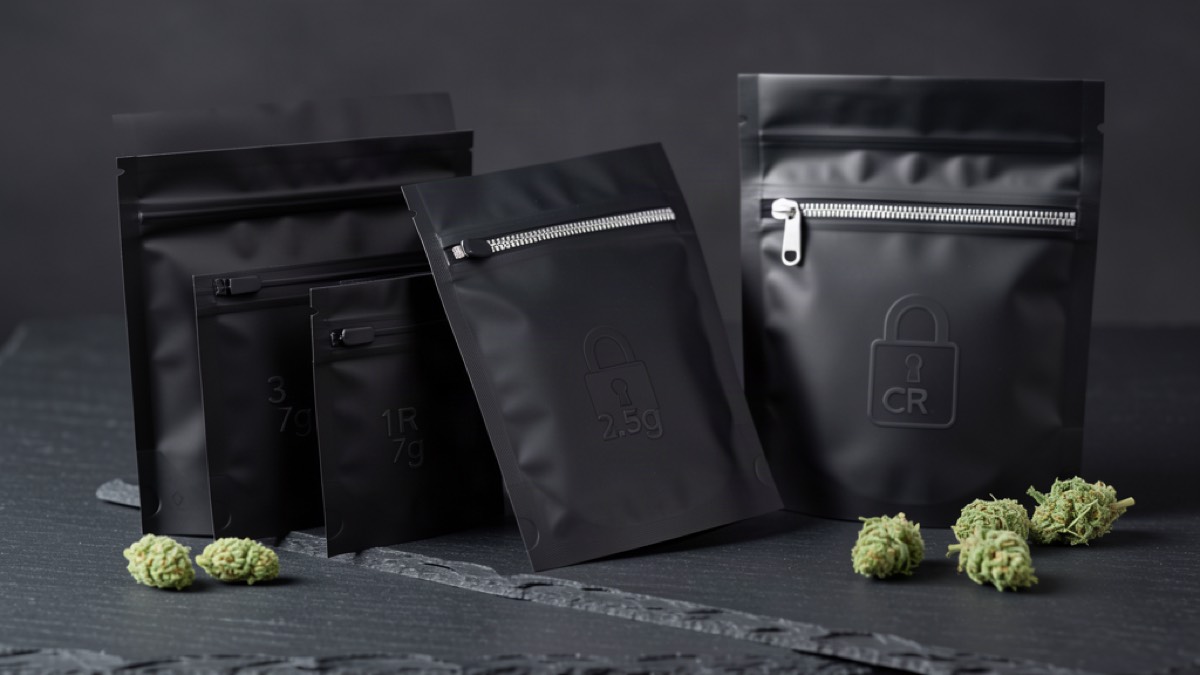
Child-resistant mylar bags require certified CR closures that pass the 16 CFR 1700.20 testing protocol and meet the ASTM D3475 classification standard. The bag's mylar construction provides the barrier; the CR zipper provides the child-resistant function. Without both, you don't have a compliant cannabis package.
I've spent about 20 years working in marketing and media connected to the cannabis industry. I created Growing Exposed on YouTube — we've built an audience of over 130,000 subscribers and 12.5 million views. I've also written for High Times and Stoner Magazine, and I own LG Digital Inc. So when brands ask me whether their mylar bags are actually child-resistant, I've seen enough suppliers stretch the truth to give them a straight answer.
Here's what child-resistant mylar bags actually are, how CR certification works, what the testing protocol involves, and how to make sure you're buying certified bags instead of ones with a generic compliance claim that won't hold up.
What Are Child-Resistant Mylar Bags?
Child-resistant mylar bags are multi-layer barrier pouches — typically PET/AL/LLDPE construction — fitted with a certified CR closure mechanism. The mylar layers block oxygen, moisture, light, and odor. The CR closure prevents children under 5 from opening the bag within the test period defined by CPSC protocol.
The key distinction: "child-resistant" doesn't mean the bag itself is special. The barrier construction is the same whether the bag is CR or not. What makes it child-resistant is the zipper. A standard ziplock on a mylar bag is not child-resistant. A CR zipper requires a two-step or dual-action motion to open — push-and-slide, pinch-and-pull, or a similar mechanism that a young child can't figure out within the test window.
Every legal U.S. state requires child-resistant packaging for cannabis products. That means if you're selling flower, edibles, concentrates, or any THC-containing product in a legal market, your mylar bags need a CR-certified closure. You can see our full selection of child-resistant mylar bags or learn more about child-resistant cannabis packaging to understand the full range of CR options.
What Does "CR" Actually Mean?
CR stands for "child-resistant." It's a specific regulatory designation, not a marketing term. A package can only be called child-resistant if it has been tested and certified under the 16 CFR 1700.20 protocol — the same federal standard that applies to pharmaceutical packaging, household chemicals, and other regulated products.
Here's what CR does not mean:
- Not child-proof. No package is truly child-proof. CR means resistant — it delays access. A determined 4-year-old might eventually get it open. The standard requires that most children can't open it within the test window.
- Not airtight. CR refers to the closure mechanism, not the barrier properties. A CR mylar bag still needs proper multi-layer construction (PET/AL/LLDPE) for oxygen and moisture barrier.
- Not tamper-evident. Tamper-evidence is a separate feature. Some CR mylar bags include a tamper-evident tear strip, but CR and tamper-evident are two different certifications.
- Not universal. CR certification is specific to the exact closure design, bag dimensions, and material thickness. Change any of those and the certification may no longer apply.
The CR designation comes from the Poison Prevention Packaging Act of 1970, which gave the Consumer Product Safety Commission authority to require special packaging for household substances and medications. Cannabis didn't exist as a legal market then, but every legal state has adopted the same standard for cannabis packaging. For a deeper dive, our child-resistant packaging guide covers the full regulatory framework.
The 16 CFR 1700.20 Testing Protocol Explained
The 16 CFR 1700.20 testing protocol is the federal standard for child-resistant packaging certification. It's administered by the CPSC and has been the benchmark since 1970. Here's how it works:
The Child Test
A panel of 50 children aged 42 to 51 months (3.5 to 4.25 years old) is given the package. The age distribution is specific: 30% of children are 42-44 months, 40% are 45-48 months, and 30% are 49-51 months. Each age group is split roughly evenly between boys and girls.
The children are tested in pairs in a familiar setting — their regular nursery school or kindergarten. They're given 5 minutes to try to open the package. If they can't open it, they're shown how it works (a demonstration), then given another 5 minutes.
To pass, at least 85% of the children must fail to open the package. If the results are inconclusive, additional panels of 50 children are tested — up to 200 total — using sequential testing criteria defined in the standard.
The Adult Test
A separate panel of 100 adults aged 50 to 70 years old is given the same package. They must be able to open and properly close it. At least 90% of adults must succeed within 5 minutes for opening and 1 minute for resecuring.
If adults can't open the package easily, it fails. The standard requires that the package be child-resistant but adult-friendly. If grandma can't get into her cannabis flower, the package doesn't pass.
The ASTM D3475 Classification
ASTM D3475 is the voluntary standard that classifies types of child-resistant packages by the type of motion or action required to open them. It doesn't replace 16 CFR 1700.20 — it supplements it by providing a classification system for different CR closure types.
For mylar bags, the relevant ASTM D3475 closure types include:
- Push-and-slide: Two interlocking plastic tracks that require simultaneous pushing and sliding to separate. The most common CR zipper on mylar bags.
- Pinch-and-pull: Two finger tabs that must be pinched together while pulling. Requires coordinated dual-motion that children under 5 typically can't perform.
- Press-and-lift: A press tab that releases a catch, allowing the zipper to slide. Less common but used on some premium CR pouches.
CR Certification vs. Compliance Claims: How to Tell the Difference
This is where most brands get burned. There's a massive difference between a supplier saying "our bags are child-resistant" and a supplier having actual CR certification documentation. Here's how to tell them apart:
| Claim | What It Means | What to Ask For |
|---|---|---|
| "Certified child-resistant" | The specific bag SKU has been tested by an accredited lab and passed 16 CFR 1700.20. | Lab test report with the exact SKU, test date, and lab accreditation number. |
| "Meets CR requirements" | Often means the closure type is designed to meet CR standards, but may not have been tested for this specific bag. | Test report for the exact bag model and size. If they can't produce it, it's not certified. |
| "Child-resistant closure" | The zipper uses a CR mechanism (push-and-slide, pinch-and-pull). But the certification may be for the zipper only, not the full bag assembly. | Test report that includes the full bag — zipper + material + seal — not just the zipper component. |
| "CR compliant" or "complies with 16 CFR 1700.20" | Legally meaningful only if backed by a test report. Without documentation, it's a marketing claim. | CPSC-accepted lab test report. If they dodge this, walk away. |
| "Child-proof" or "tamper-proof" | Nothing. These terms have no regulatory definition. Any supplier using them doesn't understand the regulations. | Nothing — find a different supplier. |
The distinction that trips up most brands: a supplier can have a CR-certified zipper mechanism and use it on a bag that hasn't been tested as a complete assembly. The zipper passes 16 CFR 1700.20 as a component. But the CPSC tests the complete package — zipper, material, heat seal, dimensions. If the bag hasn't been tested as a unit, the certification doesn't transfer.
Always ask for the test report for the exact SKU you're buying. The report should list the bag dimensions, material construction, closure type, test date, lab name, and the number of children and adults tested. If the supplier can't produce it, or shows you a report for a different product, the bag isn't certified for your use case.
Types of CR Closures for Mylar Bags
Not all CR zippers are the same. The closure type affects user experience, cost, and which products it works best for. Here are the main CR closure types you'll find on mylar bags:
Push-and-Slide CR Zipper
The push-and-slide zipper is the most common CR closure on cannabis mylar bags. It uses two interlocking plastic tracks. To open, you push a slider button while sliding it along the track — a dual-motion action that requires finger coordination children under 5 typically don't have.
Pros: Reliable, well-understood, widely tested. Most adults figure it out quickly. Cons: Can be stiff on first use. Some seniors with arthritis find it difficult — which is a real concern given the 90% adult-pass requirement in testing.
At wholesale volumes (10,000+), push-and-slide CR mylar bags run $0.12 to $0.22 per unit for stock bags, and $0.18 to $0.35 for custom-printed. You can see our full range of custom mylar bags for pricing across sizes and finishes.
Pinch-and-Pull CR Zipper
The pinch-and-pull zipper has two finger tabs on the top edge. You squeeze the tabs together while pulling the bag apart. It's simpler mechanically than push-and-slide but requires precise finger placement.
Pros: Easier for adults with limited hand strength. Cleaner visual aesthetic — the mechanism is hidden in the top seal. Cons: Slightly more expensive. Less common, so fewer suppliers offer it.
Single-Use CR Seal (Heat Seal + Tear Strip)
Some CR mylar bags use a heat seal at the top with a tamper-evident tear strip. The heat seal itself is child-resistant because it requires tearing force that young children can't consistently produce. Once opened, the bag has a standard ziplock for resealing — but the CR function is single-use.
This approach is common in edibles packaging where the product is consumed in one or two sessions. The CR certification applies to the initial opening only. For flower that a consumer will open and close multiple times, a reusable CR zipper is more appropriate.
How to Verify Your CR Mylar Bags Are Actually Certified
Here's a step-by-step process for verifying that your supplier's CR claim is legitimate:
- Ask for the test report. The report should be from a CPSC-accepted testing lab. It should list the exact product — dimensions, material, closure type — and show the pass rate for both child and adult panels.
- Check the date. If the test was done more than 2 years ago, ask if the product has been re-tested. The CPSC requires re-testing when significant changes are made to the packaging design. Many suppliers skip re-testing to save costs.
- Match the SKU. The test report should match the exact bag you're buying — same dimensions, same material construction, same closure. A test report for a 3.5g bag doesn't cover a 7g bag, even if they use the same zipper.
- Verify the lab. CPSC-accepted labs are listed on the CPSC website. If the lab isn't recognized, the certification isn't valid. Common accredited labs include UL, SGS, Intertek, and specialized packaging test labs.
- Request a Certificate of Conformity. This is the formal document that certifies the product meets the standard. It should reference the test report number and the specific product.
If your supplier can't produce any of these documents, or gives you a generic "all our bags are CR certified" answer, find a different supplier. The 16 CFR 1700.20 / ASTM D3475 certification category page lists the specific standards and documentation requirements in more detail.
CR Mylar Bag Sizes and Wholesale Pricing
CR mylar bags come in the same size range as standard mylar bags — from 1g up to 1lb. The CR closure adds a small premium over non-CR bags because the zipper mechanism is more complex and the certification process adds cost.
Here's typical wholesale pricing for CR mylar bags at 10,000+ unit volumes:
| Size | Dimensions | Non-CR Price/Unit | CR Price/Unit | CR Premium |
|---|---|---|---|---|
| 1g | 2.5" x 4" | $0.08-$0.12 | $0.12-$0.18 | +50% |
| 3.5g (eighth) | 3" x 5" | $0.10-$0.15 | $0.15-$0.22 | +47% |
| 7g (quarter) | 4" x 6" | $0.12-$0.18 | $0.18-$0.25 | +39% |
| 14g (half oz) | 5" x 8" | $0.15-$0.22 | $0.22-$0.30 | +36% |
| 28g (ounce) | 6" x 9" | $0.18-$0.28 | $0.25-$0.38 | +36% |
| 1lb (bulk) | 8" x 12" | $0.35-$0.50 | $0.45-$0.65 | +30% |
The CR premium shrinks as bag size increases because the zipper cost is fixed — it's the same component whether it's on a 1g bag or a 1lb bag. At larger volumes, the per-unit cost of the CR zipper drops further. Factory-direct suppliers like CropPak typically offer 30-50% lower pricing than broker resellers for equivalent CR-certified products. For more on barrier properties and sizing, check our guide on how to choose cannabis mylar bags.
Do All States Require CR Mylar Bags?
Yes. Every legal U.S. state requires child-resistant packaging for cannabis products sold to consumers. The specific regulations vary — our cannabis packaging requirements by state guide covers the differences — but the CR requirement is universal.
Some states have additional requirements beyond CR:
- California: Requires opaque packaging (no clear windows), universal symbol, and CR certification under 16 CFR 1700.20. Re-testing required when packaging design changes.
- New York: Requires CR packaging, QR code linking to COA, and the OCM universal symbol. Sustainability requirements are being phased in.
- Michigan: Requires CR packaging and METRC track-and-trace UID tags. Labeling must include potency and government warnings.
- Colorado: Requires CR packaging, the state's universal THC diamond symbol, and potency labeling on the primary panel.
For multi-state operators, the practical approach is to use CR mylar bags that meet the strictest common requirements — opaque, CR-certified, with modular labeling for state-specific symbols and warnings. This avoids maintaining separate SKUs per state. The flower packaging category covers the product configurations that work across multiple states.
Common CR Mylar Bag Mistakes (and How to Avoid Them)
After 20 years in cannabis packaging, I've seen the same mistakes over and over. Here are the most common ones and how to avoid them:
1. Assuming "CR zipper" means "CR bag"
A CR zipper is a component. A CR bag is a tested and certified assembly. The zipper might be certified on its own, but the full bag — zipper + material + heat seal — needs its own test report. Always ask for the bag-level certification, not just the zipper spec.
2. Skipping re-testing after design changes
If you change the bag dimensions, material thickness, or even the ink formulation on the exterior, the CPSC requires re-testing. Many suppliers skip this to save $2,000-$5,000 in lab fees. That means their "certified" claim may apply to a product that no longer exists. Always ask for the test date and compare it to the current product spec.
3. Using single-use CR for multi-use products
If you sell flower in 28g bags, customers will open and close that bag multiple times. A single-use CR heat seal is child-resistant on the first opening only. After that, it's a standard ziplock — not CR. For multi-use products, use a reusable CR zipper that maintains its CR function through repeated openings.
4. Ignoring the adult test
The 16 CFR 1700.20 protocol requires that 90% of adults aged 50-70 can open the package. If your CR closure is too stiff, it fails the adult test. This is why push-and-slide zippers are sometimes preferred over pinch-and-pull — they tend to be easier for older adults with limited hand strength.
5. Buying from a supplier who can't produce documentation
If a supplier says "all our bags are CR certified" but can't produce a test report for the specific SKU you're buying, they're not selling certified products. They're selling bags with a CR-style zipper and hoping you won't ask for proof. This is the single most common problem in the cannabis packaging supply chain.
CR Mylar Bags vs. Other CR Packaging Options
Mylar bags aren't the only CR packaging option. Depending on your product, other formats might work better:
| Format | Best For | CR Mechanism | Wholesale Cost/Unit |
|---|---|---|---|
| CR mylar bags | Flower, edibles, concentrates | Push-and-slide or pinch-and-pull zipper | $0.12-$0.38 |
| CR pop-top bottles | Pre-rolls, small flower | Squeeze-and-pop or push-and-turn | $0.08-$0.18 |
| CR glass jars | Premium flower, concentrates | Push-and-turn or squeeze-and-lift lid | $0.20-$0.50 |
| CR exit bags | At-sale packaging for dispensary exit | Push-and-slide zipper (reusable) | $0.15-$0.25 |
Many brands use a combination: CR mylar bags for the product and CR exit bags for the customer's purchase at checkout. Our child-resistant packaging requirements guide covers the full range of CR options and when each format makes sense.
How to Order CR Mylar Bags: A Practical Checklist
Before you place a wholesale order for CR mylar bags, make sure you can check off every item on this list:
- Confirm the closure type. Push-and-slide is the most widely tested and adult-friendly. Pinch-and-pull is cleaner aesthetically but slightly harder for seniors.
- Request the test report for your exact SKU. Match dimensions, material construction (PET/AL/LLDPE), and closure type to the certified product.
- Verify the lab is CPSC-accepted. Check the CPSC's list of accepted testing labs. UL, SGS, and Intertek are common choices.
- Check the test date. If it's older than 2 years, ask about re-testing. If the product has been redesigned since the test, the certification is void.
- Confirm multi-layer construction. The bag should be PET/AL/LLDPE with real aluminum foil — not metallized film (VMPET). Real foil is what makes it both smell-proof and CR-compatible. Our guide on smell-proof mylar bags covers the construction differences in detail.
- Get the right size. Match bag size to product weight with minimal headspace. Excess air degrades flower faster and can affect the CR seal performance.
- Ask about custom printing. If you need branded bags, ask whether custom printing affects the CR certification. It shouldn't — but some suppliers re-test after artwork changes, and some don't.
For brands ready to order, you can request a quote with your specs and we'll match you to the right CR-certified option. All our CR mylar bags come with test documentation on request.
Frequently asked questions
Are all mylar bags child-resistant?
What makes a mylar bag child-resistant?
What is the difference between child-resistant and child-proof?
How much do child-resistant mylar bags cost wholesale?
Do I need to re-test my CR mylar bags if I change the design?