Smell-Proof Mylar Bags: How Odor-Barrier Packaging Works for Cannabis
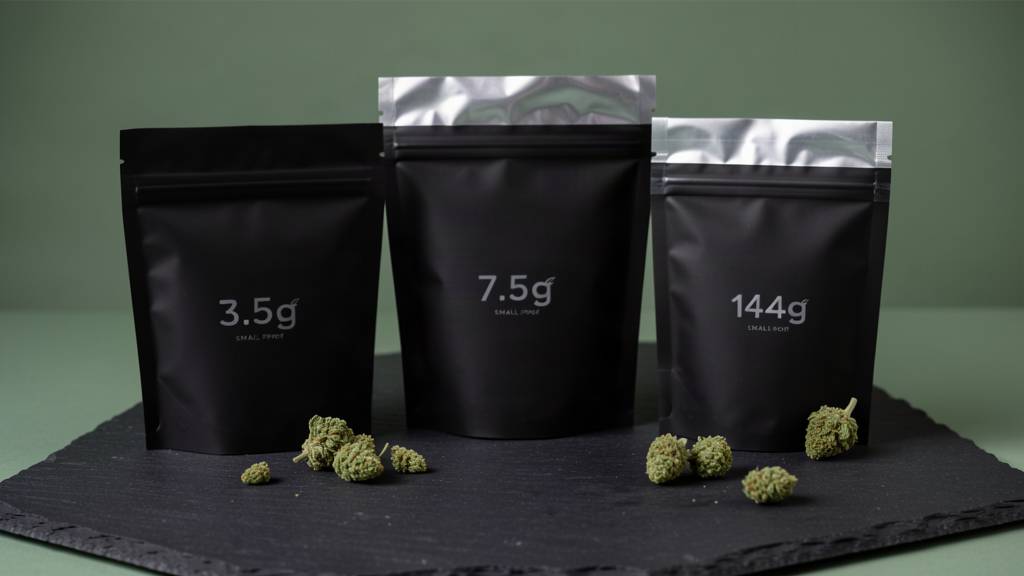
Smell-proof mylar bags block cannabis odors using a multi-layer construction with aluminum foil as the primary barrier. The foil layer prevents terpene molecules from escaping through the packaging, while a heat seal at the top closes the bag so odors can't leak out through the opening. A properly sealed PET/AL/LLDPE mylar bag with a ziplock and heat seal is effectively odor-proof for cannabis flower, concentrates, and edibles.
I've spent about 20 years working in marketing and media connected to the cannabis industry. I created Growing Exposed on YouTube — we've built an audience of over 130,000 subscribers and 12.5 million views. I've also written for High Times and Stoner Magazine, and I own LG Digital Inc. So when brands ask me whether their mylar bags are actually smell-proof, I've seen enough product on dispensary shelves to give them a straight answer.
Here's what smell-proof mylar bags actually do, how the odor barrier works, what to look for when sourcing them, and why some "smell-proof" bags aren't smell-proof at all.
How Do Smell-Proof Mylar Bags Actually Work?
The smell-proof properties of a mylar bag come from its material construction, not from any chemical treatment or special coating. A real cannabis mylar bag is a multi-layer laminate. The standard construction is PET/AL/LLDPE — three layers bonded together under heat and pressure.
Here's what each layer does:
- PET (polyethylene terephthalate, outer layer): The printable exterior. This is where your brand artwork goes. PET provides structural strength, temperature resistance, and a surface that holds ink. It's not the smell-proof layer.
- AL (aluminum foil, middle layer): This is the barrier. Aluminum foil blocks oxygen, moisture, light, and odor molecules. It's the reason a mylar bag is smell-proof. Without a real aluminum foil layer, you don't have a real barrier bag — you have a metallized film that looks like mylar but doesn't perform like it.
- LLDPE (linear low-density polyethylene, inner layer): The food-grade sealant layer. This is what makes the bag heat-sealable and provides the food-safe contact surface for your product.
Odor molecules from cannabis — primarily terpenes like myrcene, limonene, and pinene — are volatile organic compounds (VOCs). These molecules are small enough to pass through materials like polyethylene and polypropylene over time. But they can't pass through aluminum foil. The foil layer in a PET/AL/LLDPE bag creates a physical wall that terpene molecules can't penetrate.
That's the difference between a smell-proof mylar bag and a smell-permeable one. If your supplier uses metallized film — a thin layer of aluminum vapor-deposited onto plastic — instead of real aluminum foil, the barrier is weaker. Metallized film looks similar but the aluminum layer is measured in nanometers, not microns. It blocks some odors but not all. Real aluminum foil in a quality mylar bag is typically 6 to 12 microns thick, and it blocks virtually all odor transmission.
What's the Difference Between Smell-Proof and Odor-Resistant?
There's no official standard for "smell-proof" the way there is for child-resistant packaging under 16 CFR 1700.20. But in practical terms, there's a real difference between smell-proof and odor-resistant packaging:
| Property | Smell-Proof (PET/AL/LLDPE) | Odor-Resistant (Metallized Film) |
|---|---|---|
| Barrier material | Real aluminum foil (6-12 microns) | Metallized film (nanometer-level aluminum) |
| Odor transmission rate | Near zero when properly sealed | Reduced but measurable |
| Oxygen transmission rate (OTR) | 0.5-1.0 cc/m²/day | 5-50 cc/m²/day |
| Moisture vapor transmission rate (MVTR) | 0.5-1.5 g/m²/day | 5-20 g/m²/day |
| Light blocking | 100% | 90-95% |
| Typical wholesale cost (10,000+) | $0.15-$0.45 per bag | $0.05-$0.15 per bag |
| Shelf life for cannabis flower | 12-18 months sealed | 3-6 months |
The difference matters most for flower brands. Terpene loss through a metallized film bag means your customer opens what was sold as a fragrant, terpy eighth and gets something flat and dull. The flower lost its aroma through the packaging. With a real PET/AL/LLDPE bag that's heat-sealed, the terpene profile stays intact for over a year.
Why Odor Control Matters for Cannabis Brands
Cannabis packaging serves two functions when it comes to odor: containment and preservation. Containment means the smell stays inside the bag so customers, postal workers, and roommates don't know what's inside. Preservation means the terpene profile that gives your strain its distinctive aroma and flavor stays in your product, not in the packaging material.
According to a 2020 study published in the journal ACS Omega, cannabis flower can lose up to 30% of its terpene content within 30 days when stored in non-barrier packaging, compared to less than 5% loss in properly sealed aluminum foil barrier bags. That's not a minor difference. That's the difference between a premium product and a mediocre one sitting on the same shelf.
For brands shipping through the mail, odor containment is also a practical concern. The USPS and private carriers don't inspect for cannabis odor specifically, but strong odors can trigger package inspection. A properly sealed smell-proof mylar bag eliminates this risk. I've talked to brand owners who switched from cheap poly bags to proper barrier mylar and immediately saw a drop in seized shipments.
Terpene Retention: What You're Actually Protecting
The compounds that give cannabis its smell are called terpenes. The most common cannabis terpenes — myrcene, limonene, pinene, linalool, and caryophyllene — have boiling points between 156°C and 230°C. At room temperature, they're liquid but volatile, meaning they evaporate slowly. In non-barrier packaging, those evaporated terpenes pass through the bag material and disperse into the air.
Aluminum foil blocks this process completely. The terpene molecules hit the foil layer and can't pass through. They stay inside the bag, which means your flower stays aromatic and your customer gets the product you intended them to get.
How to Seal Smell-Proof Mylar Bags Properly
Even the best mylar bag won't be smell-proof if it's not sealed correctly. The seal is where most odor leaks happen. There are three common seal types for cannabis mylar bags:
Ziplock + Heat Seal (Best for Retail)
The ziplock closure provides a resealable mechanism for customers after opening, while the heat seal above the ziplock provides the actual smell-proof barrier for retail display. This is the standard approach for smell-proof mylar bags sold in dispensaries. The heat seal fuses the LLDPE inner layers together, creating a continuous barrier that odors can't penetrate. The customer snips the heat seal to open, then uses the ziplock for resealing.
Heat Seal Only (Best for Wholesale)
A heat seal without a ziplock is the most secure option. Once sealed, the bag is completely odor-proof until cut open. This is common for wholesale flower packaging and bulk product. The downside is that the bag can't be resealed by the customer — once it's open, it's open.
Ziplock Only (Not Smell-Proof)
A ziplock without a heat seal is not smell-proof. Ziplock closures have a measurable gap between the interlocking ridges that allows terpene molecules to escape. If your supplier sells "smell-proof" bags with only a ziplock closure, they're not smell-proof. They're convenient, but they won't contain odor.
The fix is simple: heat seal the top of the bag above the ziplock before it goes to retail. A 2-second heat seal at 170°C (338°F) on a standard impulse sealer creates a permanent barrier. If you're packaging at any real volume, an automatic continuous band sealer is faster and produces more consistent seals.
What Sizes Do Smell-Proof Mylar Bags Come In?
Smell-proof mylar bags come in a range of sizes matched to common cannabis product weights. Here's the breakdown of standard sizes and what they're used for:
| Size | Dimensions (typical) | Best For | Typical Wholesale Cost |
|---|---|---|---|
| 1g | 2.5" x 4" | Single-gram flower, pre-ground | $0.08-$0.12 |
| 3.5g (eighth) | 3" x 5" | Eighth of flower, most common retail size | $0.12-$0.18 |
| 7g (quarter) | 4" x 6" | Quarter of flower | $0.15-$0.22 |
| 14g (half ounce) | 5" x 7" | Half ounce of flower | $0.18-$0.28 |
| 28g (ounce) | 6" x 9" | Full ounce of flower | $0.22-$0.35 |
| 1lb (pound) | 8" x 12" | Bulk flower, wholesale | $0.35-$0.50 |
For concentrates and edibles, smaller sizes — 1g to 7g — are standard. Flower brands typically use 3.5g bags for retail eighths, which is the most common single-unit sale in dispensaries. If you're packaging flower, match the bag size to the product weight with minimal headspace. Excess air inside the bag degrades the flower faster and reduces the seal's effectiveness.
You can browse our full selection of custom mylar bags in all these sizes, or start with our cannabis packaging 101 guide if you're new to sourcing packaging.
Are Smell-Proof Mylar Bags Required to Be Child-Resistant?
Yes — in every legal U.S. state, cannabis packaging must be child-resistant under 16 CFR 1700.20. A smell-proof mylar bag by itself isn't automatically child-resistant. The CR certification comes from the closure mechanism, not the bag material.
Here's how it works: a standard mylar bag with a ziplock and heat seal is not child-resistant because a child can tear the bag open. To make it CR-compliant, you need either:
- A CR-certified zipper: Some mylar bags use a child-resistant zipper mechanism that requires a two-step process to open (press down and slide). These have been tested under the ASTM D3475 standard and certified under 16 CFR 1700.20. The supplier should have a test certificate for the exact SKU.
- A CR outer container: Many brands use a non-CR mylar bag inside a CR-certified outer container — like a pop-top bottle or a rigid CR-certified container. The outer container provides the child resistance; the mylar bag provides the odor barrier and branding.
The most common approach is a CR zipper bag for smaller sizes (3.5g and under) and a CR tube or container for larger sizes. Always ask your supplier for the actual 16 CFR 1700.20 test certificate for the specific SKU you're ordering. "Certified" without documentation means nothing. We cover this in detail in our guide to child-resistant packaging requirements.
How to Tell If Your Mylar Bags Are Actually Smell-Proof
If you're already buying mylar bags and want to verify they're genuinely smell-proof, here's what to check:
1. Ask for the Layer Construction Spec
Your supplier should be able to tell you the exact layer construction of your bags. If they say "PET/AL/LLDPE" or "PET/Aluminum/PE," you're looking at a real foil barrier bag. If they say "metallized film" or "VMPET/PE," that's a metallized film bag — weaker barrier, lower cost, not truly smell-proof for long-term storage.
2. Check the Thickness
Real smell-proof mylar bags for cannabis should be 4 to 5 mil thick minimum. Thinner bags may use real foil but with less material overall, which means the seal is weaker and the bag is more prone to puncture. Ask for the total thickness and the foil thickness separately.
3. Do the Smell Test
Put a gram of aromatic flower in the bag, heat seal it, and leave it on the counter for 24 hours. If you can smell it through the bag, it's not smell-proof. A properly constructed PET/AL/LLDPE bag that's heat-sealed should have zero detectable odor after 24 hours. We've tested our smell-proof mylar bags this way with everything from LSD-heavy strains to fruity hybrids — zero odor transmission when properly sealed.
4. Inspect the Seal
A proper heat seal should be a continuous, uniform line with no gaps, bubbles, or wrinkles. If the seal is uneven or has cold spots, terpenes will escape through the weak points. Run your finger along the seal — it should feel flat and consistent the entire length.
Smell-Proof Mylar Bags vs Other Odor-Control Options
Mylar bags aren't the only option for smell-proof cannabis packaging. Here's how they compare to other common solutions:
| Package Type | Odor Control | Terpene Preservation | Cost (per unit) | Best For |
|---|---|---|---|---|
| PET/AL/LLDPE mylar bags | Excellent (sealed) | Excellent | $0.15-$0.45 | Retail flower, concentrates, edibles |
| Glass jars with rubber gasket | Excellent (sealed) | Excellent | $0.50-$2.00 | Premium flower, long-term storage |
| Plastic pop-top tubes | Good | Good | $0.08-$0.15 | Pre-rolls, small flower quantities |
| Metallized film bags | Fair | Fair | $0.05-$0.15 | Budget products, short-term |
| Kraft paper bags | Poor | Poor | $0.03-$0.08 | Not recommended for cannabis |
For most cannabis brands, mylar bags are the best balance of cost, performance, and branding space. Glass jars offer better long-term preservation but cost 3-5x more per unit and don't offer the same custom printing surface. Pop-top tubes work well for pre-rolls — we compare the two in our guide to pre-roll tubes vs pre-roll boxes. For flower, though, mylar is the industry standard for a reason.
How Much Do Smell-Proof Mylar Bags Cost Wholesale?
Pricing for smell-proof mylar bags depends on size, order volume, customization, and whether you're buying factory-direct or through a broker reseller. Here's what you should expect at wholesale volumes:
- Stock bags (no custom print): $0.08-$0.18 per unit at 10,000+ units
- 1-color custom print: $0.15-$0.25 per unit at 10,000+ units
- Full-color custom print: $0.25-$0.45 per unit at 10,000+ units
- Premium finishes (matte, soft-touch, spot UV): Add $0.05-$0.15 per unit
- CR-certified zipper: Add $0.03-$0.08 per unit
At 50,000+ units, prices drop 20-30% across the board. The key cost difference is factory-direct vs. broker. Broker resellers typically mark up 30-50% over factory-direct pricing for the exact same product. If you're buying through a reseller, you're paying for the convenience of not dealing directly with a factory. At CropPak, we sell factory-direct, which means you're getting the same product without the markup.
For brands ordering custom-printed bags, the minimum order quantity is usually 5,000 to 10,000 units per size. If you need multiple sizes, each size has its own MOQ because the tooling and setup costs are per-size. We break down MOQ math in our cannabis packaging MOQ guide.
Common Mistakes When Buying Smell-Proof Mylar Bags
Buying Based on Price Alone
The cheapest mylar bag is almost always a metallized film bag, not a real foil bag. You save $0.05-$0.10 per unit and lose the actual barrier properties. Your flower degrades faster, your terpene profile drops, and your customer notices. That $0.05 savings costs you a returning customer.
Assuming "Mylar" Means "Barrier"
"Mylar" is a brand name for BoPET (biaxially-oriented polyethylene terephthalate) film. It's the outer layer of the bag, not the barrier. The barrier is the aluminum foil layer. A bag can be made of mylar and still not be smell-proof if it doesn't have a real foil layer. Always check the full construction spec, not just the material name.
Skipping the Heat Seal
Some brands ship product in ziplock-only mylar bags without heat sealing the top. The ziplock reduces odor but doesn't eliminate it. If you're selling through dispensaries, heat seal every bag. It takes 2 seconds per bag on an impulse sealer and it's the difference between "smell-resistant" and "smell-proof."
Not Verifying CR Certification
If your supplier says "child-resistant" but can't produce a 16 CFR 1700.20 test certificate for your specific SKU, they're not selling you a certified product. We've seen this happen repeatedly — suppliers use a generic certification from a different product and apply it to everything they sell. Get the certificate with the matching product number. The CPSC requires specific testing for each unique packaging design.
FAQ: Smell-Proof Mylar Bags
Are all mylar bags smell-proof?
No. Only mylar bags with a real aluminum foil layer (PET/AL/LLDPE construction) are genuinely smell-proof when properly sealed. Bags made with metallized film (VMPET) instead of real foil have a weaker barrier that reduces odors but doesn't eliminate them. Always confirm the layer construction with your supplier before ordering. If they can't specify "PET/AL/LLDPE with aluminum foil," you're not getting a true barrier bag.
Can a dog smell through a mylar bag?
A properly sealed PET/AL/LLDPE mylar bag with a heat seal is essentially odor-proof to humans. However, trained detection dogs can detect residual odors on the outside of the bag from handling, and the scent can transfer to the bag's exterior during the filling process. Mylar bags are designed for retail odor containment and terpene preservation, not for evading law enforcement detection. Don't rely on packaging to fool a trained K9 unit.
Do smell-proof mylar bags need to be child-resistant?
Yes. Every legal U.S. state requires child-resistant packaging for cannabis products under 16 CFR 1700.20. A mylar bag's smell-proof properties come from the foil barrier; the child-resistant properties come from the closure mechanism. You need either a CR-certified zipper on the bag or a CR-certified outer container. Ask your supplier for the actual lab test certificate for your specific SKU before ordering.
How long do smell-proof mylar bags keep cannabis fresh?
A properly sealed PET/AL/LLDPE mylar bag with a heat seal keeps cannabis flower fresh for 12-18 months. The aluminum foil blocks oxygen, moisture, and light, which are the three main factors in cannabis degradation. In non-barrier packaging like poly bags or metallized film, flower degrades in 3-6 months. Store sealed mylar bags in a cool, dark place for maximum shelf life.
What size mylar bag do I need for an eighth of flower?
A 3.5g (eighth) mylar bag is typically 3 inches by 5 inches. This size holds 3.5 grams of flower with minimal headspace, which is what you want — excess air inside the bag degrades the flower faster. Match the bag size to the product weight as closely as possible. Standard sizes run from 1g (2.5" x 4") for single-gram units up to 1lb (8" x 12") for bulk wholesale packaging.
Frequently asked questions
Are all mylar bags smell-proof?
Can a dog smell through a mylar bag?
Do smell-proof mylar bags need to be child-resistant?
How long do smell-proof mylar bags keep cannabis fresh?
What size mylar bag do I need for an eighth of flower?