Cannabis Oil Packaging: Bottles, Syringes & Containers Explained
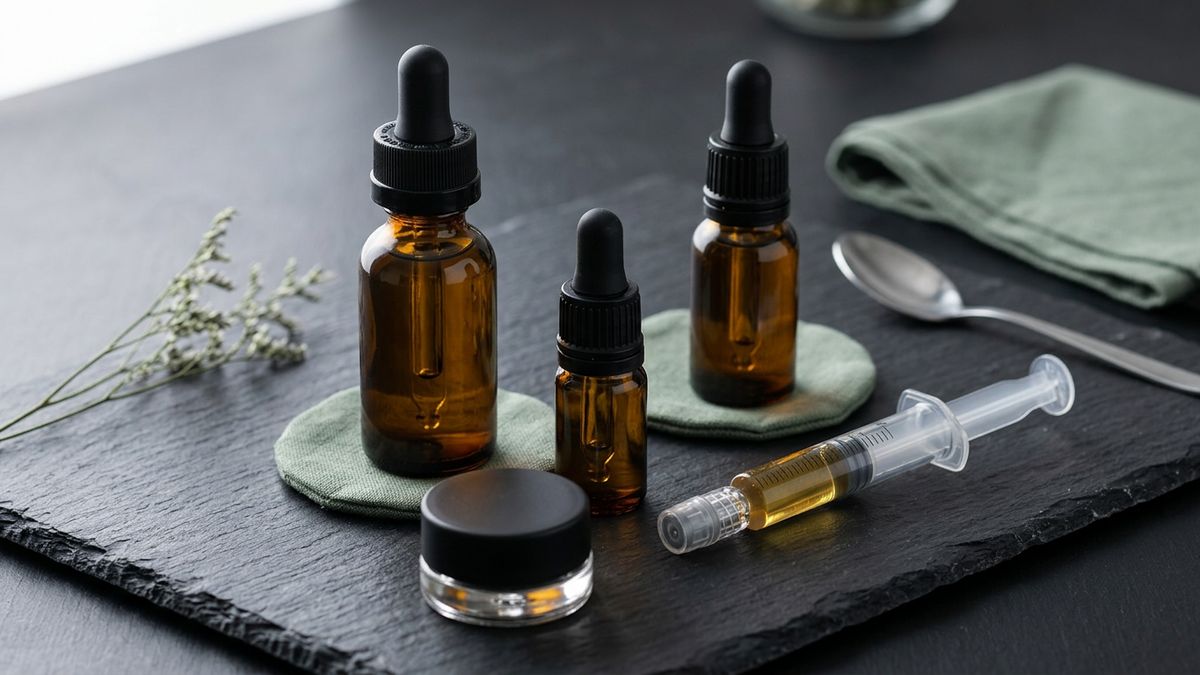
Cannabis oil packaging includes glass oral syringes, dropper bottles, and concentrate containers designed to hold cannabis extracts, tinctures, and distillate oil. Every legal state requires cannabis oil packaging to be child-resistant under 16 CFR 1700.20, and most require tamper-evident seals and opaque materials. The right packaging keeps your oil fresh, passes compliance checks, and doesn't leak all over a customer's pocket.
I've spent about 20 years working in marketing and media connected to the cannabis industry. I created Growing Exposed on YouTube — we've built an audience of over 130,000 subscribers and 12.5 million views. I've also written for High Times and Stoner Magazine, and I own LG Digital Inc. So when concentrate brands ask me about oil packaging, I've seen enough product launches — and enough leaky syringes — to give them a straight answer.
Here's everything you need to know about cannabis oil packaging: the three main container types, sizes, materials, CR compliance, labeling, and what you should actually be paying at wholesale volumes.
What Is Cannabis Oil Packaging?
Cannabis oil packaging is the category of containers, bottles, syringes, and jars designed specifically to hold cannabis oil products — distillate, FECO, RSO, tinctures, and concentrated extracts. Unlike dab containers designed for waxes and shatters, oil packaging handles liquid and semi-liquid products that flow, drip, and leak if the container isn't designed correctly.
The three primary cannabis oil packaging formats are:
- Glass oral syringes: The standard for distillate, RSO, and FECO. Measured markings let the consumer dose accurately. Typically 1ml, 5ml, and 10ml sizes.
- Dropper bottles: The standard for tinctures and sublingual oils. Glass bottle with a pipette dropper cap. Typically 15ml, 30ml, and 60ml sizes.
- Concentrate jars and containers: For thicker oils and semi-solid concentrates. Same format as concentrate packaging — small glass or plastic jars with CR lids.
Each format serves a different product type, and using the wrong one means leaks, inaccurate dosing, or a compliance failure. Let's break them down.
Glass Oral Syringes: The Standard for Distillate and RSO
Glass oral syringes are the most common cannabis oil packaging format for distillate, FECO, and Rick Simpson Oil (RSO). They're glass cylinders with a plunger and a tip — either luer-lock or luer-slip — that lets the consumer push out precise amounts of oil.
The key advantage of a glass syringe is dosing accuracy. The barrel has measurement markings printed or etched along the side, so a consumer can push out exactly 0.1ml or 0.25ml at a time. For medical patients dosing RSO or FECO, that precision matters. A dropper bottle can't match it.
Common Glass Syringe Sizes
Here are the standard sizes for cannabis oil syringes:
- 1ml syringe: For high-potency distillate and RSO. Holds 1 gram of oil. The most common size for dispensary retail.
- 5ml syringe: For FECO and larger distillate quantities. Holds about 5 grams depending on oil density.
- 10ml syringe: For bulk oil and wholesale. Less common in retail but used by some brands for value-sized distillate.
The syringe itself isn't child-resistant. The CR function comes from the outer packaging — either a CR-certified tube or box that holds the syringe, or a CR cap that covers the syringe tip. You need both the syringe and the CR outer container to sell legally in any dispensary.
Dropper Bottles: The Standard for Tinctures and Sublingual Oils
Dropper bottles are the go-to packaging for cannabis tinctures and sublingual oils. They're glass bottles — usually amber or cobalt blue to block UV light — fitted with a glass pipette dropper cap. The consumer squeezes the rubber bulb to draw oil into the pipette, then releases it drop by drop under the tongue.
Amber glass is the standard because it blocks UV light, which degrades cannabinoids and terpenes over time. Cobalt blue offers similar protection and looks more premium. Clear glass is cheaper but offers no UV protection — avoid it for oil products unless the bottle will be stored in a secondary opaque container.
Common Dropper Bottle Sizes
Here are the standard dropper bottle sizes for cannabis tinctures:
- 15ml (1/2 oz): The most common tincture size. Holds about 30 doses at 0.5ml per dose. Retail price point typically $35-$65.
- 30ml (1 oz): The second most common. Holds about 60 doses at 0.5ml per dose. Retail typically $55-$95.
- 60ml (2 oz): Value size for high-volume users. Holds about 120 doses. Retail typically $90-$140.
Dropper bottles are not child-resistant on their own. The CR requirement is met either by a CR dropper cap — which uses a push-and-turn mechanism similar to a pharmaceutical bottle — or by packaging the dropper bottle inside a CR-certified outer container. The CPSC testing protocol under 16 CFR 1700.20 applies to whichever component provides the child-resistant function.
Cannabis Oil Packaging Materials: Glass vs Plastic
The material you choose for your cannabis oil packaging affects product quality, shelf life, and compliance. Here's how glass and plastic compare for oil products:
| Feature | Glass | Plastic (PP/HDPE) |
|---|---|---|
| UV protection | Amber/b cobalt block UV | Limited; clear by default |
| Chemical resistance | Inert; no leaching | Can interact with terpenes |
| Terpene retention | Excellent; airtight seal | Poor; terpenes can permeate |
| Weight | Heavier; higher shipping cost | Light; cheaper to ship |
| Cost per unit (10K vol) | $0.15-$0.35 | $0.05-$0.15 |
| Shelf appeal | Premium; consumers trust glass | Budget; less premium feel |
| CR certification available | Yes (CR dropper caps, CR jars) | Yes (CR pop-top bottles) |
For most cannabis oil brands, glass is the right call. Terpenes — the aromatic compounds that give cannabis its smell and contribute to entourage effects — are volatile and can interact with plastic over time. Glass is chemically inert, so your oil tastes the same on day 60 as it did on day 1. Plastic is cheaper, but the cost savings don't offset the quality degradation for a premium oil product.
Child-Resistant Compliance for Cannabis Oil Packaging
Every legal U.S. state requires cannabis oil packaging to be child-resistant. The federal standard is 16 CFR 1700.20, which defines the testing protocol: 200 children aged 42-51 months attempt to open the package within 5 minutes, and at least 85% must fail. A separate panel of 100 adults aged 50-70 must be able to open and close the package, with 90% succeeding.
For cannabis oil specifically, the CR function comes from one of three places:
- CR dropper caps: Push-and-turn caps that fit standard glass dropper bottles. The same mechanism used on prescription pill bottles. Adds $0.03-$0.08 per unit.
- CR syringe caps: A push-and-turn cap that covers the syringe tip. The syringe itself isn't CR — the cap provides the child-resistant function. Adds $0.05-$0.10 per unit.
- CR outer containers: A push-and-turn tube or box that holds the syringe or bottle. This is the most common approach because it separates the compliance function from the product container. Adds $0.08-$0.15 per unit.
The key distinction: "child-resistant" doesn't mean "child-proof." No package is truly child-proof. CR means the package delays access — most children under 5 can't open it within the test period. The CPSC uses the term "child-resistant" because it's accurate. Any supplier using the term "child-proof" doesn't understand the regulation. I covered this in more detail in our CR certification guide for mylar bags — the same logic applies to oil packaging.
Tamper-Evident Seals for Cannabis Oil
Most legal states require tamper-evident packaging alongside CR certification. For cannabis oil, the tamper-evident function typically comes from one of three mechanisms:
- Induction seals: A foil liner inside the cap that bonds to the bottle rim under electromagnetic heat. When the consumer twists the cap, the foil breaks and stays on the bottle, proving it was sealed. Adds $0.02-$0.05 per unit.
- Shrink bands: A thin plastic sleeve around the cap and neck that shrinks under heat. To open, the consumer tears the perforated band. Once torn, it can't be reapplied without visible damage. Adds $0.01-$0.03 per unit.
- Tear-strip labels: A label with a perforated tear strip that must be removed to open the package. Common on syringe packaging. Adds $0.03-$0.08 per unit.
We cover tamper-evident requirements in detail in our tamper-evident packaging guide, including which states require it and how to verify your seals meet the standard.
Cannabis Oil Packaging Sizes: A Comparison
Choosing the right size depends on your product type, dose volume, and retail price point. Here's how the main sizes compare:
| Container Type | Common Sizes | Best For | Wholesale Cost (10K) |
|---|---|---|---|
| Glass oral syringe | 1ml, 5ml, 10ml | Distillate, RSO, FECO | $0.12-$0.28 |
| Amber dropper bottle | 15ml, 30ml, 60ml | Tinctures, sublinguals | $0.18-$0.35 |
| Concentrate jar (glass) | 5ml, 7ml, 9ml | Thick oils, semi-solids | $0.20-$0.50 |
| Plastic dropper bottle | 15ml, 30ml | Budget tinctures | $0.05-$0.15 |
| CR syringe tube | 1ml, 5ml | CR outer for syringes | $0.08-$0.15 |
Match the container size to your product volume with minimal headspace. Excess air inside a tincture bottle degrades the oil faster because oxygen interacts with cannabinoids. A 30ml bottle filled with 30ml of oil will stay fresh longer than the same bottle filled with 25ml.
How to Label Cannabis Oil Packaging
Cannabis oil packaging requires the same label elements as other cannabis products, plus a few oil-specific requirements. The average state requires about 16.7 separate label elements, with some requiring up to 26. Here's what most states require on cannabis oil labels:
- THC and CBD content in milligrams
- Serving size and servings per container
- Manufacturer name and contact information
- Batch or lot number
- Date of packaging and expiration date
- Universal cannabis warning symbol (state-specific)
- Government warning statement
- Net weight or volume
- Ingredients list (for tinctures with carrier oils)
- "Keep out of reach of children" warning
For oil products specifically, the serving size and total milligrams matter because consumers dose in controlled amounts. A 30ml tincture with 1000mg THC needs a label that clearly states "33mg THC per 1ml serving" so the consumer can calculate their dose. We cover labeling requirements in detail in our cannabis labels and compliance stickers guide, including how to use compliance stickers for multi-state compliance.
Wholesale Pricing for Cannabis Oil Packaging
At wholesale volumes — 10,000 units or more — cannabis oil packaging costs depend on the container type, material, size, and whether it's CR-certified and tamper-evident. Here's what you should actually be paying:
- Stock glass oral syringes: $0.12-$0.28 per unit at 10K volume. Custom-printed with 1-color pad print: $0.18-$0.35.
- Stock amber dropper bottles: $0.18-$0.35 per unit. With CR dropper cap: $0.22-$0.45. With induction seal: add $0.02-$0.05.
- Stock glass concentrate jars: $0.20-$0.50 per unit. CR lid adds $0.05-$0.10.
- Custom-printed dropper bottles: $0.25-$0.50 per unit with full-color CMYK label and CR cap.
- CR syringe tubes: $0.08-$0.15 per unit for the outer CR container.
Factory-direct suppliers like CropPak typically offer 30-50% lower pricing than broker resellers for equivalent products. The difference is volume — a broker buys from a factory and marks up, while a factory-direct supplier sells at the factory price. On a 10,000-unit order of CR dropper bottles at $0.35 per unit, that's $3,500 — and a broker would charge $5,000-$6,000 for the same order.
How to Choose Cannabis Oil Packaging: A Checklist
Here's a practical checklist for choosing the right cannabis oil packaging for your brand:
- Identify your product type. Liquid oil (distillate, tincture) needs a syringe or dropper. Semi-solid (RSO, FECO) may need a jar or a wide-bore syringe.
- Choose your material. Glass for premium products and terpene retention. Plastic for budget tinctures where cost matters more than shelf life.
- Match the size to your volume. 1ml syringes for distillate. 15ml-30ml droppers for tinctures. Fill the container with minimal headspace.
- Specify CR compliance. Decide whether your CR function comes from a CR cap or a CR outer container. Get the lab test certificate for the exact SKU.
- Add tamper-evident. Induction seal, shrink band, or tear-strip label. Check your state's requirement — most require it.
- Design your label. Compliance zone first (potency, warnings, batch number), brand zone second. Use compliance stickers for multi-state flexibility.
- Get a factory-direct quote. Compare factory-direct vs broker pricing on the same spec. The difference should be 30-50%.
If you're sourcing vape cartridge packaging alongside oil containers, bundle the order — most suppliers will offer better per-unit pricing when you combine product lines in a single run.
Common Cannabis Oil Packaging Mistakes
I've seen the same mistakes repeat across brands. Here are the ones that cost the most money:
- Using plastic for terpene-rich oils. Terpenes interact with plastic over time, degrading flavor and potency. Use glass for any oil with a meaningful terpene profile.
- Skipping the CR outer container. A glass syringe by itself isn't child-resistant. You need the CR tube or cap. Without it, you can't legally sell in any dispensary.
- Overfilling dropper bottles. Excess air degrades oil. Fill to the rated volume, not above or below.
- Using clear glass for UV-sensitive products. UV light degrades cannabinoids. Use amber or cobalt glass unless the bottle is stored in a secondary opaque container.
- Assuming "food-grade" means "CR-certified." Food-grade means the material is safe for contact with food products. CR-certified means the closure passes 16 CFR 1700.20 testing. They're different things. You need both.
Frequently Asked Questions
What packaging is used for cannabis oil?
Glass oral syringes are the standard for distillate, RSO, and FECO because they allow precise dosing with measurement markings. Dropper bottles (15ml, 30ml, 60ml) are the standard for tinctures and sublingual oils. Concentrate jars work for thicker oils and semi-solid extracts. All cannabis oil packaging must be child-resistant under 16 CFR 1700.20, and most legal states also require tamper-evident seals. The container material should be glass for terpene-rich products because plastic interacts with terpenes over time and degrades flavor.
Are cannabis oil syringes child-resistant?
The glass syringe itself is not child-resistant. The CR function comes from the outer packaging — either a CR-certified tube that holds the syringe or a CR cap that covers the syringe tip. You need both the syringe and the CR outer component to sell legally in any dispensary. The CR mechanism must pass 16 CFR 1700.20 testing, which requires 200 children aged 42-51 months to attempt opening with at least 85% failing. Ask your supplier for the actual lab test certificate for the specific SKU you're ordering.
What size dropper bottle do I need for a cannabis tincture?
The most common sizes are 15ml (about 30 doses at 0.5ml per dose), 30ml (about 60 doses), and 60ml (about 120 doses). Match the bottle size to your retail price point and target dose volume. Fill the bottle with minimal headspace — excess air degrades the oil faster because oxygen interacts with cannabinoids. Use amber or cobalt glass to block UV light, which degrades cannabinoids and terpenes. A 30ml bottle is the most common tincture size because it balances dose count with a reasonable retail price point of $55-$95.
How much does cannabis oil packaging cost wholesale?
At 10,000 units, stock glass oral syringes run $0.12-$0.28 per unit, amber dropper bottles $0.18-$0.35, and glass concentrate jars $0.20-$0.50. Adding a CR dropper cap costs $0.03-$0.08 per unit, an induction seal adds $0.02-$0.05, and a CR syringe tube adds $0.08-$0.15. Custom-printed dropper bottles with full-color labels and CR caps run $0.25-$0.50 per unit. Factory-direct suppliers like CropPak typically offer 30-50% lower pricing than broker resellers for equivalent products.
Does cannabis oil packaging need to be opaque?
It depends on your state. California and several other states require opaque packaging for all cannabis products, including oils. Other states allow transparent or amber glass as long as the product is child-resistant and tamper-evident. Amber and cobalt glass provide UV protection without being fully opaque, which satisfies some but not all state requirements. If you sell in multiple states, design your packaging to meet the strictest requirements — opaque, tamper-evident, and child-resistant. Check your specific state's cannabis packaging regulations before ordering.
Frequently asked questions
What packaging is used for cannabis oil?
Are cannabis oil syringes child-resistant?
What size dropper bottle do I need for a cannabis tincture?
How much does cannabis oil packaging cost wholesale?
Does cannabis oil packaging need to be opaque?