Cannabis Packaging 101: Beginner Guide for New Brands
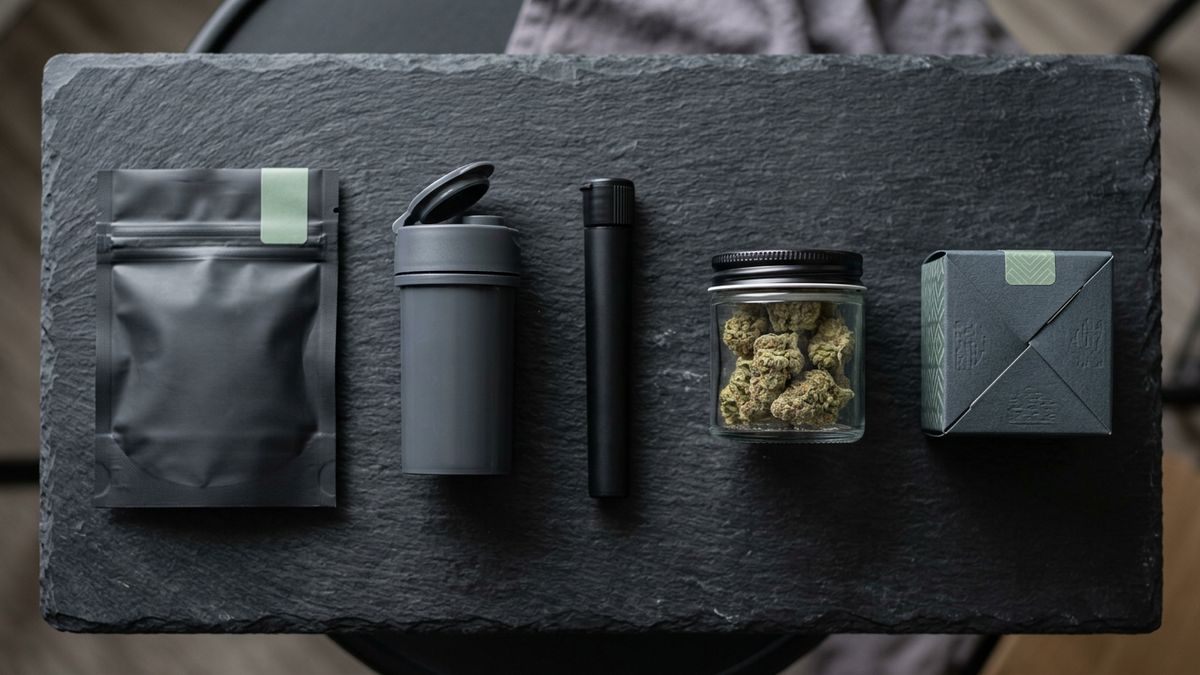
Cannabis packaging 101 covers the four main packaging types every brand needs to know: mylar bags for flower, pre-roll tubes for joints, dab containers for concentrates, and boxes for vape cartridges. Every legal state requires child-resistant packaging tested under 16 CFR 1700.20, and most require tamper-evident seals, opaque materials, and state-specific labeling. Get any of that wrong and you're looking at failed compliance checks, product recalls, or a suspended license.
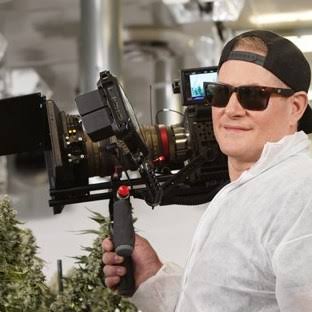
I've spent about 20 years working in marketing and media connected to the cannabis industry. I created Growing Exposed on YouTube — we've built an audience of over 130,000 subscribers and 12.5 million views. I've also written for High Times and Stoner Magazine, and I own LG Digital Inc. So when new brands come to me asking where to start with packaging, I've seen enough product launches — and enough packaging disasters — to give them a straight answer.
Here's a beginner's guide to cannabis packaging that covers the four main types, compliance requirements, materials, labeling, sourcing, and what you should actually be paying at wholesale. No jargon. No fluff. Just what you need to know to get it right the first time.
What Is Cannabis Packaging and Why Is It Different?
Cannabis packaging isn't like packaging for snacks or cosmetics. It's regulated like pharmaceutical packaging in some ways — child-resistant closures, tamper-evident seals, strict labeling — but it's also consumer-facing, so it has to look good on a dispensary shelf. That combination of regulatory compliance and brand presentation is what makes cannabis packaging uniquely complicated.
The regulatory framework comes from two layers. Federal standards like the CPSC's Consumer Product Safety Commission protocol set the baseline for child-resistant packaging. Then each state writes its own cannabis-specific rules on top of that — covering labeling, universal symbols, tracking, and sustainability. The result is a patchwork where a package that's compliant in Oregon might not work in New York.
If you're a new brand, the good news is that the fundamentals are the same everywhere: child-resistant, opaque, properly labeled, and tamper-evident. Get those four things right and you're most of the way there. The details vary by state, which is why we put together a full state-by-state compliance guide that breaks down the specifics.
The 4 Main Types of Cannabis Packaging
Most cannabis products fall into one of four packaging categories. Each has its own material requirements, compliance considerations, and price points. Here's how they compare:
| Product Type | Packaging Format | Common Sizes | Material | CR Required? | Wholesale Cost |
|---|---|---|---|---|---|
| Flower (bud) | Mylar bags | 1g, 3.5g, 7g, 14g, 28g, 1lb | PET/AL/LLDPE multi-layer | Yes | $0.08–$0.45/unit |
| Pre-rolls (joints) | Tubes or boxes | 78mm–116mm tubes | Polypropylene plastic or paperboard | Yes | $0.08–$0.40/unit |
| Concentrates (wax, shatter, live resin) | Dab containers / concentrate jars | 2ml–100ml | Silicone, glass, or plastic | Yes | $0.05–$0.60/unit |
| Vape cartridges & disposables | Vape cartridge boxes | 510 cart & disposable sizes | Paperboard with CR insert | Yes | $0.25–$0.70/unit |
Every one of those formats requires child-resistant packaging. There's no product type in the cannabis category that gets a pass on CR requirements. Let's break down each one.
Flower Packaging: Mylar Bags
Flower is the most common cannabis product, and mylar bags are the standard packaging. A proper cannabis mylar bag is a multi-layer laminate — PET/AL/LLDPE — with an aluminum foil layer that blocks oxygen, moisture, light, and odor. That's what keeps your flower fresh on the shelf instead of degrading into dry dust.
Sizes run from 1g bags for single-gram retail up to 1lb bags for bulk wholesale. The 3.5g (eighth) is the highest-volume retail size by a wide margin. If you're launching a flower brand, start by getting your 3.5g and 7g bags right — those are your bread and butter. You can read our full guide on how to choose cannabis mylar bags for a deeper dive on construction, finishes, and sizing.
Pre-Roll Packaging: Tubes and Boxes
Pre-rolls are the second most popular cannabis product category, and they use two packaging formats: pre-roll tubes and custom pre-roll boxes. Tubes are cylindrical plastic containers that hold a single joint — they're cheap, functional, and available in CR-certified screw-top and pop-top closures. Boxes are paperboard cartons that can hold singles or multi-packs and give you more surface area for branding.
Most brands use both: a CR tube inside a branded box. That way the tube handles compliance and the box handles presentation. Tube sizes range from 78mm for mini pre-rolls up to 116mm for king-size. You need to match the tube length to your pre-roll length — don't just order "1-gram tubes" because 1-gram joints come in different lengths depending on the cone paper.
Concentrate Packaging: Dab Containers
Concentrates — wax, shatter, live resin, budder, crumble, diamonds — need containers that won't let the product stick to the sides or degrade the terpene profile. That's where dab containers and concentrate jars come in. Silicone is the most popular material because it's non-stick, which means your customer can peel the concentrate off cleanly instead of scraping it off the sides of a glass jar.
For premium concentrates like live resin and sauce, glass jars are better because they're airtight and preserve terpene profiles longer. Sizes range from 2ml for micro-doses up to 100ml for bulk. The 5ml and 7ml sizes are the most common for retail 1-gram concentrates.
Vape Packaging: Cartridge Boxes
Vape cartridges and disposable vape pens are the fastest-growing cannabis product category. They need boxes that hold the product securely, provide child-resistant protection, and look good on a dispensary shelf. Most vape cartridge boxes use a CR-certified inner tube inside a branded paperboard outer box — the same approach as pre-roll packaging.
Standard 510-thread cartridges need a box around 1.25 inches wide by 4.5 to 5.0 inches tall. Disposable vape pens are larger, usually 1.5 inches wide by 6 inches tall. Always measure your actual product before ordering — the variation between manufacturers is bigger than you'd expect.
Child-Resistant Packaging: The One Rule You Can't Skip
Every legal state requires child-resistant (CR) packaging for cannabis products. The federal testing standard is 16 CFR 1700.20, which requires 200 children aged 42 to 51 months to attempt opening the package within 5 minutes — at least 85% must fail. A separate panel of 100 adults aged 50 to 70 must be able to open and close the package, with 90% succeeding.
The ASTM D3475 standard classifies child-resistant packaging by the type of closure mechanism. For cannabis, the most common CR mechanisms are:
- Push-and-turn screw-top — requires two simultaneous motions (push down and rotate). Used on pre-roll tubes and concentrate jars.
- Pop-top (squeeze-and-pop) — squeeze the sides of the tube and the cap pops off. Used on pre-roll tubes. Single-use CR — works for the first opening only.
- CR zipper — push-and-slide or pinch-and-pull zipper on mylar bags. Requires a coordinated dual-action motion that children under 5 typically can't perform.
- Slider boxes — paperboard boxes with a built-in slider mechanism that requires two actions to open.
Here's the catch: not every supplier actually tests their products. Some slap a "child-resistant" label on standard packaging without running the 16 CFR 1700.20 protocol. That's why you need to ask for the actual lab test certificate for the specific SKU you're buying — not a generic compliance claim. We cover this in detail in our guide to child-resistant packaging requirements.
If your packaging isn't actually CR-certified and a state inspector checks, you're looking at a product recall at minimum. In some states, repeated violations can cost you your license. Don't risk it.
Cannabis Packaging Materials: What's Safe and What Isn't
The material you choose for your cannabis packaging matters for product protection, compliance, and shelf appeal. Here are the main materials you'll encounter:
Mylar (PET/AL/LLDPE): The gold standard for flower packaging. Multi-layer construction with aluminum foil blocks oxygen, moisture, light, and odor. A properly sealed mylar bag keeps flower fresh for 12-18 months. Available in matte, gloss, holographic, and kraft finishes. Not all "mylar" bags are real mylar — some suppliers sell single-layer metallized film (VMPET) that looks similar but has a much weaker barrier. Always confirm PET/AL/LLDPE construction.
Glass: Used for concentrate jars and premium flower jars. Airtight, non-porous, and preserves terpene profiles better than any other material. Heavier and more expensive than plastic, but it looks premium on a shelf. Glass jars with CR push-and-turn lids are common for premium flower brands and concentrate producers.
Polypropylene plastic: The standard material for pre-roll tubes and pop-top bottles. Lightweight, cheap, and available in CR-certified closures. Recyclable in some municipalities. Not as premium-looking as glass or paperboard, but it gets the job done for volume products.
Paperboard (SBS, kraft, rigid): Used for pre-roll boxes, vape cartridge boxes, and exit bags. 16pt SBS (solid bleached sulfate) is the most common weight — sturdy enough for retail, thin enough for precise die-cutting. For eco-conscious brands, kraft cardboard with recycled content offers a natural look. Rigid board (2-3mm thick) is used for premium magnetic-closure gift boxes.
Silicone: The standard for dab containers. Non-stick, flexible, heat-resistant, and cheap. Your concentrate peels off cleanly without leaving residue. Available in 2ml to 100ml sizes. Not as premium-looking as glass, but most consumers don't care about the container when the product is good.
Cannabis Labeling: What Goes on Every Package
Cannabis labeling is where most new brands get tripped up. The average legal state requires 16.7 separate label elements on every cannabis package, with some states requiring up to 26. Get one wrong and you can fail a compliance check.
While specifics vary by state, most legal states require these elements on every cannabis label:
- THC and CBD content (potency)
- Manufacturer name and contact information
- Batch or lot number
- Universal cannabis warning symbol (state-specific)
- Government warning statement
- Net weight in grams
- Date of packaging or harvest
- Child warning ("keep out of reach of children")
- Ingredients (for edibles)
- Allergen information (for edibles)
Each state has its own universal symbol — California uses a triangle with "CA" and a marijuana leaf, Colorado uses a diamond with "THC," New York has its own OCM symbol. There is no single universal cannabis symbol in the U.S. Multi-state operators need state-specific label variants for each market.
Most states allow compliance information to be applied via stickers rather than printed directly on the packaging. This is actually the preferred approach for multi-state brands because you can swap stickers when regulations change without reprinting your branded packaging. For a full breakdown of labeling rules, check our guide to cannabis labeling requirements.
How to Source Cannabis Packaging: Factory-Direct vs Broker
When you start sourcing cannabis packaging, you'll run into two types of suppliers: factory-direct and brokers. The price difference between them can be 30-50% for the exact same product. Here's why.
A factory-direct supplier like CropPak manufactures the packaging and sells it to you. There's no middleman. You're paying for the materials, the manufacturing, and the shipping. That's it.
A broker doesn't manufacture anything. They buy from a factory, mark up the price, and resell to you. Some brokers add value — they handle design, logistics, or compliance paperwork. But most just add markup. When a broker quotes you $1.20 for a mylar bag that costs $0.30 from the factory, the $0.90 difference is the broker's margin for doing essentially nothing.
For new brands ordering their first packaging run, factory-direct is almost always the better choice. You get the same product for less, you can talk directly to the manufacturer about specs and compliance, and you avoid the communication lag of working through a middleman. You can learn more about the difference in our MOQ guide, which covers minimum order quantities and how they affect pricing.
Cannabis Packaging Costs: What to Expect at Wholesale
Cannabis packaging costs vary wildly based on product type, customization level, and order volume. Here's what you should actually be paying at wholesale volumes (10,000+ units):
| Packaging Type | Stock (no custom print) | Custom 1-color print | Full-color custom print | With CR + premium finish |
|---|---|---|---|---|
| Mylar bags (3.5g) | $0.08–$0.15 | $0.15–$0.25 | $0.18–$0.35 | $0.25–$0.45 |
| Pre-roll tubes (109mm) | $0.08–$0.15 | $0.15–$0.25 | $0.25–$0.40 | $0.35–$0.55 |
| Dab containers (7ml) | $0.05–$0.15 | $0.15–$0.25 | $0.20–$0.35 | $0.30–$0.50 |
| Vape cartridge boxes | $0.15–$0.25 | $0.20–$0.30 | $0.25–$0.40 | $0.45–$0.70 |
| Custom pre-roll boxes | $0.12–$0.20 | $0.18–$0.28 | $0.18–$0.35 | $0.35–$0.65 |
Volume is the biggest factor in pricing. At 10,000 units, you're paying standard wholesale. At 50,000+ units, costs drop 20-30% across the board. At 100,000+ units, you're getting close to factory pricing. For new brands just starting out, 10,000 is the sweet spot — large enough to get wholesale pricing, small enough that you're not stuck with inventory if your product doesn't sell.
Custom printing adds cost but it's not as expensive as most brands expect. Full-color CMYK printing on mylar bags adds $0.05-$0.15 per unit. Spot UV, soft-touch, and holographic finishes add another $0.05-$0.10. For a premium 3.5g mylar bag with full-color print and a soft-touch finish, you're looking at about $0.35-$0.45 per unit at 10,000 volume. That's the price of a good coffee — and it's the first thing your customer touches before they ever see your product.
Getting Started: Your Cannabis Packaging Checklist
If you're a new brand getting ready to order packaging for the first time, here's what you need to do:
- Determine your product type — flower, pre-rolls, concentrates, or vapes. Each has its own packaging format.
- Choose your sizes — match the package size to the product size with minimal headspace. Excess air degrades flower faster.
- Verify CR certification — ask your supplier for the actual 16 CFR 1700.20 lab test certificate for the specific SKU you're buying. Don't accept a generic compliance claim.
- Check your state's labeling requirements — every state has different rules. Start with the compliance hub and verify with your state's regulatory body.
- Design your artwork — send vector files (AI or PDF) with all fonts outlined. Leave 30-40% of the surface for compliance text.
- Order samples first — never order 10,000 units without seeing a physical sample first. Test the CR mechanism, check the print quality, verify the fit.
- Get an all-in quote — packaging, printing, and shipping should be one quote. If your supplier can't give you an all-in number, find one who can.
That's it. If you can check those seven items, you're ready to order your first packaging run. It's not complicated — it's just specific. Get the specifics right and you'll pass compliance, protect your product, and look good on the shelf. Get them wrong and you'll learn an expensive lesson.
Ready to start? Browse our full product catalog or request a quote and we'll put together an all-in price for your entire packaging line — usually same day.
Frequently asked questions
What is cannabis packaging?
Do all cannabis products need child-resistant packaging?
How much does cannabis packaging cost?
What is the difference between child-resistant and child-proof packaging?
Can I use the same packaging in multiple states?