Tamper-Evident Cannabis Packaging Guide

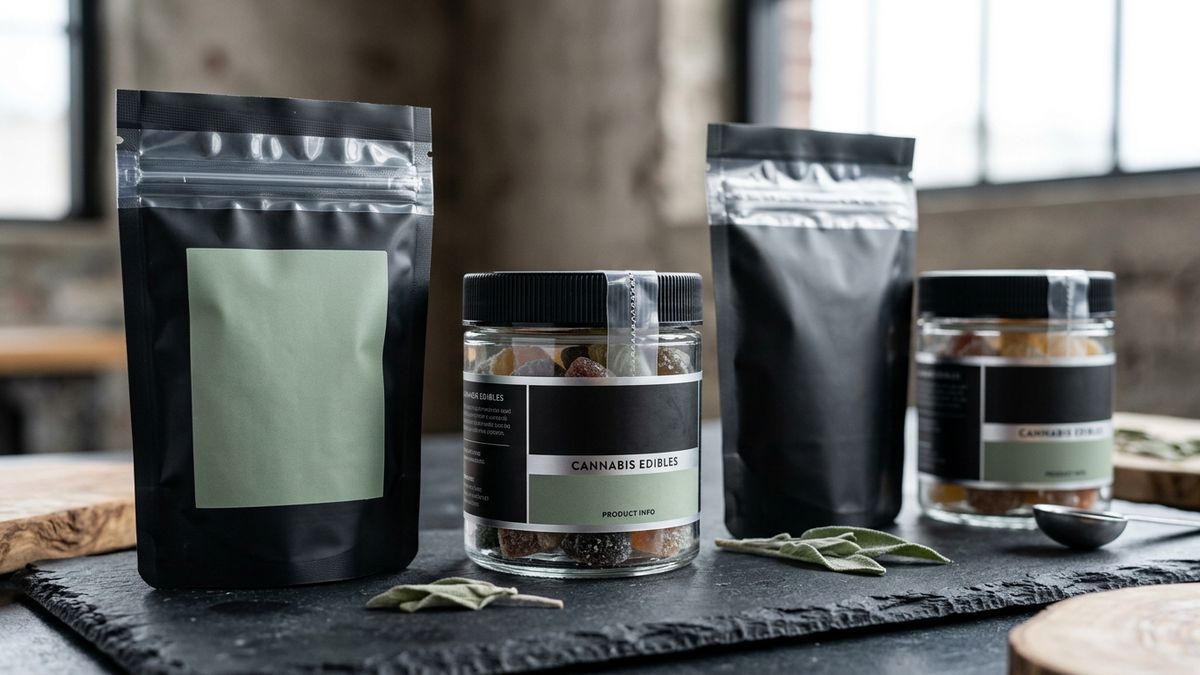
Tamper-evident packaging shows visible proof when a cannabis product has been opened or compromised before reaching the consumer. Most legal U.S. states require it alongside child-resistant certification under 16 CFR 1700.20, and food-grade materials are mandatory for any packaging that contacts edibles, flower, or concentrates directly. Without both, you can't legally sell cannabis products in most regulated markets.
I've spent about 20 years working in marketing and media connected to the cannabis industry. I created Growing Exposed on YouTube — we've built an audience of over 130,000 subscribers and 12.5 million views. I've also written for High Times and Stoner Magazine, and I own LG Digital Inc. So when brands ask me whether their packaging actually meets tamper-evident and food-grade requirements, I've seen enough dispensary shelves and enough compliance audits to give them a straight answer.
Here's what tamper-evident packaging actually means, how food-grade requirements work, which states require what, and how to make sure your packaging checks every box without overpaying for it.
What Is Tamper-Evident Packaging?
Tamper-evident packaging is designed so that once it's sealed, any attempt to open it leaves visible, irreversible evidence. The package doesn't prevent someone from opening it — it shows that it's been opened. That distinction matters because the goal isn't to make the package impenetrable. The goal is to make it obvious to the consumer that someone tampered with it before they got it.
Think about the plastic ring that stays on a ketchup bottle neck after you twist off the cap. That ring snaps and stays behind, proving the cap was opened. That's a tamper-evident band. If the ring is broken when you pick up the bottle, you know someone opened it. Same principle applies to cannabis packaging.
For cannabis products, tamper-evident features serve two purposes. They protect consumers by making contamination visible, and they protect brands by creating a clear chain of custody from the packaging facility to the dispensary shelf. If a product shows up with a broken seal, the dispensary knows to pull it. Without that visible evidence, a compromised product could reach a customer and the brand wouldn't know until the complaint came in.
Tamper-Evident vs Tamper-Proof: What's the Difference?
People mix these up constantly. Tamper-evident means the package shows visible signs of tampering — a broken band, a torn label, a popped seal. Tamper-proof implies the package can't be opened at all without destroying it, which isn't realistic for retail packaging. You need customers to be able to open the product. What you don't want is for someone to open it, tamper with the contents, and close it back up without leaving a trace.
Every state regulator I've read uses the term "tamper-evident," not "tamper-proof." If your supplier says their packaging is "tamper-proof," that's a red flag — they don't understand the standard. The CPSC and state cannabis regulators require evidence of tampering, not prevention of access. For more on the child-resistant side of this, see our child-resistant packaging requirements guide.
Which States Require Tamper-Evident Cannabis Packaging?
Most legal states require tamper-evident packaging for cannabis products sold at retail. The specific language varies, but the requirement shows up across the major markets. Here's how it breaks down:
| State | Tamper-Evident Required? | Also Requires |
|---|---|---|
| California | Yes | Child-resistant, opaque, resealable |
| New York | Yes | Child-resistant, opaque, resealable |
| Colorado | Yes | Child-resistant, exit packaging |
| Michigan | Yes | Child-resistant, METRC tracking |
| Oregon | Yes | Child-resistant, resealable |
| Maryland | Yes | Child-resistant, tamper-evident per COMAR 14.17.18 |
| Nevada | Yes | Child-resistant, labeled as containing cannabis |
New York's Part 128 guidance states that retail packaging must "be tamper-evident, without covering or obscuring any required labeling — even after opening." California's Department of Cannabis Control requires all cannabis goods to be sold in child-resistant packaging that's also tamper-evident and resealable. Maryland's regulations under COMAR 14.17.18.02 explicitly require that "all packaging of any cannabis product for retail sale shall be tamper evident."
If you operate in multiple states, design for the strictest common denominator: child-resistant, tamper-evident, opaque, and resealable. That package will pass in every legal market. For a full state-by-state breakdown, see our cannabis packaging requirements by state guide.
Types of Tamper-Evident Packaging for Cannabis
There are four main tamper-evident mechanisms used in cannabis packaging. Each one works differently and suits different product types. Here's what you'll encounter when sourcing packaging:
Shrink Bands and Shrink Sleeves
Shrink bands are the most common tamper-evident feature in cannabis packaging. A thin plastic sleeve wraps around the cap and neck of a container — a shrink band or full-body shrink sleeve. When heat is applied, the sleeve shrinks tightly around the container. To open the product, the consumer tears the band along a perforated line. Once torn, the band can't be replaced without it being obvious.
Shrink bands work on glass jars, plastic bottles, pre-roll tubes, and concentrate containers. They're cheap — about $0.01 to $0.03 per unit at wholesale volumes — and they're visually obvious when broken. A dispensary customer can see at a glance whether the band is intact.
Induction Seals
Induction seals use a thin foil liner bonded to the container's opening through electromagnetic induction. When the induction sealer passes over the container, it heats the foil liner, which bonds to the rim. The consumer peels the foil off to access the product. Once peeled, the seal can't be reapplied.
Induction seals are common on concentrate jars and edible containers. They provide a stronger barrier than shrink bands because they create an airtight, hermetic seal. That means they also serve as a freshness barrier, not just a tamper indicator. The downside is cost — induction sealing equipment runs $1,500 to $8,000 for a benchtop unit, and the foil liners add $0.02 to $0.05 per unit.
Tear-Strip Labels and Tamper-Resistant Labels
Some packaging uses labels designed to tear or shred when removed. If someone tries to peel the label off to open the package from the bottom or side, the label destroys itself. This is common on mylar bags where a tear-away strip across the top seal shows the bag has been opened. Once the strip is torn, there's no way to make the package look unopened again.
For cannabis brands using custom mylar bags, the heat seal at the top of the bag itself acts as a tamper-evident feature. Once you cut or tear the heat seal, the bag is clearly opened. The ziplock below it lets you reseal, but the original seal line shows it was opened.
Breakaway Caps and Push-Through Seals
Some containers use caps that break or separate when first opened. A plastic ring on the cap snaps off and stays on the bottle neck, similar to a soda bottle cap. This is common on tincture bottles and some concentrate jars. Push-through blister packs also work as tamper-evident for individual edible doses — once the blister is pushed through, it can't be restored.
What Does Food-Grade Mean for Cannabis Packaging?
Food-grade packaging means every material that contacts the product directly is safe for human consumption. For cannabis edibles, flower, and concentrates, the inner layer of the packaging — the surface the product actually touches — must be made from materials approved for food contact by the FDA under food contact substance regulations.
In a cannabis mylar bag, that's the LLDPE (linear low-density polyethylene) inner layer. In a glass concentrate jar, it's the glass itself and the food-grade coating on the lid. In a pre-roll tube, it's the polypropylene interior. If any of these materials isn't food-grade, the packaging isn't compliant for direct product contact — even if the outer packaging is fine.
This matters most for edibles. A cannabis gummy sitting inside a non-food-grade plastic container can absorb chemicals from the container material. Those chemicals migrate into the product, and the consumer eats them. That's why states with edible-specific packaging rules require food-grade inner packaging for any product that's ingested.
Food-Grade vs Food-Safe: Is There a Difference?
Food-grade means the material itself is approved for contact with food. Food-safe means the finished article — the container as manufactured — is safe for food contact. A food-grade material can become non-food-safe if it's processed with non-food-grade inks, adhesives, or coatings. For cannabis packaging, you need both. The raw materials must be food-grade, and the manufacturing process must maintain food-safe conditions.
Ask your supplier for a food-contact compliance statement. That document should list the specific materials used in the inner layer and confirm they meet FDA food contact standards. If your supplier can't produce that document, don't assume the packaging is food-grade. It might be, but you can't verify it — and neither can a regulator.
How Tamper-Evident and Food-Grade Requirements Work Together
Tamper-evident and food-grade requirements aren't separate decisions — they're layers in the same packaging system. Your cannabis packaging needs to be child-resistant, tamper-evident, and food-grade at the same time. Here's how those layers stack:
- Inner layer (food-grade): The surface that contacts the product. Must be FDA-compliant for food contact. This is LLDPE in mylar bags, glass in jars, polypropylene in tubes.
- Barrier layer: The layer that blocks oxygen, moisture, light, and odor. Aluminum foil in mylar bags. This layer doesn't contact the product but protects it.
- Outer layer: The printable surface for branding. PET in mylar bags, paperboard in boxes. Not food-grade, but it doesn't need to be — it doesn't touch the product.
- Closure mechanism (child-resistant + tamper-evident): The CR zipper provides child-resistant certification under ASTM D3475. The heat seal or shrink band provides tamper evidence. Both are needed.
For a typical cannabis flower product, the full stack looks like this: a PET/AL/LLDPE mylar bag with a CR zipper (child-resistant), a heat seal across the top (tamper-evident), and food-grade LLDPE as the inner layer (food-grade). Each layer serves a different regulatory purpose, and skipping any one means non-compliance.
For edibles, the requirements are stricter. Many states require edibles to be packaged in food-grade inner packaging that's then placed inside child-resistant, tamper-evident outer packaging. The inner package is food-grade. The outer package is CR and tamper-evident. Both layers together make the product compliant. Our tamper-evident and food-grade packaging category covers the specific products that meet both requirements.
How to Source Compliant Tamper-Evident Cannabis Packaging
Sourcing tamper-evident and food-grade cannabis packaging comes down to three things: the right materials, the right documentation, and the right supplier. Here's what to look for at each step.
1. Specify Your Product Type and State Requirements
Before you contact a supplier, know what you're packaging and where you're selling it. Flower needs opaque, CR, tamper-evident, food-grade packaging. Edibles need food-grade inner packaging inside CR outer packaging. Concentrates need food-grade containers with tamper-evident lids. Different products, different requirements.
Check your state's cannabis regulatory body for the current packaging rules. California's Department of Cannabis Control, New York's Office of Cannabis Management, and Colorado's Marijuana Enforcement Division all publish their packaging requirements online. Don't rely on a supplier to know your state's rules — that's your responsibility.
2. Ask for Documentation Up Front
When you request a quote, ask for three documents: the CR certification under 16 CFR 1700.20, the food-contact compliance statement for the inner layer, and the tamper-evident specification for the closure. A legitimate supplier will provide all three. A broker who doesn't manufacture the packaging won't have them — they'll forward your request to the factory and hope the factory responds.
For more on how to verify CR certification and avoid suppliers who fake it, read our cannabis packaging 101 guide. The short version: if they can't produce test reports for the exact SKU you're buying, their certification claim doesn't apply to your product.
3. Test With Your Actual Product
Order samples before you commit to a production run. Put your actual product in the packaging, apply the tamper-evident feature, and test it. Does the shrink band stay intact during shipping? Does the induction seal hold at different temperatures? Does the tear strip break cleanly along the perforation? These are things you can only verify with your real product, not a spec sheet.
4. Compare Factory-Direct vs Broker Pricing
Tamper-evident features add cost. A shrink band adds $0.01 to $0.03 per unit. An induction seal adds $0.02 to $0.05. A custom tear-strip label adds $0.03 to $0.08. But brokers mark these up 30 to 50% on top of their base pricing. Factory-direct suppliers like CropPak offer the same tamper-evident features at closer to actual production cost.
At 10,000 units, a CR mylar bag with a heat-seal tamper-evident feature and food-grade LLDPE inner layer runs $0.18 to $0.38 per unit factory-direct. The same bag through a broker runs $0.30 to $0.55. That difference adds up fast at volume. See our full compliance resource hub for more on sourcing certified packaging.
Common Tamper-Evident Packaging Mistakes Cannabis Brands Make
I've seen the same mistakes repeat across brand after brand. Here are the ones that cost real money:
Using non-food-grade inner packaging for edibles. This is the most common failure. A brand buys attractive packaging that looks great but has a non-food-grade inner layer. The edible contacts the material, chemicals migrate, and the product fails a state compliance check. Always verify the inner layer material with a food-contact compliance statement.
Assuming the CR closure is also tamper-evident. A child-resistant zipper or push-and-turn cap provides child resistance, not tamper evidence. They're different functions. You need a CR closure plus a tamper-evident feature (heat seal, shrink band, or induction seal). Some CR closures have built-in tamper-evident features, but most don't. Don't assume.
Using shrink bands that don't fit the container. A shrink band that's too loose won't shrink tightly enough to show tampering. One that's too tight may break during shipping and make every product look like it's been tampered with. Get bands sized for your exact container dimensions. Measure the cap diameter and container neck, and order bands to match.
Skipping the tamper-evident feature to save cost. A $0.02 shrink band seems trivial until a dispensary rejects your entire shipment because the packaging isn't tamper-evident. Now you're repackaging 10,000 units at your own cost. The band was $200. The repackaging is $5,000 plus two weeks of lost shelf time.
Not documenting the tamper-evident specification. When a regulator asks how your packaging is tamper-evident, "it has a seal" isn't a sufficient answer. You need to specify the type of seal, the material, and how it provides tamper evidence. Keep this in your compliance file alongside your CR certification.
What Tamper-Evident Cannabis Packaging Costs at Wholesale
Here's a breakdown of what tamper-evident and food-grade features cost at wholesale volumes (10,000+ units):
| Feature | Cost Per Unit | Typical Use |
|---|---|---|
| Shrink band (pre-cut) | $0.01 – $0.03 | Jars, bottles, tubes |
| Full-body shrink sleeve | $0.03 – $0.08 | Vape carts, bottles, boxes |
| Induction seal liner | $0.02 – $0.05 | Concentrate jars, edible containers |
| Tear-strip label | $0.03 – $0.08 | Mylar bags, boxes |
| Breakaway cap ring | $0.01 – $0.02 | Tincture bottles, dropper bottles |
| Food-grade inner layer (LLDPE) | $0.01 – $0.03 | Mylar bags (included in standard construction) |
| Food-grade glass | $0.10 – $0.25 | Concentrate jars, flower jars |
Most of these costs are incremental. If you're already buying CR-certified mylar bags at $0.18 to $0.38 per unit, the tamper-evident heat seal is already included in that price — it's part of the bag's construction. Shrink bands and induction seals are add-ons. Food-grade inner layers are standard in quality PET/AL/LLDPE bags but aren't guaranteed in cheaper single-layer alternatives.
For a fully compliant cannabis flower package — CR mylar bag with heat seal, food-grade LLDPE inner, and a shrink band over the ziplock — expect $0.20 to $0.42 per unit at 10,000 volume from a factory-direct supplier. Through a broker, that same package runs $0.35 to $0.60. The compliance features are the same; the price difference is markup.
For more on how to choose the right packaging for your specific product, see our cannabis labels and compliance guide — labeling and packaging go hand in hand, and both need to be right for a product to pass compliance checks.
Frequently asked questions
Is tamper-evident packaging required for cannabis products?
What is the difference between tamper-evident and child-resistant packaging?
Does cannabis packaging need to be food-grade?
How do shrink bands work as tamper-evident packaging?
How much does tamper-evident cannabis packaging cost?