Vape Cartridge Boxes: CR, Custom-Printed Packaging for Cannabis Vapes

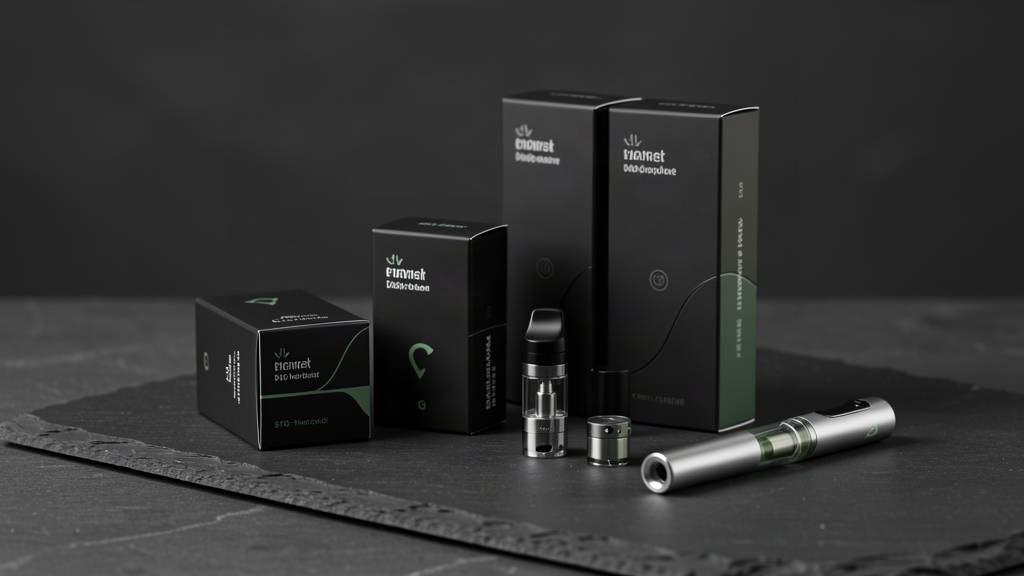
Vape cartridge boxes are the retail packaging that holds 510-thread cartridges, disposable vape pens, and cannabis oil syringes. Every legal state requires them to be child-resistant under 16 CFR 1700.20, and most require tamper-evident seals. The right box protects your product, passes compliance checks, and looks good on a dispensary shelf.
I've spent about 20 years working in marketing and media connected to the cannabis industry. I created Growing Exposed on YouTube — we've built an audience of over 130,000 subscribers and 12.5 million views. I've also written for High Times and Stoner Magazine, and I own LG Digital Inc. So when vape brands ask me about cartridge boxes, I've seen enough product launches — and enough packaging recalls — to give them a straight answer.
Here's everything you need to know about vape cartridge boxes: sizes, materials, CR compliance, custom printing, and what you should actually be paying at wholesale volumes.
What Are Vape Cartridge Boxes?
Vape cartridge boxes are small paperboard or plastic containers designed to hold cannabis vape products — 510-thread cartridges, disposable vape pens, and oil syringes. They're the outer retail packaging that customers see on dispensary shelves and that regulators check for compliance.
The box itself typically isn't the child-resistant component. Most vape cartridge boxes use a CR-certified tube or inner container as the actual child-resistant mechanism, with the outer box providing branding, tamper-evidence, and shelf presence. Some states allow CR paperboard boxes with built-in push-and-turn or slider mechanisms, but the more common approach is a vape cartridge box with a CR inner tube.
According to the CPSC, child-resistant packaging must be tested under the protocol in 16 CFR 1700.20, which requires 200 children aged 42-51 months to attempt opening the package, with at least 85% failing. A separate panel of 100 adults must successfully open and close it. This applies to every cannabis vape product sold in any legal state.
Vape Cartridge Box Sizes: Matching the Box to Your Product
Vape products come in a range of shapes and sizes, and your box needs to match. Here's a breakdown of the common sizes and what they fit:
510-Thread Cartridge Boxes
Standard 510-thread cartridges are the most common vape format. They're typically 10mm to 14mm in diameter and range from 0.5ml to 1.0ml in capacity. The boxes for these carts are usually small — around 1.25 inches wide by 4.5 inches tall. Some hold the cartridge with a foam insert; others use a molded plastic tray that snaps the cart into place.
Disposable Vape Pen Boxes
Disposable vape pens are larger than 510 carts because the battery is built in. These are typically 5 to 6 inches long and need boxes around 1.5 inches wide by 6 inches tall. Disposables are the fastest-growing vape category — they overtook refillable 510 carts in dispensary sales volume in California in 2023, according to Headset's cannabis retail data.
Multi-Pack Vape Boxes
Some brands sell 2-packs or 5-packs of 510 carts. These boxes run larger — around 3 to 4 inches wide — and need custom insert trays to hold multiple cartridges securely. Multi-packs are gaining traction in value-driven markets like Michigan and Arizona.
| Vape Product Type | Typical Box Size (inches) | Insert Type | CR Required? |
|---|---|---|---|
| 0.5ml 510 cartridge | 1.25 x 4.5 | Foam or molded pulp | Yes |
| 1.0ml 510 cartridge | 1.25 x 5.0 | Foam or molded pulp | Yes |
| Disposable vape pen (1g) | 1.5 x 6.0 | Molded plastic tray | Yes |
| Disposable vape pen (2g) | 1.75 x 6.5 | Molded plastic tray | Yes |
| 2-pack 510 cartridges | 3.0 x 5.0 | Custom molded insert | Yes |
| Oil syringe (1ml) | 1.5 x 5.5 | Foam with cutout | Yes |
Materials: Paperboard, Plastic, and What Actually Matters
Vape cartridge boxes are made from one of three primary materials. Each has trade-offs in cost, durability, and sustainability.
SBS Paperboard
Solid bleached sulfate (SBS) paperboard is the most common material for vape cartridge boxes. It's a rigid, white paperboard that takes print beautifully and folds cleanly into cartons. Most custom vape boxes you see on dispensary shelves are 14pt to 18pt SBS with a matte or soft-touch finish. SBS is recyclable, which matters in states with sustainability requirements.
Kraft Paperboard
Kraft paperboard is the eco-friendly alternative. It's unbleached, brown, and has a natural look that appeals to brands positioning themselves as sustainable. Kraft runs about 15-20% cheaper than SBS, but it doesn't take full-color printing as well — colors look muted on the brown background. If you're going kraft, plan for 1-2 color printing rather than full CMYK.
Rigid Plastic Boxes
Some brands use clear or opaque plastic boxes for vape products. These are more durable and offer a premium feel, but they're more expensive and less eco-friendly. Plastic boxes work for high-end disposables where the packaging itself signals quality. They're also a good option for products that need to be visible through the packaging, though some states require opaque (non-transparent) packaging for cannabis products.
For most brands, SBS paperboard is the right call. It's the sweet spot of printability, cost, and recyclability. You can see our full range of vape cartridge packaging options to compare materials and finishes.
Child-Resistant Certification for Vape Cartridge Boxes
Here's where things get critical. If you sell cannabis vape products in any legal state, your packaging must be child-resistant. That means it needs to pass the 16 CFR 1700.20 testing protocol and meet the ASTM D3475 standard for child-resistant packaging classification.
The testing protocol is specific: 200 children between 42 and 51 months old attempt to open the package within 5 minutes. At least 85% must fail to open it after a demonstration. Then 100 adults aged 50-70 must be able to open and properly close the package, with at least 90% succeeding. If your packaging doesn't pass both tests, it's not certified.
There are two common approaches to making vape cartridge boxes CR-compliant:
- CR inner tube + outer box: The vape cart goes inside a CR-certified tube (push-and-turn or squeeze-and-pop), and that tube goes inside the branded outer box. This is the most common approach and what most regulators expect to see.
- CR paperboard box: The box itself uses a slider or push-and-turn mechanism that's been tested and certified. These exist but are less common and more expensive per unit.
Always ask your supplier for the actual CR test certificate for the specific SKU you're buying. Not a generic compliance claim — the actual lab report with the test date, lot number, and packaging configuration. I've seen too many brands get burned by suppliers who say "CR certified" when they mean "CR certified for a different product that we also sell." For more on this, check our guide to child-resistant packaging requirements.
Custom Printing: What's Possible and What It Costs
Custom printing is where vape cartridge boxes shine. The flat surface of a paperboard box gives you a large branding canvas relative to the product size. Here's what's available and what it costs.
Printing Methods
Offset printing is the standard for custom vape boxes. It delivers full CMYK color with excellent detail and consistency. Most custom-printed vape boxes use offset printing on SBS paperboard. Minimum order quantities typically start at 5,000 to 10,000 units.
Digital printing works for smaller runs (500-5,000 units). It's more expensive per unit than offset but eliminates plate costs, making it cost-effective for short runs or brands testing new products. Digital print quality has improved significantly but still doesn't match offset for consistency across large runs.
Foil stamping and spot UV are add-on finishes that create tactile and visual effects. Foil stamping applies metallic foil (gold, silver, holographic) to specific areas of the design. Spot UV creates a glossy raised effect on selected elements. Both add $0.05-$0.15 per unit depending on complexity and volume.
Finish Options
- Matte finish: The most popular choice for premium cannabis brands. No glare, feels smooth, photographs well for social media.
- Soft-touch (velvet) finish: A step up from matte. Feels like suede and signals luxury. Adds about $0.03-$0.05 per unit.
- Gloss finish: Shiny and reflective. Less common in cannabis but works for brands with bold, colorful designs.
- Soft-touch with spot UV: The premium combo — matte background with glossy accent elements. This is what you see on high-end disposable vape packaging.
If you're ready to spec your vape boxes, browse our custom box options and request a quote — same-day pricing on most configurations.
Tamper-Evident Features for Vape Cartridge Boxes
Beyond child-resistance, most states require tamper-evident packaging for cannabis vape products. Tamper-evident means the packaging shows visible signs if it's been opened or interfered with before the customer gets it.
The most common tamper-evident features for vape cartridge boxes include:
- Tear strip / tear tape: A perforated strip on the top of the box that must be torn to open. Once torn, it can't be resealed. This is the cheapest option — adds about $0.01-$0.02 per unit.
- Shrink wrap: A plastic film shrunk around the box with heat. Must be cut to open. Adds $0.02-$0.04 per unit.
- Glue seal: The box is glued shut during filling. Opening it breaks the glue line, which can't be resealed. No additional cost if your filling process includes gluing.
- Tamper-evident label: A sticker seal across the opening flap that tears when removed. Adds $0.01-$0.03 per unit.
Most brands use a tear strip or shrink wrap. Both are cost-effective and clearly visible to dispensary staff and customers. For more on tamper-evident options, see our tamper-evident packaging category.
Wholesale Pricing: What You Should Actually Pay
Vape cartridge box pricing varies based on size, material, print complexity, finish, and order volume. Here's what you should expect at different volume tiers:
| Configuration | 5,000 units | 10,000 units | 25,000+ units |
|---|---|---|---|
| Stock blank box (no print) | $0.15-$0.25 | $0.10-$0.18 | $0.07-$0.12 |
| 1-color printed, matte finish | $0.25-$0.40 | $0.18-$0.30 | $0.12-$0.20 |
| Full-color printed, matte finish | $0.35-$0.55 | $0.25-$0.40 | $0.18-$0.28 |
| Full-color + soft-touch + spot UV | $0.50-$0.75 | $0.35-$0.55 | $0.25-$0.40 |
| CR inner tube + custom outer box | $0.60-$0.90 | $0.45-$0.70 | $0.30-$0.50 |
These are factory-direct prices. Broker resellers typically charge 30-50% more for equivalent products. If your supplier can't tell you whether they're factory-direct or a broker, assume broker pricing. For a deeper comparison, read our pre-roll packaging guide which covers the same factory-direct vs broker dynamic.
State-Specific Requirements for Vape Packaging
While every legal state requires child-resistant packaging for vape products, some states have additional rules specific to vape or inhalable cannabis products:
California requires opaque packaging for all cannabis products and specifically prohibits clear or transparent packaging for vape cartridges. The California Department of Cannabis Control also requires a universal symbol on all packaging.
New York requires QR codes on all cannabis packaging that link to the product's certificate of analysis. For vape products specifically, NY requires child-resistant packaging that meets both 16 CFR 1700.20 and state-specific testing standards.
Colorado requires all vape packaging to include a warning about potential health risks of inhalation, in addition to CR certification.
For a full breakdown of state requirements, see our state-by-state packaging guide and our cannabis labeling requirements guide.
How to Choose the Right Vape Cartridge Box
Here's the decision framework I use when advising brands on vape cartridge packaging:
- Measure your product. Know the exact dimensions of your cartridge or disposable — length, diameter, and any protruding features like mouthpieces or USB ports. Don't estimate. Measure with calipers.
- Determine your CR strategy. Will you use a CR inner tube inside a branded outer box, or a CR-certified paperboard box? The inner-tube approach is cheaper and more common.
- Choose your material. SBS paperboard for most brands. Kraft if sustainability is your core positioning. Rigid plastic for ultra-premium disposables.
- Specify your finish. Matte is the default for cannabis. Add soft-touch + spot UV if you're charging a premium price point.
- Plan your insert. Foam inserts are cheapest but look generic. Molded pulp is eco-friendly. Custom molded plastic trays look the most premium but cost more.
- Add tamper-evidence. Tear strip or shrink wrap. Don't skip this — it's required in most states.
- Get a quote. Request pricing at 5,000, 10,000, and 25,000 units. The per-unit savings at higher volumes can be significant.
For a broader overview of all packaging types, our cannabis packaging 101 guide covers everything from mylar bags to concentrate jars.
Common Vape Cartridge Packaging Mistakes
After 20 years in this industry, these are the mistakes I see most often:
Buying boxes that are too big. Brands order a standard size box and stuff their cartridge with extra foam. The cart rattles around, the box looks oversized on the shelf, and it costs more to ship. Measure your product and get a box that fits snugly.
Skipping CR certification to save money. Some brands use non-CR boxes and hope nobody checks. Regulators do check. A single compliance violation can cost thousands in fines and trigger a product recall. The CR tube adds maybe $0.08-$0.15 per unit. That's cheaper than a recall.
Using transparent packaging in states that require opaque. California and several other states require opaque packaging. Clear boxes with a visible vape pen inside will fail compliance checks in those states.
Ignoring the insert. The insert matters as much as the box. A cheap foam insert that doesn't hold the cart securely will let it shift during shipping, potentially cracking the glass tank or leaking oil. Spend the extra $0.02 for a molded insert that fits.
Forgetting tamper-evidence. CR certification covers child safety, but tamper-evidence is a separate requirement. You need both. Add a tear strip or shrink wrap.
Frequently asked questions
Are vape cartridge boxes required to be child-resistant?
What size box do I need for a 510 vape cartridge?
How much do custom vape cartridge boxes cost wholesale?
Can I use clear or transparent boxes for vape cartridges?
What's the difference between a CR tube and a CR box for vape cartridges?