Cannabis Packaging New York: OCM Compliance Guide
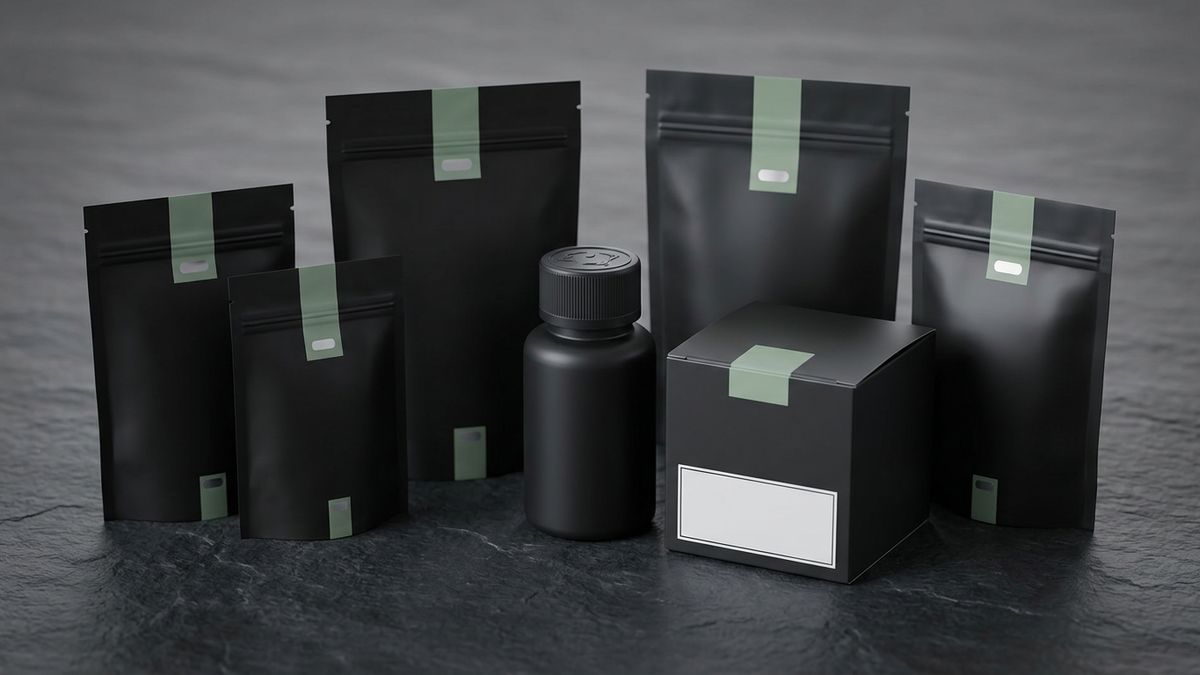
Cannabis packaging in New York is regulated by the Office of Cannabis Management (OCM) under Title 9 of the New York Codes, Rules and Regulations, Part 128. Every licensed product sold in the state must be child-resistant per 16 CFR 1700.20, tamper-evident, and light-resistant. Edibles must be in opaque packaging. Labels must carry the New York universal symbol, a QR code linking to product information, THC and CBD potency in milligrams, ingredient lists, and required government warnings. Packaging that imitates snack foods or candy is explicitly prohibited — one of the strongest anti-imitation rules in the country.
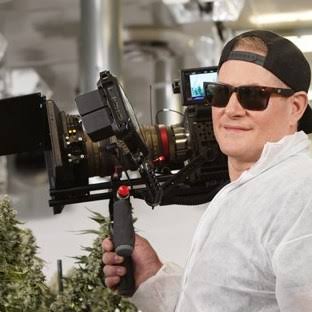
I've spent about 20 years working in marketing and media connected to the cannabis industry. I created Growing Exposed on YouTube — we've built an audience of over 130,000 subscribers and 12.5 million views. I've also written for High Times and Stoner Magazine, and I own LG Digital Inc. I've watched New York's market evolve from the Marijuana Regulation and Taxation Act in March 2021 through the first licensed retail sales and into the regulatory framework we have now. I've seen enough brands get flagged by OCM inspectors to give you a straight answer on what New York actually requires.
Here's everything you need to know about cannabis packaging in New York for 2026: the specific OCM requirements, how New York compares to other states, what catches out-of-state brands, and how to source compliant packaging without overpaying.
Who Regulates Cannabis Packaging in New York?
The Office of Cannabis Management (OCM) is the state agency that regulates all cannabis activity in New York — both medical and adult-use. It operates under the Cannabis Control Board, which was established by the Marijuana Regulation and Taxation Act (MRTA) signed into law in March 2021. The OCM writes the packaging and labeling rules, issues license suspensions for non-compliant operators, and conducts inspections at licensed dispensaries.
New York's adult-use market launched with licensed retail sales in late December 2022. As of 2025, the state has issued over 400 conditional and adult-use licenses. The OCM has been deliberate about market structure, and that includes strict packaging requirements designed to protect consumers and prevent youth access. If you're entering the New York market, the OCM is your regulatory authority — not the FDA, not the CPSC directly, and not your home state's regulator.
The OCM's packaging regulations are codified in Title 9 NYCRR Part 128. They reference federal standards like 16 CFR 1700.20 for child-resistance and add New York-specific requirements that brands from other states need to understand before shipping product into New York. You can read more about how New York fits into the national picture on our cannabis packaging United States compliance guide.
What Are New York's Child-Resistant Packaging Requirements?
New York requires all cannabis products to be in child-resistant packaging that meets 16 CFR 1700.20. The OCM also accepts ASTM D3475 as an alternative testing standard. Your packaging supplier must provide certification for at least one of these standards — and the certification must match the exact SKU you're buying, not a generic claim. We cover this in detail in our guide to child-resistant packaging requirements for cannabis brands.
The 16 CFR 1700.20 testing protocol is straightforward but rigorous. A panel of 200 children aged 42 to 51 months attempts to open the package within 5 minutes. At least 85% must fail. Then a separate panel of 100 adults aged 50 to 70 must be able to open and close the package, with 90% succeeding. If your packaging can't produce those numbers in a certified lab, it's not compliant in New York — or any other legal state.
Tamper-evident packaging is required alongside CR. The consumer must be able to determine whether the package has been opened before purchase. Acceptable tamper-evident methods include shrink bands, induction seals, breakaway closures, and tear-strip labels. Our tamper-evident shrink sleeves and bands are the most cost-effective option at $0.01 to $0.03 per unit at wholesale volumes.
Where New York goes further than most states: light resistance. New York requires cannabis packaging to be light-resistant, meaning it must protect the product from UV and visible light degradation. This applies to all cannabis products — not just edibles. Light-resistant packaging preserves cannabinoid potency and prevents terpene degradation. If light can pass through your packaging and degrade the product, you're non-compliant in New York.
CR Closure Types That Work in New York
Not every CR closure works the same way. Here's what's available and what works for New York:
- Push-and-turn screw-top closures: The pharmaceutical standard. Used on pre-roll tubes and glass jars. Meets 16 CFR 1700.20 with proper testing.
- Squeeze-and-pop pop-top tubes: Single-use child-resistant. The squeeze mechanism is inherently CR for the initial opening. Works for pre-rolls and small edibles.
- Push-and-slide CR zippers: Used on mylar bags. Requires a coordinated dual-action motion that children under 5 typically can't perform. This is what we use on our child-resistant mylar bags.
- Pinch-and-pull CR zippers: Alternative bag closure. Same principle as push-and-slide but with a different motion.
A standard ziplock closure does not meet New York's CR requirement. If your supplier sells you bags with standard zippers and claims they're "child-resistant," they're lying. Ask for the lab test certificate for the exact SKU.
Opacity, Light Resistance, and Resealability in New York
New York requires opaque packaging for cannabis edibles. The product must not be visible through the packaging. This is consistent with the state's prohibition on packaging that imitates food products — opaque packaging prevents the edible from looking like a regular snack item through the container.
For flower and concentrates, the light-resistance requirement effectively means opaque or UV-blocking packaging. While the OCM doesn't use the word "opaque" for non-edibles, the light-resistance standard achieves the same result. If UV light passes through your flower bag and degrades the product, you're non-compliant. UV exposure can reduce THC potency by up to 30% over six months in transparent packaging, according to a 2020 study published in the Journal of Cannabis Research.
Resealability is required for multi-use products. Any package that a consumer will open and close multiple times must have a resealable closure that maintains CR function. New York's regulation mirrors the federal standard for special packaging under the Poison Prevention Packaging Act. For single-use products like individual pre-roll tubes, resealability isn't required — but the initial CR function is.
Custom mylar bags from CropPak combine opacity, light resistance, and CR resealability in a single package. For New York brands, this is the most efficient way to meet multiple requirements with one product.
Labeling Requirements: What Must Be on New York Cannabis Packaging
New York cannabis labels must include more elements than most states. The OCM requires the following on every cannabis product package:
- New York universal symbol: The state's cannabis warning symbol must appear on all packaging. It must be printed directly on the package — not applied as a removable sticker.
- QR code: New York requires a QR code on every cannabis package that links to product information on the OCM website or the licensee's site. The QR code must resolve to an active page. Dead links are treated as compliance failures during inspections.
- Potency information: THC and CBD content in milligrams per serving and per package.
- Ingredient list: Full ingredient disclosure for all products, with allergens specifically identified.
- Warning statement: Required health warnings including "keep this product away from children."
- Licensee information: Name, license number, and address of the licensee.
- Batch or lot number: For product traceability.
- Net weight: In both metric and imperial units.
- Manufacturing or packaging date: Required for shelf-life tracking.
The QR code requirement is what catches brands from out of state. You can't sell product in New York without a scannable QR code that links to current product information. The OCM has tested QR codes during inspections to verify they resolve to active pages. If the link is dead or the page hasn't been updated, that's a compliance failure. Our custom cannabis labels and compliance stickers include QR code printing with scannable code placement.
For a full breakdown of labeling requirements across all legal states, read our cannabis labeling requirements guide. The average state requires 16.7 separate label elements — New York requires more than most.
What's Prohibited in New York Cannabis Packaging?
New York has some of the strictest packaging prohibitions in the country. Here's what you can't do:
- No snack imitation: Cannabis packaging cannot imitate snack foods, candy, or any packaged food product. This is explicit in New York's regulations and it's one of the strongest anti-imitation rules in the country. If your edible packaging even slightly resembles a snack chip bag, candy wrapper, or beverage container, the OCM will flag it.
- No child-appealing imagery: No cartoons, characters, or designs that would attract minors.
- No health claims: Packaging cannot make medical or therapeutic claims.
- No packaging that looks like non-cannabis products: This broad prohibition covers food, beverage, and cosmetic packaging imitation.
- No alcoholic beverage crossover: Cannabis packaging cannot reference or imitate alcohol brands.
The snack imitation prohibition is the one that trips up the most brands. If your gummy packaging looks anything like a fruit snack bag, you'll get flagged. Design with this in mind from the start — don't try to make cannabis packaging look familiar and approachable like grocery store snacks. That's exactly what New York is trying to prevent.
New York vs. Other States: How Do NY Packaging Rules Compare?
New York's packaging rules share baseline requirements with other legal states but go further on several fronts. Here's how New York compares:
| Requirement | New York | California | Colorado | Michigan |
|---|---|---|---|---|
| Child-resistant (16 CFR 1700.20) | Yes | Yes | Yes | Yes |
| Tamper-evident | Yes | Yes | Yes | Yes |
| Light-resistant | Yes (all products) | Edibles only | No | No |
| Opaque edibles | Yes | Yes | No | No |
| QR code required | Yes | No (UID tags) | No | No |
| Universal symbol (printed) | Yes | Yes | Yes | Yes |
| Snack imitation ban | Yes (strictest) | Yes | Yes | Yes |
| Track-and-trace system | OCM system | METRC | METRC | METRC |
The two requirements that set New York apart: light resistance for all products (not just edibles) and mandatory QR codes on every package. No other legal state requires both. If you're a multi-state operator, design your packaging to meet New York's requirements and you'll exceed the bar in every other market. Read our cannabis packaging requirements by state guide for the full multi-state breakdown.
How Much Does Compliant Cannabis Packaging Cost in New York?
New York's additional requirements — light resistance, QR codes, the NY universal symbol — add cost. But the increments are small compared to the cost of non-compliance. Here's what you should expect at wholesale volumes:
- CR mylar bags (light-resistant, opaque): $0.12 to $0.38 per unit at 10,000+ volume, depending on size and customization. The light-resistant requirement is met by the aluminum foil layer in PET/AL/LLDPE construction, so there's no premium for that — it's standard.
- CR pre-roll tubes with tamper-evident caps: $0.08 to $0.25 per unit at 10,000+ volume.
- Custom labels with QR code + NY universal symbol: $0.05 to $0.08 per label at 10,000+ volume. The QR code printing is included in the label cost.
- Tamper-evident shrink bands: $0.01 to $0.03 per unit.
- CR glass jars with UV-blocking coating: $0.20 to $0.50 per unit at 10,000+ volume.
A fully compliant New York package — CR mylar bag, custom label with QR code and NY symbol, tamper-evident shrink band — runs about $0.18 to $0.49 per unit at 10,000+ volume from a factory-direct supplier like CropPak. The same package through a broker reseller runs $0.30 to $0.70. That 30 to 50% markup is what drives brands toward non-compliant alternatives — they can't afford the broker pricing, so they cut corners on CR certification. Factory-direct pricing eliminates that problem.
Product recalls due to packaging violations typically cost brands $10,000 to $50,000 in lost inventory, logistics, and reputation damage. The average cost to redesign and reprint non-compliant packaging runs $3,000 to $8,000 per SKU. Compare that to the $0.01 to $0.03 per unit for tamper-evident bands, and the math is obvious: compliance is cheaper than non-compliance.
How to Source New York-Compliant Packaging
Sourcing compliant packaging for New York comes down to four steps:
- Verify CR certification. Ask your supplier for the actual lab test certificate for the exact SKU you're buying. Not a generic compliance claim — the real certificate, with a test date that matches the current product. If they can't produce it, find a different supplier.
- Confirm light resistance. For all products, not just edibles. PET/AL/LLDPE mylar bags with aluminum foil meet this by default. Transparent packaging does not. If your supplier doesn't know what light resistance means in the context of OCM regulations, they're not going to keep you compliant.
- Get QR code labeling right. The QR code must resolve to an active page with current product information. Test it yourself before submitting to the OCM. Dead links are compliance failures.
- Use the NY universal symbol correctly. It must be printed on the package, not applied as a removable sticker. Work with a supplier who can print it directly or integrate it into your label design.
Factory-direct suppliers like CropPak handle all of this in a single production run. We manufacture CR mylar bags with light-blocking aluminum foil layers, produce custom labels with QR codes and the NY universal symbol, and add tamper-evident shrink bands — all tested and certified for New York compliance. Request a quote and tell us about your New York product line.
Common New York Packaging Compliance Failures
Based on what I've seen brands get flagged for, here are the most common OCM compliance failures:
- Standard ziplock bags sold as "child-resistant." A standard zipper is not CR. You need a certified CR zipper — push-and-slide or pinch-and-pull — with lab test documentation.
- QR codes that link to dead pages. The OCM tests QR codes during inspections. If the link goes to a 404 or an outdated product page, you fail.
- Edible packaging that looks like snacks. Even subtle similarities get flagged. Don't use pouch shapes, color schemes, or typography that resemble grocery store snack packaging.
- Universal symbol applied as a sticker. New York requires the symbol to be printed on the package, not stickered. Stickers can be removed or peeled — printed symbols can't.
- Transparent flower bags. Light passes through, product degrades, and you're non-compliant on light resistance. Use opaque or UV-blocking mylar.
- Missing potency information. THC and CBD in milligrams per serving and per package. Both numbers, not one or the other.
Every one of these failures is preventable. The pattern I see is brands trying to save $0.05 to $0.10 per unit by skipping certification, using standard zippers, or cutting corners on labeling — and then paying $5,000 to $50,000 in fines, recall costs, and reprinting when the OCM catches it. Compliance costs less than non-compliance, every time.
For more on how New York compares with other states, read our California DCC compliance guide and our child-resistant cannabis packaging category for CR certification details. You can also check our compliance hub for the full regulatory landscape.
Frequently asked questions
What are the cannabis packaging requirements in New York State?
Does New York require QR codes on cannabis packaging?
Does New York require light-resistant cannabis packaging?
Can I use the same packaging in New York and California?
How much does New York-compliant cannabis packaging cost?