Wholesale Cannabis Packaging: Buy Factory-Direct
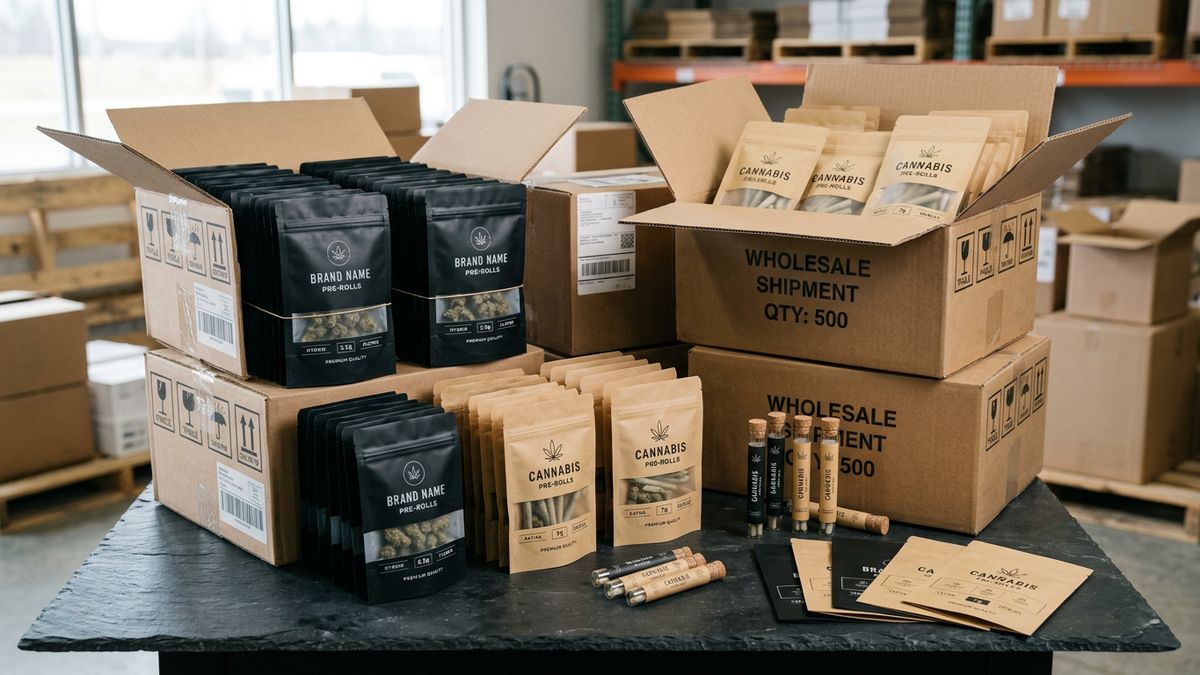
Wholesale cannabis packaging is packaging bought in production volume, usually 500 to 50,000+ units per SKU, at factory pricing instead of retail case pricing. Buying wholesale packaging well comes down to five steps: a complete quote request, the right MOQ tier, an approved proof, a true landed cost, and verified compliance documents.
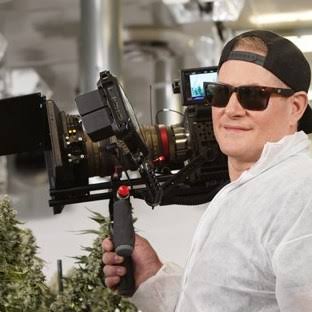
I've spent 22 years working in marketing and media connected to the cannabis industry. I built Growing Exposed on YouTube to more than 130,000 subscribers and 12.5 million views, I've had bylines in High Times and Stoner Magazine, and I own LG Digital Inc. Over that time I've watched a lot of brands overpay for bags, boxes and tubes. Not because they picked a bad supplier, but because they didn't know how the buying process works.
This guide walks through that process the way a purchasing manager would: what to put in a quote request, how MOQs and print methods change your price, how proofs work, what "landed cost" really includes, and how to make sure the CR certificates match what you're actually buying.
What Is Wholesale Cannabis Packaging?
Wholesale cannabis packaging covers any packaging you buy in bulk for resale or for filling: custom mylar bags, pre-roll tubes, concentrate jars, vape cartridge boxes, labels and exit bags. The term gets used loosely, though, and there are really two different markets hiding under it.
Stock wholesale vs custom wholesale
Stock wholesale is blank or generic packaging sold by the case. You pick a size and color off a website, pay by card, and it ships from a warehouse in a few days. Case packs typically run from 100 to about 1,000 units, and the price drops as you buy more cases.
Custom wholesale is a production order. Your artwork, your size, your film structure, your finish. Nothing exists until you approve a proof and the factory schedules a run. That's where the real savings live, and it's also where most buying mistakes happen.
If you're still deciding between the two models of sourcing a custom order, we've already compared them in detail in our factory-direct vs broker breakdown. I won't repeat that here. This post is about the next step: once you've decided to buy factory-direct, how do you actually do it without getting burned?
How Do You Get an Accurate Wholesale Cannabis Packaging Quote?
An accurate wholesale cannabis packaging quote starts with a complete spec. Vague requests get vague numbers, and vague numbers turn into change orders later. When a brand emails "how much for 5,000 custom bags?", any supplier has to guess at half the details. The quote you get back is either padded to cover the guesses or it's low and gets revised once the real details come out.
The spec sheet that gets you a real number
Send these details in your first message and you'll get a quote you can actually budget against:
- Product type and fill weight: 3.5g flower, 1g pre-roll, 1g concentrate, 10-pack gummies. Fill weight drives bag dimensions.
- Dimensions: width x height x gusset in mm or inches, or the stock size you want matched.
- Quantity per SKU and per design: 10,000 bags in one design prices very differently from 10,000 bags split across five strains.
- Closure: heat-seal only, press-to-close zipper, or a certified child-resistant zipper.
- Finish and print effects: matte, gloss, soft-touch, holographic, foil stamping, spot UV, clear window.
- Film structure, if you know it: for example PET/AL/PE for full foil barrier or PET/VMPET/PE for metallized film.
- Ship-to address and target in-hand date: needed for freight, duties and scheduling.
- Market: which US states or Canadian provinces the product sells in, because that changes labeling space and CR needs.
At CropPak, that list is basically what our quote request form asks for. With it, we usually turn around an all-in price the same day.
Compare quotes line by line, not by unit price
Here's the trap. Supplier A quotes $0.21 per bag. Supplier B quotes $0.26. Supplier A looks cheaper until you notice it excludes plates, freight, duties and the CR zipper upgrade. Put every quote into the same five buckets before you compare:
- Unit price at your exact quantity
- One-time costs (plates, cylinders, dies, setup)
- Freight to your door
- Duties, taxes and customs brokerage
- Upgrades (CR zipper, window, special finishes)
Add them up and divide by the units. That's the number that matters.
What MOQs Should You Expect When Buying Wholesale?
Minimum order quantity depends mostly on the print method, because each method has a different setup cost that has to be spread across the run. CropPak's current minimums for custom printed mylar bags at wholesale volume start at 500 units for digital, 1,000 for flexo and 10,000 for rotogravure.
| Print method | CropPak MOQ | One-time setup | Best fit | Per-unit trend |
|---|---|---|---|---|
| Digital | 500 units | No plates | Launches, limited drops, many strains in small runs | Highest per unit, lowest cash outlay |
| Flexographic | 1,000 units | Flexible plates per color | Mid-volume core SKUs, about 1,000 to 10,000 units | Middle |
| Rotogravure | 10,000 units | Engraved cylinders, often $400-$800 per color | Flagship SKUs at 10,000 to 50,000+ units | Lowest per unit above about 10,000 |
Source: CropPak production MOQs and tooling ranges, 2026.
The cylinder cost is the one people forget. A six-color gravure design at $400-$800 per color is $2,400-$4,800 before a single bag runs. You pay it once. On a same-art reorder, it's gone, which is why reorders often come in noticeably cheaper per unit than the first run.
For a full breakdown of how MOQs differ by product type (tubes, boxes, jars, labels), read our cannabis packaging MOQ explainer or the longer MOQ guide. The short version for buying decisions: match the tier to 3 to 6 months of realistic sales. Packaging that sits for 18 months risks going stale on regulations before it goes on shelf.
How to split SKUs without blowing up your MOQ
If you sell eight strains but only move 1,500 units of each per quarter, you've got options. Run one gravure base bag in your brand colors and add a strain label. Or run digital for all eight designs in one order, since digital doesn't charge plates per design. Ask your supplier to quote both. The answer changes depending on how many colors your art uses.
How Do Proofs and Samples Work Before a Production Run?
The proof is your last cheap chance to catch a mistake. After you sign it, every error is printed 10,000 times. Treat proof approval like signing a contract, because that's what it is.
Digital proof vs physical sample
A digital proof is a PDF that shows your artwork placed on the bag's dieline, with seal areas, zipper position, tear notch and any window marked. CropPak sends one free before production. It's where you check copy, warnings, barcode placement and whether anything important sits inside a seal zone where it'll get crushed.
A physical pre-production sample is a printed bag off the actual press or a close equivalent. It costs more and adds time, but it's the only way to see how your colors look on metallized film versus white film. Colors on metallized film shift. Soft-touch mutes saturation. If brand color matters to you, pay for the sample.
The proof checklist I'd use
- Every required warning and symbol present for each market you sell in
- Nothing critical within the seal margins or behind the zipper track
- Barcode quiet zones respected and scannable at final size
- Pantone references listed for brand colors
- Bag dimensions and gusset confirmed against a filled test bag
- CR zipper or closure type matches the certificate you'll receive
Design decisions that make proofing easier, like leaving a blank label panel for state-specific info, are covered in our cannabis packaging design guide.
What Is the Real Landed Cost of Wholesale Cannabis Packaging?
Landed cost is the full price of wholesale cannabis packaging once it's sitting in your facility: product, tooling, freight, insurance, customs entry, duties and taxes. Unit price is only the first line. On overseas orders, the other lines can add a big percentage on top, and they're exactly the lines a low quote leaves out.
Know what the shipping term includes
Most international quotes use an Incoterm, which defines where the supplier's responsibility ends. These four show up constantly in packaging quotes:
| Quote term | What the price covers | Who handles customs and duties | What you still pay |
|---|---|---|---|
| EXW (Ex Works) | Goods at the factory door | You | Export clearance, freight, insurance, import entry, duties, delivery |
| FOB (Free On Board) | Goods loaded on the vessel at the origin port | You | Ocean freight, insurance, import entry, duties, delivery |
| DDP (Delivered Duty Paid) | Goods delivered to your address with duties paid | Supplier | Usually nothing, if the quote is truly DDP |
| CropPak all-in quote | Packaging, printing, shipping, and any duties or tax | Handled for you | One number, no add-ons |
An FOB quote can look 20% cheaper than a delivered quote and end up costing more once your freight forwarder and customs broker send their invoices. Always ask a supplier to quote on the same term before comparing.
US duties on imported packaging
Plastic sacks and bags fall under heading 3923 of the US Harmonized Tariff Schedule. Subheadings 3923.21 (polyethylene) and 3923.29 (other plastics) both carry a 3% general duty rate. That's the easy part. Goods of Chinese origin in heading 3923 also carry Section 301 List 3 duties of 25%, and further tariff actions have stacked on top through 2025 and 2026, with rates changing by country of origin. Classification for a laminated foil pouch is a call your customs broker makes, not your packaging rep.
The other change that caught a lot of small brands off guard: US Customs and Border Protection ended duty-free de minimis treatment for all countries effective August 29, 2025. Shipments valued at or under $800 that used to clear duty-free now owe all applicable duties, taxes and fees, according to the CBP de minimis fact sheet. If you used to order sample-size runs straight from overseas sellers to dodge duties, that path is closed.
Canadian buyers
In Canada, the CBSA collects duties plus GST or HST on imported goods at the border. Provincial rules then decide what your retail packaging has to look like. We cover the federal side on our Health Canada packaging and labelling page, and the provinces in our blog guides, including the Quebec provincial packaging guide.
A simple landed cost worksheet
Here's how I'd lay out a 10,000-bag order to compare two suppliers. The numbers are illustrative, not a quote:
- Bags: 10,000 x $0.22 = $2,200
- Cylinders or plates: $2,400 (first run only)
- Freight and insurance: get the actual figure
- Customs entry and brokerage: get the actual figure
- Duties: customs value x the rate for your HTS code and country of origin
- Landed cost per bag = total / 10,000
Run the same sheet for the reorder with tooling removed. That second number is what your packaging really costs you long term, and it's the one to put in your product margin model.
How Do You Verify Compliance Before You Pay?
Price means nothing if the bags fail an inspection. Before you approve production, ask for the compliance documents tied to the exact package and closure you're buying. A certificate for a different zipper, a different film thickness or a different bag size doesn't cover you.
Child-resistant certification
In the US, child-resistant packaging is tested under the protocol in 16 CFR 1700.20, which uses panels of children and senior adults to confirm that kids can't open the package and adults can. Results are commonly classified under ASTM D3475, the standard classification for child-resistant packages. The CPSC's guidance on testing and certification is the place to start if you want to understand what a valid test report looks like.
What to ask your wholesale supplier for:
- The CR test report naming the specific package type, dimensions and closure
- The lab that ran the test and the test date
- Food-contact compliance documents for the inner layer, especially for edibles
- Material spec sheet showing the film structure and thicknesses
We break down how CR testing works for flexible packaging in our post on child-resistant mylar bag certification, and the standards themselves on our 16 CFR 1700 and ASTM D3475 certification page.
Market rules change the spec
Your state or province decides warning text, symbol size, opacity and whether the package itself must be child-resistant or just the exit bag. Lock those rules into the spec before quoting. Changing a symbol after cylinders are engraved means new cylinders.
How Should You Plan Wholesale Reorders and Cash Flow?
The brands that buy wholesale cannabis packaging well treat it like inventory planning, not a one-off purchase. Running out of bags costs you shelf space. Overbuying ties up cash in packaging that might need a regulatory update before you use it.
Build your reorder point backward from lead time
Factory-direct overseas production usually runs about 4 to 6 weeks door-to-door: roughly 2 to 3 weeks of production, 1 to 2 weeks of ocean freight and 3 to 5 days in customs. Domestic or North American production can be faster but usually costs more per unit. Pick your trade-off per SKU.
A simple rule: reorder when your remaining stock covers your lead time plus a 2-week buffer. If you move 2,500 bags a week and your lead time is 6 weeks, reorder when you're down to about 20,000 bags.
| Weekly usage | Lead time | Buffer | Reorder at |
|---|---|---|---|
| 500 units | 6 weeks | 2 weeks | 4,000 units |
| 2,500 units | 6 weeks | 2 weeks | 20,000 units |
| 5,000 units | 5 weeks | 2 weeks | 35,000 units |
Keep artwork and tooling under your control
Ask who owns the print files and the cylinders. You paid for them. Make sure your supplier keeps cylinders on file for reorders and will release your final art files if you ever need them. That's the difference between a 10-minute reorder email and starting the whole proof process from scratch.
Dual-source the overflow
Even if most of your volume runs factory-direct, keep a stock option in your back pocket for emergencies. A case of blank bags plus a compliance label can bridge a delayed shipment. It isn't pretty, but it keeps product on shelves.
Wholesale Cannabis Packaging Buying Checklist
Before you send a deposit, run down this list:
- Full spec sent: product, fill weight, dimensions, closure, finish, film, quantity per design, markets.
- Every quote converted to the same shipping term and broken into the same five cost buckets.
- Print method matched to 3 to 6 months of realistic sales, not to the lowest unit price.
- Digital proof checked against every market's warnings, and a physical sample ordered if color matters.
- Landed cost worked out for the first run and for the reorder.
- CR test report and material specs matched to the exact package and closure.
- Reorder point set from lead time plus buffer, with tooling ownership confirmed in writing.
If you want a number you can actually budget against, send us your spec. We'll match your job to the right factory and print method and come back with one all-in price covering packaging, printing, shipping and any duties or tax, usually the same day.
Frequently asked questions
What is the minimum order for wholesale cannabis packaging?
How do I compare wholesale cannabis packaging quotes?
Do I pay import duties on cannabis packaging shipped to the US?
What is landed cost for cannabis packaging?
How long does wholesale cannabis packaging take to arrive?