How to Design Cannabis Packaging: A 2026 Guide
Learning how to design cannabis packaging means balancing three things at once: brand identity that stands out on dispensary shelves, compliance with 16 CFR 1700.20 child-resistant standards and state labeling rules, and functional performance that protects the product inside. Get any one of those wrong and you're looking at failed compliance checks, repackaging costs, or product that looks generic on the shelf.
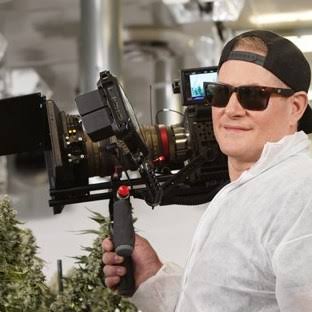
I've spent about 20 years working in marketing and media connected to the cannabis industry. I created Growing Exposed on YouTube — we've built an audience of over 130,000 subscribers and 12.5 million views. I've also written for High Times and Stoner Magazine, and I own LG Digital Inc. So when brands come to me asking how to design cannabis packaging, I've seen enough product launches — and enough packaging failures — to give them a straight answer.
Here's a practical, step-by-step guide to designing cannabis packaging that looks great, passes compliance, and doesn't cost more than it should.
What Does It Mean to Design Cannabis Packaging?
Designing cannabis packaging isn't the same as designing packaging for coffee or supplements. Cannabis packaging has to do three jobs simultaneously: protect the product, pass regulatory compliance, and communicate the brand. Most packaging designers handle one or two of those. Cannabis requires all three, and the compliance layer is non-negotiable.
The compliance layer comes from two sources. Federal standards like 16 CFR 1700.20 and ASTM D3475 define how child-resistant packaging is tested and classified. State regulations define labeling, universal symbols, opacity, and tracking requirements. The CPSC oversees the federal testing protocol, but states enforce their own rules on top. If you want to understand how to design cannabis packaging properly, start with compliance and build outward.
The 6-Step Cannabis Packaging Design Process
Here's the process I use with brands at CropPak. It works whether you're launching your first SKU or redesigning an entire product line.
Step 1: Define Your Compliance Footprint
Before you open a design file, figure out which states you're selling in and what each one requires. California requires opaque packaging and specific universal symbols. New York has sustainability requirements and its own OCM labeling rules. Michigan uses METRC for track-and-trace. The average state requires 16.7 separate label elements, according to a 2024 analysis of state cannabis regulations by the National Cannabis Industry Association.
Make a compliance matrix: list every state, then list the requirements for each (CR certification, opacity, universal symbol, warning text, potency format, tracking system). This becomes your design constraint document. If you're a multi-state operator, you'll likely need modular labeling — same base packaging, different compliance stickers per state.
Step 2: Choose Your Container Format
The container format drives everything else. Custom mylar bags for flower, pre-roll tubes for joints, dab containers for concentrates, and vape cartridge boxes for carts and disposables. Each format has standard sizes, material options, and CR certification paths.
The biggest mistake I see is brands choosing a format based on aesthetics before checking whether it's available in a CR-certified version for their state. Not every container format has a CR-certified option. If you design a beautiful box and then discover you can't get it CR-certified, you're back to square one.
Step 3: Build Your Design System
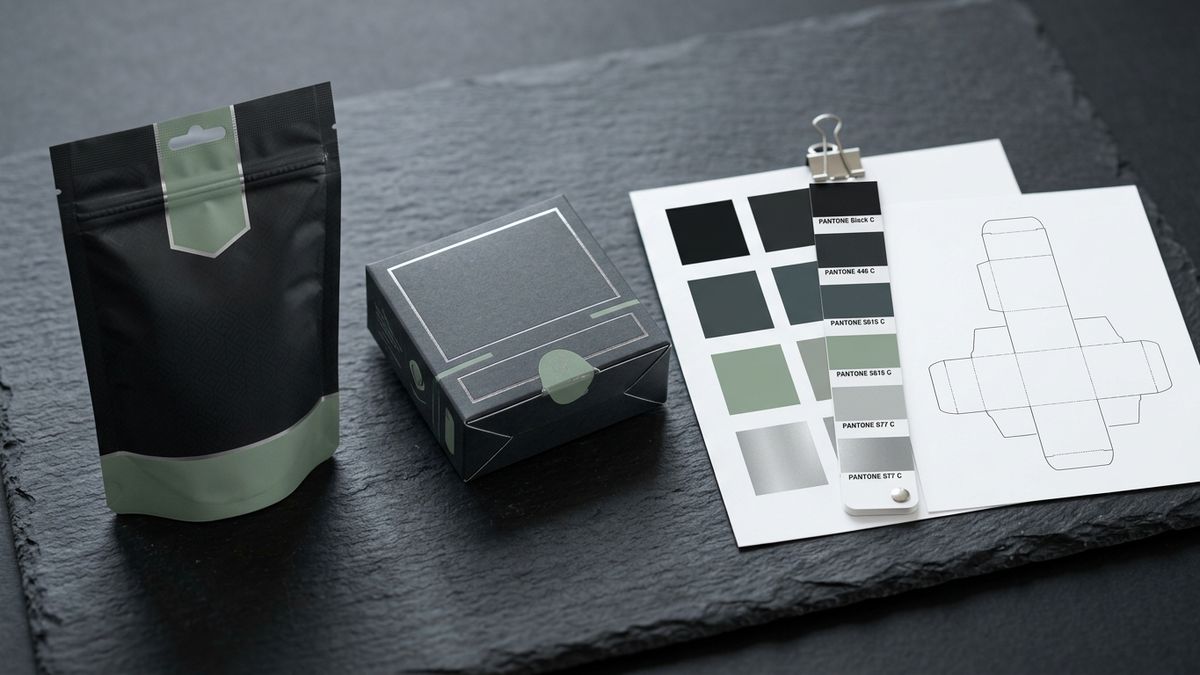
A design system is more than a logo. It's your color palette, typography, finish choices, and structural design language — applied consistently across every SKU. If you sell flower, pre-rolls, and concentrates, the packaging for each should look like it came from the same brand. That means shared colors, shared typography, and a consistent approach to how you handle the compliance text zone.
Most cannabis brands have a logo but not a design system. They use different fonts on different products, different color treatments, and inconsistent label layouts. A proper design system specifies: primary and secondary colors with Pantone numbers, font families for headings and body text, standard label layout (brand zone vs. compliance zone), and finish specifications (matte, gloss, soft-touch, spot UV).
Step 4: Design the Label Layout
This is where most brands fail. A cannabis label has two zones: the brand zone (primary panel) and the compliance zone (informational panel). The brand zone is where your logo, strain name, and visual identity go. The compliance zone is where THC/CBD potency, batch numbers, universal symbols, government warnings, and manufacturer information go.
Here's the mistake: brands design the brand zone first, then realize there's no room left for the compliance text. Design the compliance zone first. Allocate space for every required element — potency, batch number, warnings, universal symbol, net weight, manufacturer info — then fill the remaining space with brand elements. This is how to design cannabis packaging that passes compliance reviews on the first try.
For detailed labeling requirements, see our custom cannabis labels and compliance stickers guide, which breaks down every required element by state.
Step 5: Prototype and Test
Before you commit to a production run, order prototypes. Fill them with your actual product. Check that the container fits, the seal works, the CR mechanism functions, and the label is legible at actual size. A label that looks great on a 27-inch monitor can be unreadable on a 3.5-inch mylar bag.
Prototyping costs $200-$800 depending on the format and customization level. That's cheap insurance against a $10,000+ production run that fails compliance or doesn't fit your product. For CR certification, the CPSC testing protocol requires 200 children aged 42-51 months to attempt opening the package, with at least 85% failing. That test costs $2,000-$5,000 per SKU and takes 4-6 weeks.
Step 6: Production and Quality Control
Once the prototype passes, move to production. At production scale, quality control matters more than ever. Check that every batch matches the certified prototype — same material thickness, same closure mechanism, same seal width. The CPSC requires re-testing under 16 CFR 1700.20 when significant changes are made to the packaging design. If your supplier swaps materials without telling you, your certification may be invalid.
For production orders, custom mylar bags at 10,000+ units run $0.12-$0.38 per unit depending on size and CR certification. Custom pre-roll boxes run $0.18-$0.35. Custom cannabis labels run $0.05-$0.08 per label at 10,000 units. Factory-direct suppliers like CropPak typically offer 30-50% lower pricing than broker resellers for equivalent products.
How to Design Cannabis Packaging for Maximum Shelf Impact
Compliance gets you on the shelf. Design gets you picked up. Here's how to make your cannabis packaging design stand out without running afoul of regulations.
Color and Finish
Matte finishes outperform gloss on dispensary shelves. A 2023 consumer behavior study by NielsenIQ for the cannabis category found that matte-finished packaging was perceived as more premium than gloss by 62% of dispensary shoppers surveyed. Matte also photographs better for social media, which matters if your customers share unboxing content.
Dark palettes — matte black, deep green, charcoal — dominate premium cannabis shelves. But that means they don't stand out because everyone is doing the same thing. If you want to differentiate, consider muted earth tones (sage, clay, stone) or bold single-color statements that still meet opacity requirements.
Typography
Keep typography clean and legible. Your strain name should be readable at arm's length on a dispensary shelf. Avoid overly decorative fonts that become illegible at small sizes — and remember that compliance text has minimum legibility requirements in most states. California requires potency information in at least 8-point font, for example. If your brand font can't render clearly at 8pt on a label, pick a different font for compliance text.
Structural Design
Structural design — the physical shape and opening mechanism of your packaging — is an underused differentiator. Most brands use stock containers with custom labels. Custom structural design (unique box shapes, custom tube profiles, proprietary opening mechanisms) costs more but creates a brand experience that stock packaging can't match. Just remember that any structural change to a CR-certified package requires re-testing under ASTM D3475 classification standards.
Compliance-First Design: Build Around the Rules
The single most important principle in cannabis packaging design: start with compliance, not aesthetics. Designing a beautiful package and then trying to retrofit compliance is how brands end up with cluttered, cramped labels that fail reviews.
Here's what compliance-first design looks like in practice:
| Compliance Element | Design Consideration | Common Mistake |
|---|---|---|
| Child-resistant closure | Must be certified under 16 CFR 1700.20; affects container choice | Choosing a non-CR container, then adding CR as an afterthought |
| Universal symbol | State-specific; requires minimum size (0.5" in CA) | Using the wrong state's symbol or undersizing it |
| THC/CBD potency | Required on informational panel; min 8pt font in CA | Putting potency on the front panel with insufficient space |
| Government warning | Required text, specific wording per state | Truncating or rewording the required warning statement |
| Batch/lot number | Required for track-and-trace (METRC, etc.) | Forgetting to leave space for batch labeling at production time |
| Opacity | Required in CA, NY, and several other states | Using transparent or semi-transparent materials |
Every one of these elements needs dedicated space on your label layout before you add any brand artwork. For a deeper dive into the rules, our cannabis packaging 101 guide covers the four main packaging types and their compliance requirements in detail.
Materials and Finishes: What Actually Works
Material choice affects barrier performance, compliance, cost, and shelf appearance. Here's how the main materials compare for cannabis packaging design:
| Material | Best For | Barrier | CR Available | Cost/Unit (10K+) |
|---|---|---|---|---|
| PET/AL/LLDPE mylar | Flower, edibles | Excellent (oxygen, moisture, light, odor) | Yes (CR zipper) | $0.12-$0.38 |
| Polypropylene tubes | Pre-rolls | Moderate (physical protection) | Yes (push-and-turn, pop-top) | $0.08-$0.18 |
| Silicone containers | Concentrates (wax, shatter) | Low (non-stick, not airtight) | Limited (CR lids available) | $0.05-$0.15 |
| Glass jars | Concentrates (live resin, sauce) | Excellent (airtight, non-porous) | Yes (CR lids) | $0.20-$0.50 |
| SBS paperboard boxes | Pre-roll packs, vape carts | Low (structural only) | Yes (with CR inner) | $0.18-$0.35 |
For flower packaging, PET/AL/LLDPE mylar is the standard. The aluminum foil layer blocks oxygen, moisture, light, and odor — all four factors that degrade cannabis on the shelf. For more on this, see our guide to choosing cannabis mylar bags, which covers construction, sizes, and finishes in detail.
How to Design Cannabis Packaging: What It Costs
Budgeting for cannabis packaging design involves three cost layers: design, compliance, and production. Here's what each typically runs.
Design: $500-$3,000 for a single SKU if you're working with a freelance designer who understands cannabis compliance. $3,000-$8,000 for a full brand system across multiple SKUs. Some factory-direct suppliers include design services at no additional cost when you place a production order.
Compliance: CR certification testing under 16 CFR 1700.20 costs $2,000-$5,000 per SKU. State-specific labeling review (if you use a compliance consultant) runs $500-$1,500 per state. Re-testing is required when significant packaging changes are made — including changes to the closure mechanism, material thickness, or bag dimensions.
Production: At 10,000+ units, expect $0.12-$0.38 per CR mylar bag, $0.08-$0.18 per CR pre-roll tube, $0.05-$0.15 per dab container, and $0.18-$0.35 per custom box. Custom labels run $0.05-$0.08 each at 10,000 units. Total per-unit cost for a fully custom, CR-compliant package typically lands between $0.25 and $0.70 depending on format and finish level.
For a detailed breakdown of minimum order quantities and pricing tiers, see our cannabis packaging MOQ guide.
Common Cannabis Packaging Design Mistakes to Avoid
I've reviewed hundreds of cannabis packaging designs over the last 20 years. Here are the mistakes I see most often:
- Designing before checking compliance. You spend $2,000 on design and then discover your state requires opaque packaging and you designed a clear window box. Always check the compliance matrix first.
- Using "child-proof" instead of "child-resistant." The CPSC uses the term "child-resistant" because no package is truly child-proof. Using "child-proof" on your label or marketing materials signals you don't understand the regulations. See our CR packaging requirements guide for the full breakdown.
- Ignoring multi-state labeling needs. If you sell in multiple states, you need modular labeling. Designing a single fixed label means you'll reprint every time a state changes its universal symbol or warning format.
- Overdesigning the brand zone. If your brand artwork takes up 70% of the label, there's no room for compliance text. Allocate 30-40% of the label surface for compliance before adding brand elements.
- Choosing materials based on looks alone. A beautiful single-layer mylar bag won't protect your flower. A glass jar that isn't airtight will let terpenes evaporate. Match the material to the product's barrier requirements, not just to how it looks on a Pinterest board.
For brands just getting started, our compliance hub has state-by-state resources, and our cannabis packaging design guide walks through the full process with template layouts.
Frequently asked questions
How do I design cannabis packaging?
What compliance requirements affect cannabis packaging design?
How much does it cost to design custom cannabis packaging?
Can I design my own cannabis packaging or do I need a professional?
What materials are best for cannabis packaging design?