Mylar Bags Canada: Cannabis Packaging for the Canadian Market
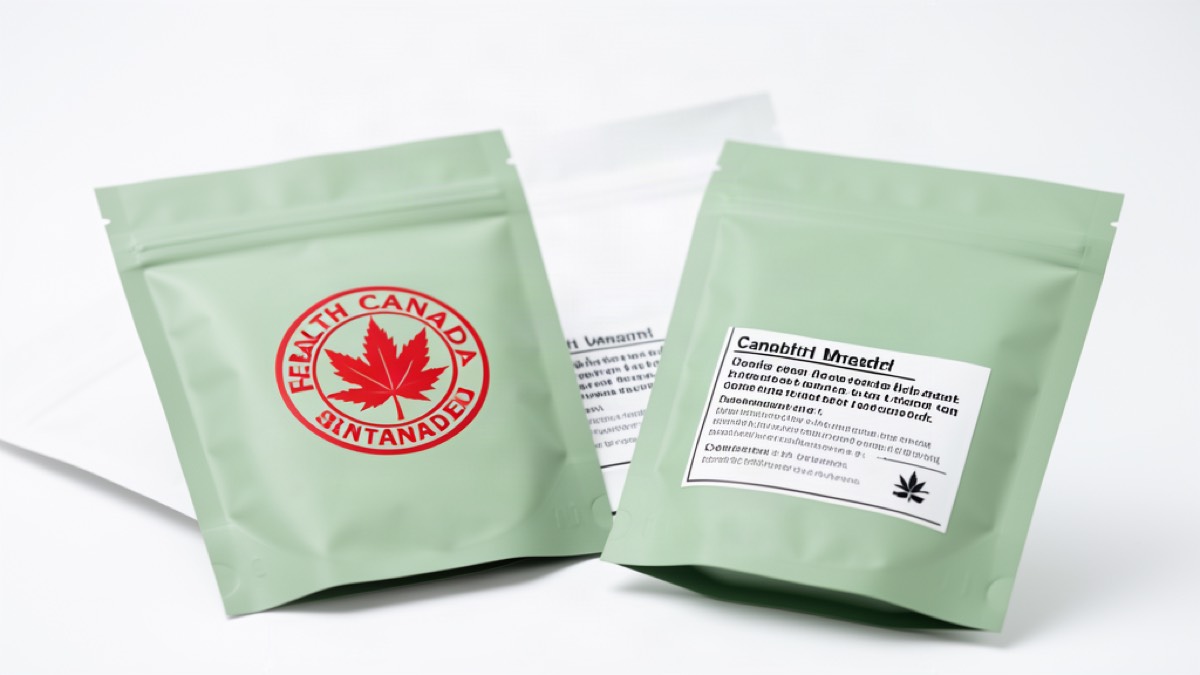
Mylar bags sold in Canada for cannabis products must meet Health Canada's plain packaging requirements under the Cannabis Regulations (SOR/2018-144). That means child-resistant closures, a single uniform color, the red standardized cannabis symbol, bilingual health warning messages, and no branding beyond a single brand name on the label. Canadian cannabis packaging rules are federal, not provincial — unlike the U.S. state-by-state model — so the requirements are the same whether you're selling in Ontario, British Columbia, or Quebec.
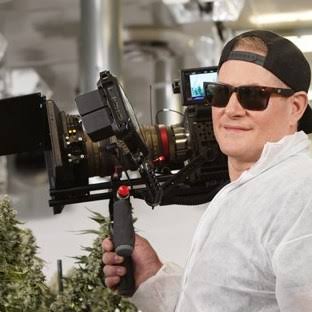
I've spent about 20 years working in marketing and media connected to the cannabis industry. I created Growing Exposed on YouTube — we've built an audience of over 130,000 subscribers and 12.5 million views. I've also written for High Times and Stoner Magazine, and I own LG Digital Inc. So when licensed producers ask me about mylar bags for the Canadian market, I've seen enough brands get burned by non-compliant packaging to give them a straight answer.
Here's everything you need to know about mylar bags in Canada: what Health Canada requires, how Canadian rules differ from U.S. state regulations, what makes a mylar bag compliant north of the border, and what you should actually be paying at wholesale volumes.
What Are the Health Canada Cannabis Packaging Requirements?
Health Canada regulates cannabis packaging at the federal level through the Cannabis Act and the Cannabis Regulations (SOR/2018-144). Unlike the United States, where each legal state writes its own packaging rules, Canada has one set of federal requirements that apply in every province and territory. That's actually simpler in some ways — you don't need separate SKUs for Ontario vs. Alberta — but the federal requirements are strict and they're enforced.
The Health Canada packaging and labelling guide outlines the full requirements. Here are the core rules that apply to mylar bags specifically:
- Plain packaging: One uniform color on the container. No fluorescent or metallic colors on containers. No images, no logos beyond a single brand name on the label.
- Child-resistant: Every immediate container must be child-resistant under C.01.001(2) to (4) of the Food and Drug Regulations. The only exception is cannabis plants and seeds.
- Standardized cannabis symbol: The red standardized cannabis symbol is required on the label if THC concentration exceeds 10 micrograms per gram (10 µg/g). The symbol must be at least 1.27 cm (0.5 inches) in height.
- Health warning message: A mandatory health warning is required on the label, printed in yellow and black.
- Bilingual labeling: All required information must appear in both English and French.
- Tamper-evident: Packaging must have a security feature that shows if it's been tampered with.
- Opaque: Packaging must not allow the product to be visible from the outside (with limited exceptions for dried cannabis and seeds).
That's the baseline. Every one of those requirements applies to a mylar bag sold as the immediate container for a cannabis product in Canada. Miss any of them and you're looking at a non-compliance finding from Health Canada, which can mean product recall, fines, or license suspension.
How Do Canadian Cannabis Packaging Rules Differ From U.S. State Rules?
If you're a brand that operates in both the U.S. and Canada — or if you're a U.S. brand looking to expand north — you need to understand the differences. The two regulatory frameworks look similar on the surface but diverge in ways that affect your packaging design and your costs.
| Requirement | Canada (Health Canada) | U.S. Legal States |
|---|---|---|
| Regulatory level | Federal (Cannabis Act, Cannabis Regulations) | State-level (varies by state) |
| Plain packaging | Required — one uniform color, no images, no logos beyond brand name | Not required in most states; full custom branding allowed |
| Child-resistant | Required under Food and Drug Regulations C.01.001 | Required under 16 CFR 1700.20 |
| Standardized symbol | Federal red cannabis symbol (uniform across all provinces) | State-specific symbols (CA, CO, NY each different) |
| Language requirements | Bilingual English and French | English (some states require Spanish) |
| Health warning | Yellow and black health warning message | State-specific warning text and format |
| Brand elements on package | One brand name on label only; no brand elements on container | Full custom printing, logos, artwork allowed |
| THC limit per container | 10 mg THC per immediate container for edibles | Varies by state (e.g., 100 mg in CA, 10 mg per serving) |
The biggest difference is plain packaging. In the U.S., cannabis brands invest heavily in custom-printed mylar bags with full-color artwork, logos, and premium finishes. In Canada, that's not allowed. Your custom mylar bags for the Canadian market need to be plain — a single uniform color with no images or promotional elements. The brand name goes on the label, not on the container. If you're used to the U.S. approach, our guide to choosing cannabis mylar bags covers what the U.S. market allows — but don't assume those rules cross the border.
This changes the economics. Canadian brands can't compete on shelf presence through packaging design the way U.S. brands do. Compliance and product quality become the differentiators, not flashy packaging.
What Makes a Mylar Bag Compliant in Canada?
A compliant mylar bag for the Canadian cannabis market needs to meet both the construction requirements (barrier protection, durability) and the regulatory requirements (plain packaging, CR, labeling). Here's the checklist:
Construction Requirements
The bag itself still needs to be a proper multi-layer barrier pouch. Health Canada doesn't specify the exact material construction, but the bag needs to protect the product from contamination and maintain freshness. A PET/AL/LLDPE multi-layer construction — the same standard you'd use in the U.S. market — meets this requirement. The aluminum foil layer provides the oxygen, moisture, and light barrier that keeps cannabis flower fresh for 12-18 months.
What's different is the exterior. In Canada, the outer surface must be a single uniform color with no images, no raised features, no embossing, no fluorescent or metallic colors on the container. The color must also create contrast with the yellow health warning message and the red standardized cannabis symbol.
Child-Resistant Closure
Every immediate container for cannabis in Canada must be child-resistant under C.01.001(2) to (4) of the Food and Drug Regulations. This is the Canadian equivalent of the U.S. CPSC protocol under 16 CFR 1700.20. The testing protocol is similar: a panel of children attempts to open the package within a set time, and a defined percentage must fail.
For mylar bags, the CR function comes from the zipper closure — typically a push-and-slide or pinch-and-pull CR zipper. The bag material provides the barrier; the zipper provides the child resistance. You need both. A mylar bag with a standard ziplock but no CR certification won't pass Health Canada compliance. Our child-resistant mylar bags use certified CR zippers that have been tested to the Canadian standard.
Tamper-Evident Seal
Canadian cannabis packaging must include a security feature that indicates whether the package has been opened or tampered with. For mylar bags, this is typically a heat seal at the top of the bag that must be torn or cut to access the product. Once broken, it's visually obvious that the seal has been compromised. Some bags use a perforated tear strip or a tamper-evident label across the opening.
Bilingual Labeling
Canada has two official languages: English and French. Every required element on the label — brand name, class of cannabis, THC/CBD content, health warning, lot number, storage conditions, licence holder contact information, and the "KEEP OUT OF REACH OF CHILDREN / TENIR HORS DE LA PORTÉE DES ENFANTS" warning — must appear in both languages.
If you're used to the U.S. market where English-only labels are standard, this is a real cost factor. Your label artwork needs to accommodate roughly 40-50% more text. Plan your label layout accordingly — or use a compliance sticker approach where bilingual information is applied via a separate label, which is what most Canadian LPs do.
How Much Do Compliant Mylar Bags Cost in Canada?
Canadian cannabis packaging pricing runs slightly higher than U.S. pricing because of the bilingual labeling requirement and the smaller domestic market for compliant packaging suppliers. Here's what you should expect to pay at wholesale volumes:
| Product | Volume | Price per Unit (CAD) |
|---|---|---|
| Stock plain CR mylar bag (3.5g) | 10,000+ | $0.18 - $0.35 |
| Stock plain CR mylar bag (7g) | 10,000+ | $0.22 - $0.40 |
| Stock plain CR mylar bag (14g) | 10,000+ | $0.28 - $0.50 |
| Stock plain CR mylar bag (28g) | 10,000+ | $0.35 - $0.60 |
| Custom-size plain CR mylar bag | 10,000+ | $0.30 - $0.55 |
| Bilingual compliance label (BOPP) | 10,000+ | $0.06 - $0.10 |
| Bilingual compliance label (BOPP) | 50,000+ | $0.03 - $0.05 |
Note that in Canada, you can't print full-color custom artwork on the bag itself. The bag is a plain single-color container. Your brand identity lives on the label, not on the packaging. This actually keeps per-unit costs lower than the U.S. market — you're not paying for custom CMYK printing on every bag — but you pay for bilingual labels instead. The net cost is comparable.
Factory-direct suppliers like CropPak offer pricing 30-50% below broker resellers for equivalent products. If you're sourcing through a Canadian distributor, expect 40-60% markup on top of the factory price. Going factory-direct on a commodity product like a plain CR mylar bag is the single biggest cost saving available to Canadian LPs.
What Sizes Do Canadian Cannabis Brands Need?
Canadian cannabis brands sell flower in metric units — grams, not ounces. The standard retail sizes in Canada are 1g, 3.5g, 7g, 15g, and 30g, though some provinces also carry 3.5g, 7g, 15g, and 28g (one ounce) formats. The sizes are set by provincial distributors like the OCS (Ontario Cannabis Store), BCLDB (British Columbia Liquor Distribution Branch), and SQDC (Société québécoise du cannabis).
Here are the standard mylar bag sizes for the Canadian market:
- 1g: 2.5 x 4 inches. For single-gram flower, samples, and pre-roll packs.
- 3.5g: 3 x 5 inches. The highest-volume retail size in Canada. Holds an eighth of flower.
- 7g: 4 x 6 inches. Quarter-ounce format. Common for mid-tier flower.
- 15g: 4 x 7 inches. Half-ounce format available in some provinces.
- 28g/30g: 5 x 8 to 6 x 9 inches. Full ounce or 30g format. Bulk retail.
Match the bag size to the product weight with minimal headspace. Excess air inside the bag degrades the flower faster. If you're packaging concentrates or edibles in mylar bags, the sizing shifts — a 5ml concentrate needs a much smaller bag than 3.5g of flower.
U.S. vs. Canada: Can You Use the Same Mylar Bag?
The short answer is no — not if you want to be compliant in both markets. Here's why:
A mylar bag that's fully compliant in a U.S. legal state with custom-printed artwork, your logo, and full-color branding is not compliant in Canada. Canadian plain packaging rules prohibit images, logos, and brand elements on the container. You'd need a separate plain bag for the Canadian market.
The reverse is also true: a plain Canadian-compliant bag is compliant in most U.S. states (the CR certification transfers), but you'd be leaving branding opportunity on the table. U.S. dispensaries reward brands that invest in shelf presence. A plain bag on a U.S. dispensary shelf looks like a budget product.
The practical approach for brands operating in both markets: use the same bag construction (PET/AL/LLDPE, same thickness, same CR zipper) but with different exterior finishes. Plain single-color for Canada. Full custom CMYK print for the U.S. This way you're sourcing the same base product from the same factory, just with different print specifications. Your Canadian cannabis packaging and your U.S. packaging share a supply chain but diverge at the print stage.
For brands that only sell in Canada, this is simpler — you need plain CR mylar bags in standard metric sizes with bilingual labels. That's it. No custom print, no artwork budget, no premium finishes. Your compliance cost is in the CR certification and the bilingual labeling, not in custom printing.
How to Source Compliant Mylar Bags for the Canadian Market
Sourcing mylar bags for the Canadian market comes down to five things: construction, CR certification, plain packaging compliance, bilingual labeling, and price. Here's what to ask any supplier before you place an order:
- What's the layer construction? You want PET/AL/LLDPE with real aluminum foil. If they say "metallized film" or can't specify the layers, you're not getting a real barrier bag. Walk away.
- Is the CR zipper certified to C.01.001 or 16 CFR 1700.20? Ask for the lab test report. If they can't produce a test certificate for the specific SKU you're buying, their CR claim isn't backed by documentation.
- Is the exterior a single uniform color with no images? This is a Health Canada hard requirement. Any supplier that offers "custom-printed" mylar bags for the Canadian market doesn't understand the regulations.
- Can they produce bilingual labels? If you're sourcing bags and labels from the same supplier, ask about bilingual label printing. If they can't, you'll need a separate label supplier.
- What's the price at 10,000+ units? Stock plain CR mylar bags should run $0.18 to $0.35 CAD per unit at 10,000+ volume. If you're paying more than $0.50, you're paying broker markup.
A factory-direct supplier like CropPak handles all of this. We source the same multi-layer construction for both markets, apply the correct CR zipper, and produce plain single-color bags that meet Health Canada's plain packaging requirements. You can also check our Health Canada packaging and labelling requirements category page for the full compliance breakdown.
One thing I've learned over about 20 years in this industry: the suppliers who can answer all five of those questions without hesitation are the ones who actually understand the regulations. The ones who hem and haw about CR test reports or try to sell you custom-printed bags for Canada are the ones who'll get your product recalled. For more on spotting fake CR claims, check our guide to child-resistant packaging requirements. And if you sell in both markets, our cannabis packaging requirements by state guide breaks down the U.S. side.
Common Mistakes Canadian Brands Make With Mylar Bags
After seeing hundreds of product launches — and plenty of packaging failures — here are the mistakes I see most often from Canadian cannabis brands:
Buying non-CR bags and assuming they'll pass. Health Canada checks for child resistance. A standard ziplock mylar bag is not child-resistant. If your bag doesn't have a certified CR zipper, you're not compliant. This is the most common reason LPs get non-compliance findings.
Using the U.S. standardized symbol. The U.S. has state-specific symbols. Canada has one federal standardized cannabis symbol — the red cannabis leaf symbol. They're not interchangeable. Using the wrong symbol on your Canadian packaging is a compliance failure.
Skipping the bilingual label. Every required label element must be in English and French. Brands that produce English-only labels for the Canadian market are non-compliant in every province. This is especially common when U.S. brands expand into Canada without updating their label artwork.
Custom-printing the bag. Health Canada's plain packaging rules are clear: one uniform color, no images, no brand elements on the container. Your brand name goes on the label — not on the bag. If a supplier offers to custom-print your logo on a Canadian-market mylar bag, they don't understand the regulations.
Ignoring the tamper-evident requirement. The heat seal or tear strip isn't optional. Your bag needs a visible security feature that shows if it's been opened. A bag without tamper-evidence fails Health Canada compliance even if everything else is correct.
Frequently asked questions
Are mylar bags legal for cannabis packaging in Canada?
What is plain packaging for cannabis in Canada?
Do Canadian cannabis mylar bags need to be child-resistant?
What is the standardized cannabis symbol in Canada?
Can I use the same mylar bags in Canada and the United States?